Are Escape Rooms Scary? How Operators and Research Dial Fear Down
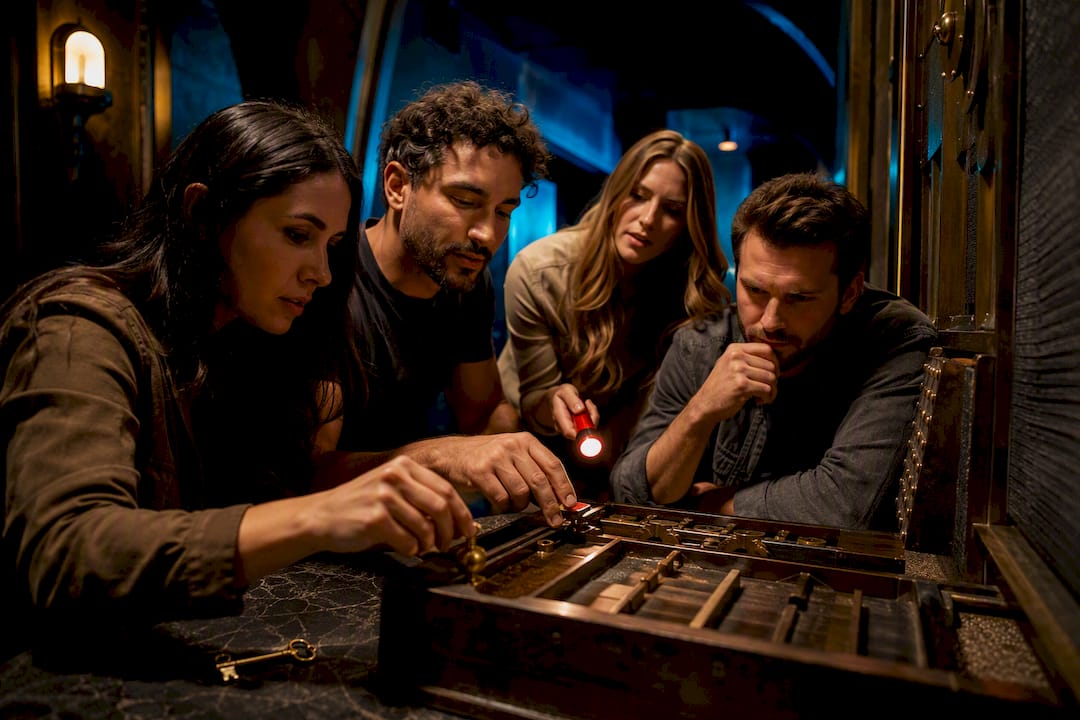
Most escape rooms are not designed to terrify you. They range from bright, family-friendly puzzle hunts to deliberately dark horror experiences, so how scary a room feels depends almost entirely on its theme and how the operator builds it. Reputable venues also give you real safety controls, from staff monitoring to opt-out options, so you’re never actually trapped.
Table of Contents
- Are Escape Rooms Scary? It Depends on Theme and Production
- Common Escape Room Fears and What Actually Happens
- How Reputable Operators Manage Scare Levels and Safety
- How to Pick a Low-Scare Room When Booking
- How to Manage Escape Room Anxiety Before and During the Game
- Escape Rooms vs. Haunted Houses: They’re Not the Same Thing
- How CodeBusters Sets and Communicates Scare Levels
- What the Research Actually Tells Us About Escape Room Fear
- Ready to Try a Room That Matches Your Comfort Level?
- Sources
Are Escape Rooms Scary? It Depends on Theme and Production
The honest answer is that “escape room” describes a format, not a fright level. A room built around a birthday heist or a time-travel caper plays nothing like one built around a haunted asylum, even though both use the same locked-door structure. Theme is the single biggest factor separating a laid-back puzzle hunt from something that spikes your pulse.
Production choices do the rest. Lighting is the fastest lever: a fully lit room with clean sightlines feels manageable no matter what’s painted on the walls, while dim lighting and shadow play can make even a mild mystery theme feel tense. Sound design matters just as much. Ambient creaks, sudden musical stings, and distorted voice recordings are cheap to add and highly effective at raising tension, which is exactly why horror rooms lean on them.
Live actors change the equation more than almost any other element. A room with no actors relies purely on puzzles and atmosphere. Add a costumed performer who pops out from behind a door, and you’ve shifted from a mystery experience into something closer to a haunted attraction. Some venues label these rooms clearly; others bury the detail in fine print, so it pays to ask.
Jump scares themselves come down to frequency and predictability. A single, well-telegraphed scare near the finale reads very differently than random startles scattered every few minutes with no warning. Escape room guides note that family rooms typically skip jump scares altogether, while horror rooms build entire scenes around them.
Game design elements layer on top of theme and production. Darkness that forces you to use a flashlight, tactile props like fake bones or sticky substances, countdown timers that blare warnings, and surprise reveals (a wall panel sliding open, a “body” that isn’t actually a prop) all raise intensity independent of whether the room is technically labeled horror. A ByrdLab study on escape room enjoyment found that surprise itself is closely tied to how much fun players report, with average surprise ratings of 2.80 against average fun ratings of 3.55 on their scale. Designers can dial surprise up to keep a room exciting without ever making it frightening. That distinction, surprise versus dread, is the difference between a room that’s thrilling and one that’s genuinely scary.
Common Escape Room Fears and What Actually Happens
Ask ten people why they’re hesitant to book, and you’ll hear the same handful of worries repeated. Here’s what’s actually true.
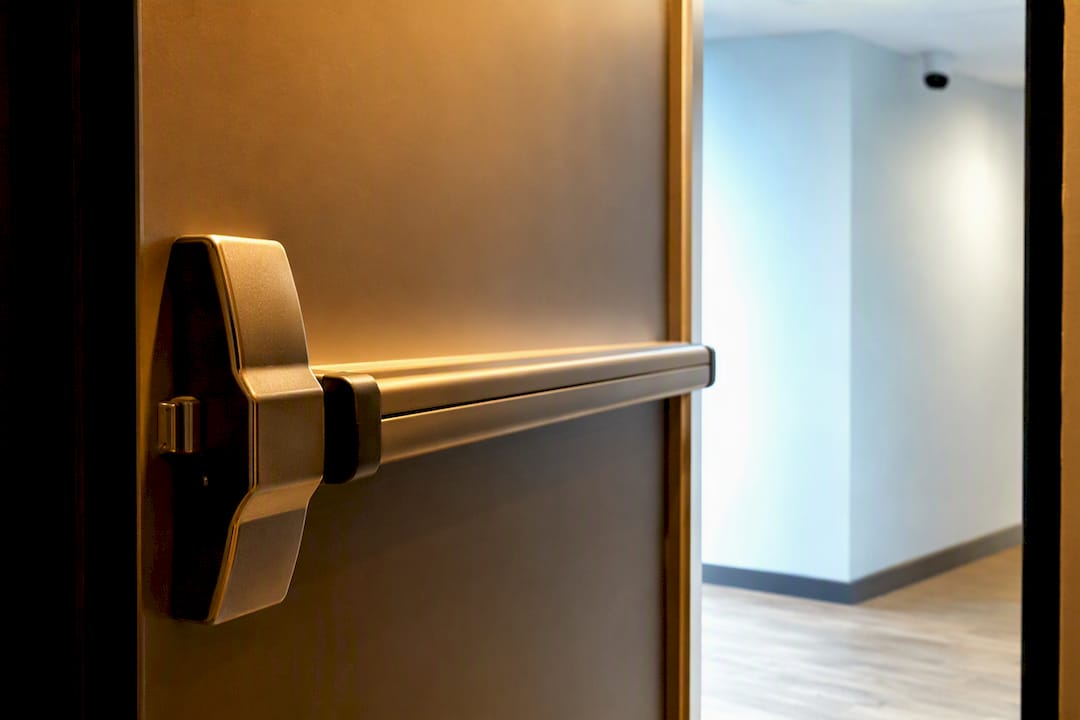
“What if I get locked in and can’t get out?” You won’t. Every legitimate escape room uses doors with panic hardware or staff-controlled release mechanisms, not literal locks that trap you inside. A game master watches the room the entire time, usually through cameras or a one-way mirror, and can end the session instantly if needed. Nobody is ever actually confined against their will.
“I’m claustrophobic. Will the space feel tight?” Room layouts vary a lot. Some are single small chambers; others open into two or three connected spaces so you’re never boxed into one corner. Staff can tell you the square footage and ceiling height before you book, and many rooms use sightlines and open shelving specifically so the space doesn’t feel closed off.
“Will there be gore or things that traumatize kids?” Only in rooms explicitly themed that way. Family and mystery rooms almost never include graphic content, and operators typically post content warnings for anything with blood, jump scares, or disturbing imagery. If a listing doesn’t mention it, that’s usually because it isn’t there.
“The timer stresses me out.” Time pressure is real, but it’s manageable. Most venues build in a clue system specifically to prevent groups from spiraling into panic when they’re stuck. Interestingly, the ByrdLab research found that players who needed more clues for an equally difficult room actually reported less fun, not more relief. The lesson: a good clue policy should feel like a light nudge, not a lifeline you’re forced to grab every five minutes.
How Reputable Operators Manage Scare Levels and Safety
Well-run venues don’t leave your comfort to chance. They build safety into the structure of the game itself, which is worth checking before you book anywhere.
- Pre-game safety briefing. Staff walk through the rules, explain what’s real versus prop, and explicitly state that you can leave at any time.
- Emergency exits with one-touch release. No key, code, or staff permission required to open a door from the inside in a genuine emergency.
- Continuous staff monitoring. Cameras, intercoms, or a game master watching a live feed the entire session, ready to intervene.
- Structured clue delivery. A hint system on a timer or button, so you’re never stuck feeling helpless for the full session.
- Posted age limits and signage. Clear minimum ages and content warnings at booking, not discovered mid-game.
- Transparent room descriptions. Honest previews of darkness level, actor presence, and intensity, so you know what you’re walking into.
These aren’t just courtesy measures. Industry best-practice guides treat briefings, visible exits, and monitoring as baseline standards, not upsells. If a venue can’t clearly explain its safety setup when you call, that’s worth noting before you book.
How to Pick a Low-Scare Room When Booking
You have more control over your experience than most first-timers realize. Follow these steps and you’ll land in a room that matches your comfort level, not someone else’s idea of fun.
- Scan for labels like “family,” “intro,” or “beginner.” Venues use these terms deliberately to flag lower intensity and simpler puzzles, and they almost always exclude jump scares and actors.
- Read the full room description, not just the title. A spooky-sounding name doesn’t always mean a spooky room. Look for explicit mentions of darkness, actors, or special effects in the actual copy.
- Call or message staff with direct questions. Ask specifically whether the room uses total darkness, live actors, or scripted jump scares. Staff answer this constantly and would rather tell you upfront than deal with a mid-game walkout.
- Book a private session instead of joining strangers. A private booking means your group sets the pace, and you can talk openly about pulling back if someone’s uncomfortable, without worrying about how it looks to unfamiliar teammates.
- Choose daytime or early-evening time slots when possible. Some venues dim lighting or add extra ambiance for evening bookings, so an earlier slot can mean a slightly gentler atmosphere.
- Favor rooms with a generous clue system. A room where hints come easily tends to keep tension lower throughout, since you’re never stuck long enough to spiral.
- Check the posted age guidance and difficulty rating. Lower difficulty ratings usually correlate with gentler pacing and fewer surprise elements, not just easier puzzles.
How to Manage Escape Room Anxiety Before and During the Game
If you already know you get anxious in tense situations, a little preparation goes a long way. None of this requires being an expert puzzle solver.
- Practice slow, controlled breathing before you go in. Research summarized by the Harvard Business Review shows that controlled breathing lowers heart rate and blunts the body’s stress response, making it one of the simplest tools you can use mid-game if tension spikes.
- Bring someone calm and assign clear roles, a strategy supported by group activity icebreakers that actually get people talking. Having a steady teammate, and a specific job like “reads clues aloud” or “tracks the timer,” gives your brain something concrete to focus on instead of the atmosphere around you.
- Agree on a comfort signal before you start. A simple phrase or hand gesture that means “I need a second” lets you signal your team without stopping the whole group or feeling embarrassed.
- Tell staff about your anxiety when you book. Game masters can adjust lighting cues, skip certain effects, or simply check in more during the session if they know ahead of time.
- Use your exit option the moment you need it. Every legitimate room lets you step out or end the session immediately. Using that option isn’t failure. It’s the system working as designed.
Pro Tip: If you’re nervous about a specific room, ask staff directly whether any players have needed to step out mid-game and how they handled it. Their answer tells you a lot about how seriously the venue takes guest comfort.
One account from a longtime horror escape room skeptic describes exactly this shift: avoidance turned into genuine enjoyment once they understood what to expect and built a few coping habits into their routine. Preparation, not bravery, made the difference.
Escape Rooms vs. Haunted Houses: They’re Not the Same Thing
A lot of the fear around escape rooms actually comes from confusing them with haunted houses, and the two are built for opposite goals.
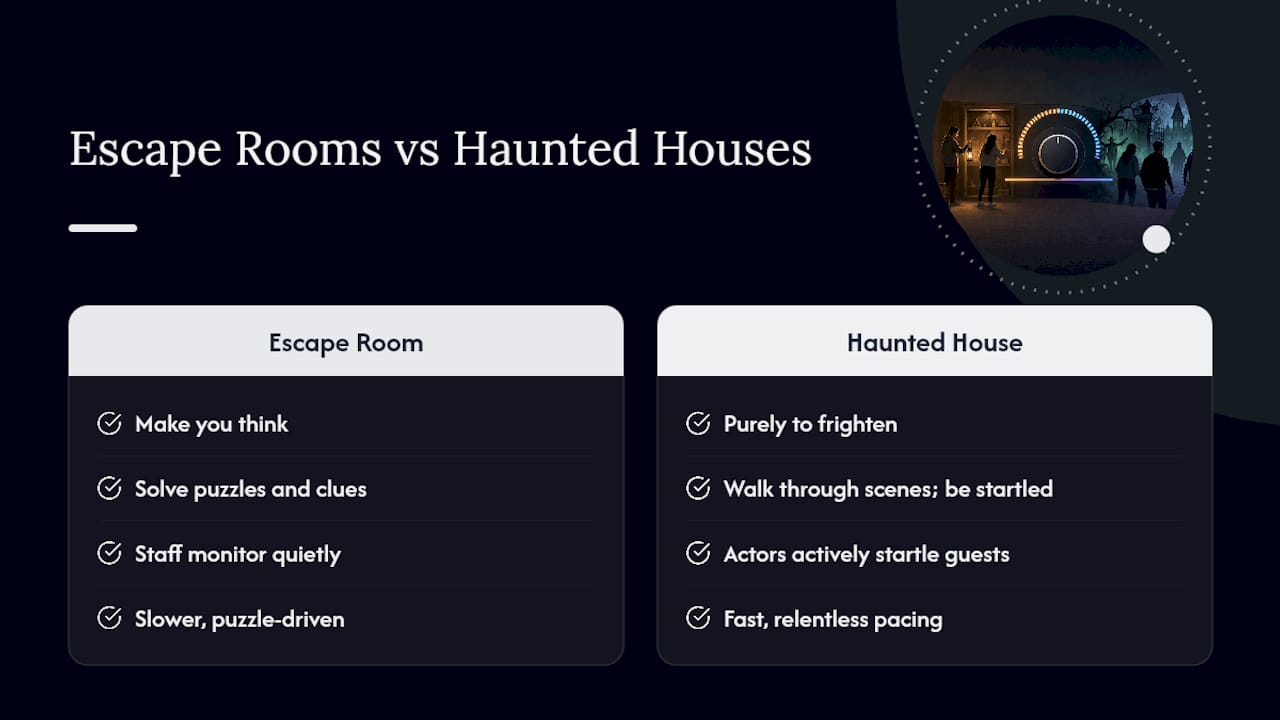
Escape rooms exist to make you think. The core loop is puzzles, clues, and a story you’re actively solving, and any scare elements are secondary to that goal. Staff monitor quietly from the sidelines rather than actively chasing you. Haunted houses exist purely to frighten you. Actors are paid to startle guests on a loop, pacing is fast and relentless, and there’s no puzzle to solve, just a path to walk through while getting scared on purpose.
You can usually tell which you’re looking at from the listing itself. If the description talks about clues, codes, and a 60 minute time limit, you’re looking at an escape room, even a horror-themed one. If it talks about walking through scenes, “no touching” actors, and a haunted trail, that’s a haunted house wearing a different name. When in doubt, ask whether there’s an actual puzzle to solve. If the answer is no, it’s not really an escape room.
How CodeBusters Sets and Communicates Scare Levels
CodeBusters Escape Room builds its room lineup around variety, not a single intensity level. Themes like Past to the Future and Flight of Deception lean into story and puzzle-solving rather than horror, while other rooms are designed for players who want a more intense, higher-stakes atmosphere. That range matters because it means the decision about how scary your session feels isn’t left to chance. It’s built into which room you pick.
Private bookings give groups even more control. When you’re not sharing a session with strangers, your team can set its own pace and decide together how far to push the intensity. Combined with clear room descriptions and staff who explain what to expect before you start, that adds up to a booking process where you know what you’re walking into.
If you have specific concerns, whether about darkness, tight spaces, or a younger player in your group, contacting CodeBusters staff directly before booking is the most reliable way to get a straight answer.
What the Research Actually Tells Us About Escape Room Fear
The most overlooked point in this whole conversation is that surprise and fear are not the same thing, and conflating them leads people to avoid experiences they’d probably enjoy. The ByrdLab research found surprise tracks closely with fun, not dread. A room can catch you off guard constantly and still feel exciting rather than frightening, because good design separates “I didn’t see that coming” from “I’m genuinely scared.”
Where conventional advice falls short is treating “scary” as a fixed trait of escape rooms in general, rather than a variable that changes room to room and even feature to feature within the same room. Lighting, actor presence, and clue frequency do more to shape your experience than the word “horror” in a title ever will.
If you’re on the fence, prioritize asking direct questions over reading reviews. Reviews reflect someone else’s tolerance. A five-minute conversation with staff about darkness, actors, and clue policy tells you what your actual experience will be.
— CodeBusters
Ready to Try a Room That Matches Your Comfort Level?
If everything above has you convinced you’d enjoy an escape room but want zero surprises about intensity, start with a family or intro-level room and book it privately. A private session means no strangers, no pressure to match someone else’s pace, and full control over how your group handles tense moments. You pick the theme, you pick the difficulty, and staff walk you through exactly what to expect before the clock starts.
Gift vouchers may be available if you’re planning ahead for a birthday, team outing, or a group of friends who keep debating whether they’re brave enough to try one. Whether you want something lighthearted like a puzzle-driven mystery or a slightly more intense themed room, you can browse options and book a private session directly through the site. If you’re still deciding which room fits your group best, the escape room selection guide breaks down how to match difficulty and theme to what your team actually wants. Pick your date, choose your room, and see for yourself how manageable it feels once you’re the one in control.
Sources
- Fun, surprise and challenge in escape rooms — ByrdLab (Christy Byrd)
- Research: Why Breathing Is So Effective at Reducing Stress — Harvard Business Review
- Briefscape
- How I Learned to Stop Worrying and Love Horror Escape Rooms — RoomEscapeArtist