Plan 75–90 Minutes for an Escape Room Visit with CodeBusters’ Tips
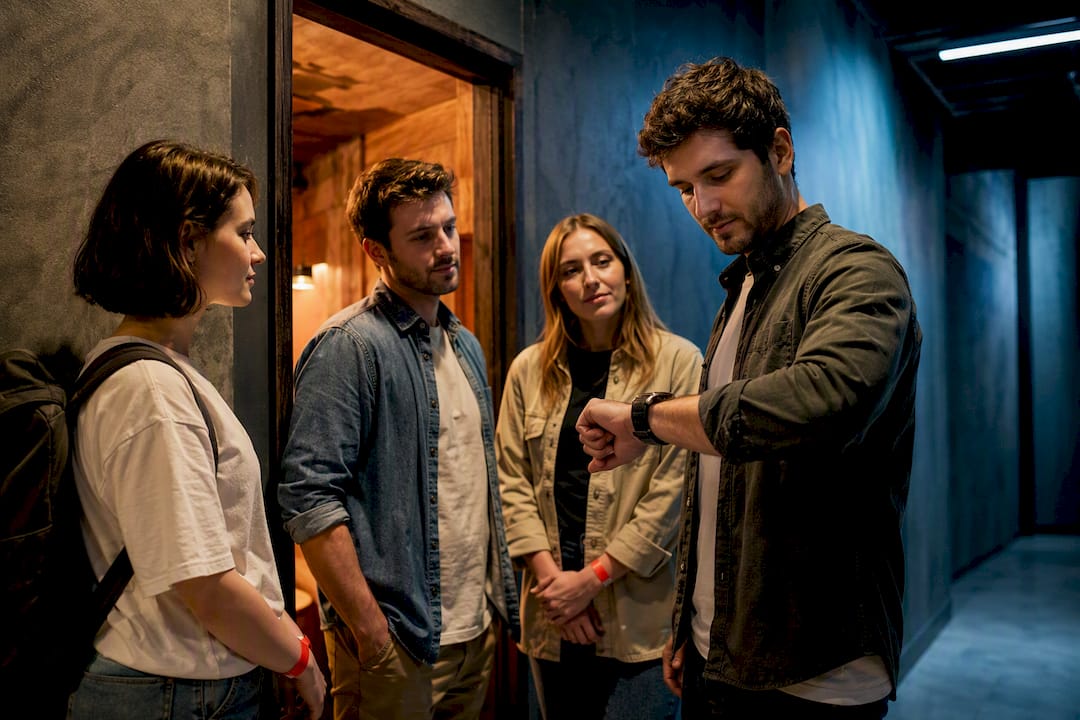
Most escape rooms run on a 60-minute game clock, but the full visit takes longer. Plan for a typical total time that usually lasts around an hour and a half once you count arrival, check-in, the briefing, the game itself, and a short debrief afterward. Special formats can take considerably longer. Book a window of around an hour and a half to two hours for a standard outing to avoid feeling rushed.
Table of Contents
- Escape Room Duration: How Long Is the Actual Game?
- Total Visit Time: What to Plan for at the Venue
- Common Room Formats That Change How Long You’re There
- What Actually Changes Your Completion Time: Group Size, Difficulty, and Hints
- What Happens if You Don’t Escape in Time
- Planning Tips: Fitting an Escape Room Into Your Evening
- Operator Perspective: Timing Patterns We See
- Ready to Book? Here’s What to Expect at Codebusters Escape Room
- Sources
- FAQ
Escape Room Duration: How Long Is the Actual Game?
Sixty minutes has become the default because it hits a sweet spot. It’s long enough for designers to layer multiple puzzles and a real story arc, but short enough to keep urgency alive from the first lock to the last. That time pressure isn’t incidental. Research on timed group tasks shows that a ticking clock pushes groups toward faster collaboration and communication, which is exactly the dynamic escape room designers are chasing.
There’s also a business reason behind the hour mark. A design breakdown from Room Escape Artist notes that 60 minutes lets a venue turn rooms over multiple times a day without cutting corners on story or puzzle count. It’s a rationale straight out of escape-room design guidance rather than a random round number.
Plenty of rooms break from the standard on purpose:
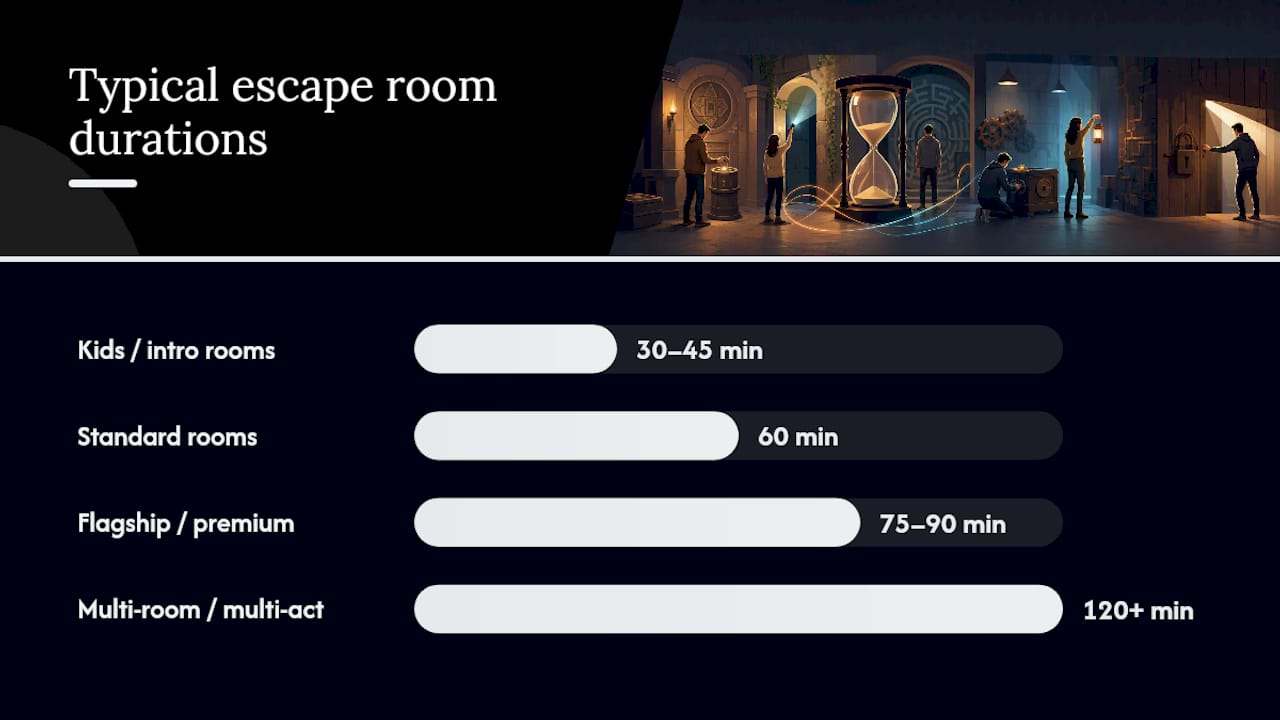
- 30 to 45 minutes: kids’ rooms, intro-level experiences, or rooms built for shorter attention spans.
- 75 to 90 minutes: flagship or premium rooms with denser puzzle chains and bigger sets.
- Two hours or more: multi-room or multi-act experiences, which vary widely by design.
If a listing doesn’t specify, assume 60 minutes. If it calls itself a “flagship” or “premium” experience, expect longer.
Total Visit Time: What to Plan for at the Venue
The game clock is only part of your afternoon. A breakdown from Breakout Games indicates that a typical full visit from arrival to departure generally takes longer than the game clock alone, with some flagship or group bookings lasting even more.
Here’s roughly how that time breaks down:
- Arrival and check-in (10 to 15 minutes): paperwork, waivers, and settling the group.
- Briefing (10 to 15 minutes): the game master explains rules, safety, and the story setup.
- Gameplay (60 minutes): the timed portion most people think of as “the escape room.”
- Debrief and photos (10 to 15 minutes): wrap-up, a group photo, and a chat about what you missed.
Venues often book sessions back to back, so arriving even 10 minutes late can shrink your prep time or push your group straight into the room without a full briefing. Operators generally recommend a 15 to 30 minute buffer around the clocked portion, so build that into any tight schedule rather than assuming you can walk in five minutes before your slot.
Common Room Formats That Change How Long You’re There
Duration isn’t one-size-fits-all, and reading a listing correctly saves you from showing up with the wrong expectations. Short-format rooms, usually 30 to 45 minutes, are built for kids, first-timers, or groups who want a lighter commitment. They tend to have fewer puzzles and simpler logic chains.
Flagship rooms sit at the other end, often running 75 to 90 minutes with denser stories, bigger sets, and puzzles that build on each other in sequence. Multi-room or “chapter” style experiences can run past two hours total, since you’re really playing several linked games back to back rather than one continuous puzzle.
A few cues tell you what you’re booking before you arrive:
- Listings that say “family friendly” or “beginner” usually run shorter.
- “Flagship,” “premium,” or “signature” rooms usually run longer.
- Any room described as “multi-part” or “chapters” should be treated as a longer commitment, not a standard 60-minute game.
Checking a room selection guide before you book helps match the room’s length and difficulty to your group instead of guessing from the title alone.
What Actually Changes Your Completion Time: Group Size, Difficulty, and Hints
The clock stays fixed at 60 minutes, but your odds of beating it move around a lot based on a few controllable factors.
- Group size: A two-person team searches less ground but coordinates faster on logic puzzles. Groups of four to eight cover more physical space at once but need someone directing traffic, or they trip over each other’s progress.
- Difficulty rating: A harder rating doesn’t mean a longer clock. It means a lower completion rate within the same 60 minutes, since the puzzles demand more steps or tighter logic.
- Hint policy: Unlimited hints effectively shorten the puzzle-solving workload. A strict “three hints max” policy means your actual time-to-complete depends heavily on how efficiently you use each one.
Puzzle density and pacing, which a look at how clues shape gameplay covers in more detail, matter just as much as raw difficulty.
Pro Tip: Ask about the hint system before the timer starts. Knowing whether hints cost time, come automatically, or require asking a game master out loud changes how your group should pace itself from minute one.
What Happens if You Don’t Escape in Time
Running out the clock isn’t a big deal, and it’s common. Most groups don’t escape.
- The game master typically enters, unlocks the final steps, and walks you through what you missed.
- Venues generally follow this with a debrief and a group photo, treating it the same as a win for the social wrap-up, as described in venue guides on escape room procedures.
- Refund, replay, or reschedule policies vary by venue, so it’s worth checking before you book if that matters to you.
There’s no penalty beyond not getting the win, and the debrief still gives you closure on the story.
Planning Tips: Fitting an Escape Room Into Your Evening
A little scheduling math prevents most day-of stress.
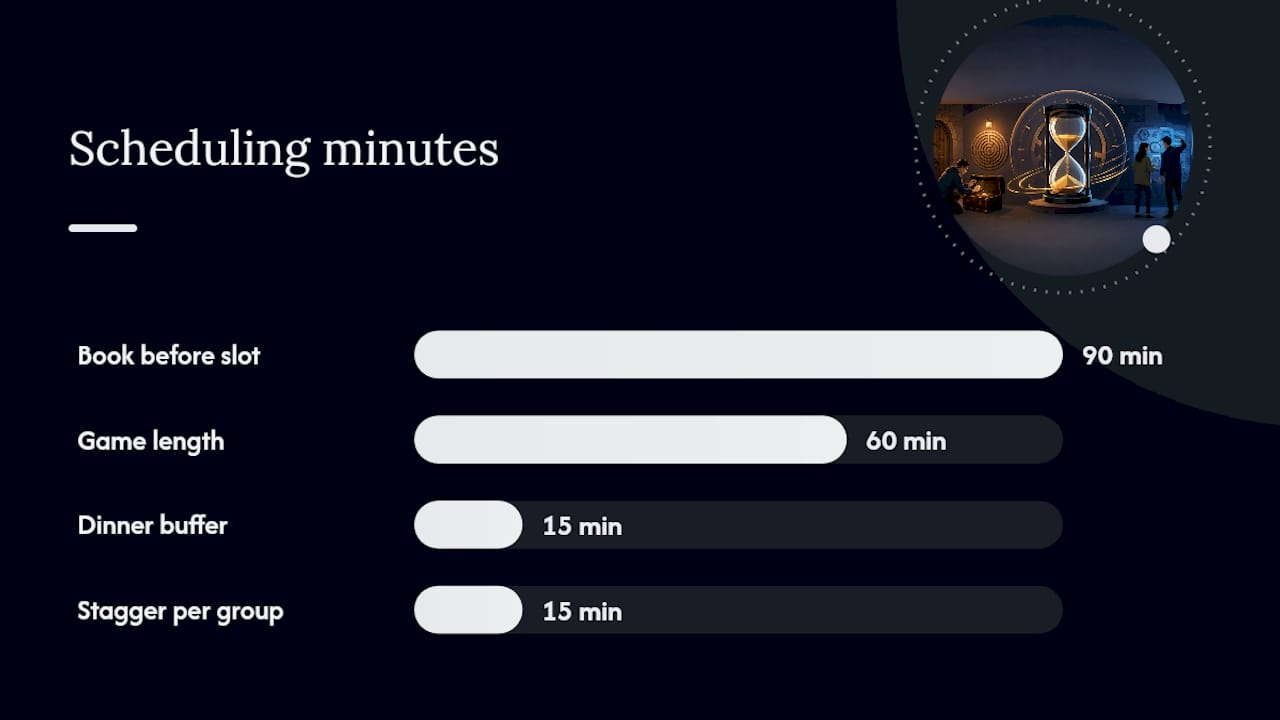
- Game before dinner: Book your slot 90 minutes before your reservation. That covers the buffer, the 60-minute game, and a debrief without rushing to the table.
- Game after dinner: Leave dinner 15 minutes earlier than you think you need to, since parking and check-in eat time fast.
- Party or group event with multiple rooms: Stagger start times by 15 minutes per group if you’re running back-to-back sessions so debriefs don’t collide with the next group’s briefing.
Tell your teammates two things ahead of time: when to arrive, and roughly how long the whole visit runs, not just the 60-minute clock. A quick pre-game checklist helps first-timers show up ready instead of confused about what to expect.
Pro Tip: If your schedule has zero wiggle room, such as around a flight or a dinner reservation, book a private session instead of a public one. Private bookings put the timing entirely in your group’s hands. If you’re coordinating a school trip or youth group, logistics guidance for group outings is worth a look, and event planners juggling multiple time slots can find useful scheduling angles in this guide to filling every seat at a private event.
Operator Perspective: Timing Patterns We See
The biggest mistake guests make isn’t during the game. It’s underestimating the front end. Groups that show up five minutes before their slot lose briefing time they didn’t plan to lose. We build predictable buffers around every booking specifically so a 60-minute game doesn’t turn into a rushed 40 minutes of actual play. If your schedule is tight, check a room’s description or reach out directly before booking. Timing questions are easier to solve in advance than in the parking lot.
— CodeBusters
Ready to Book? Here’s What to Expect at Codebusters Escape Room
Sessions typically run on a standard 60-minute game clock, with most visits lasting around 75 to 90 minutes total once you count check-in and debrief. That’s the number to plug into your evening plans, whether you’re squeezing a game in before dinner or building a party around it.
If your schedule has less flexibility, consider private bookings which allow your group more control over timing and avoid sharing time slots with others. That matters most for corporate events, birthday parties, or any group where a strict start and end time is non-negotiable. Browse the full lineup, including rooms like Past to the Future and Flight of Deception: The Royal Takeover, on the rooms and booking page to see run times and reserve a slot that fits your evening.
Sources
- Escape Room Game Length Design Tips — Room Escape Artist
- PMC article on timed group tasks and engagement
- Escape room: duration, price and difficulty level — BoulZeye
FAQ
How long does an escape room usually last?
The game itself typically runs 60 minutes, but your total time at the venue, including check-in, briefing, and debrief, usually lands between 75 and 90 minutes.
Are all escape rooms 60 minutes?
No. Short or kids’ rooms often run 30 to 45 minutes, flagship rooms can run 75 to 90 minutes, and multi-room experiences sometimes exceed two hours.
Is two people enough for an escape room?
Yes, two people can complete most standard rooms, and smaller teams often coordinate logic puzzles faster, though larger groups cover physical search areas more quickly.
What is the fastest escape room time?
Fast finishes vary enormously by room difficulty and group experience, so there’s no universal record; what matters more for planning is your venue’s specific hint policy and difficulty rating going in.
How long should I plan for a visit to Codebusters Escape Room?
Codebusters Escape Room runs its standard sessions on a 60-minute game clock, and most guests should plan for 75 to 90 minutes total to cover check-in and debrief.