Six Escape Room Hints Operators Recommend for Beginners
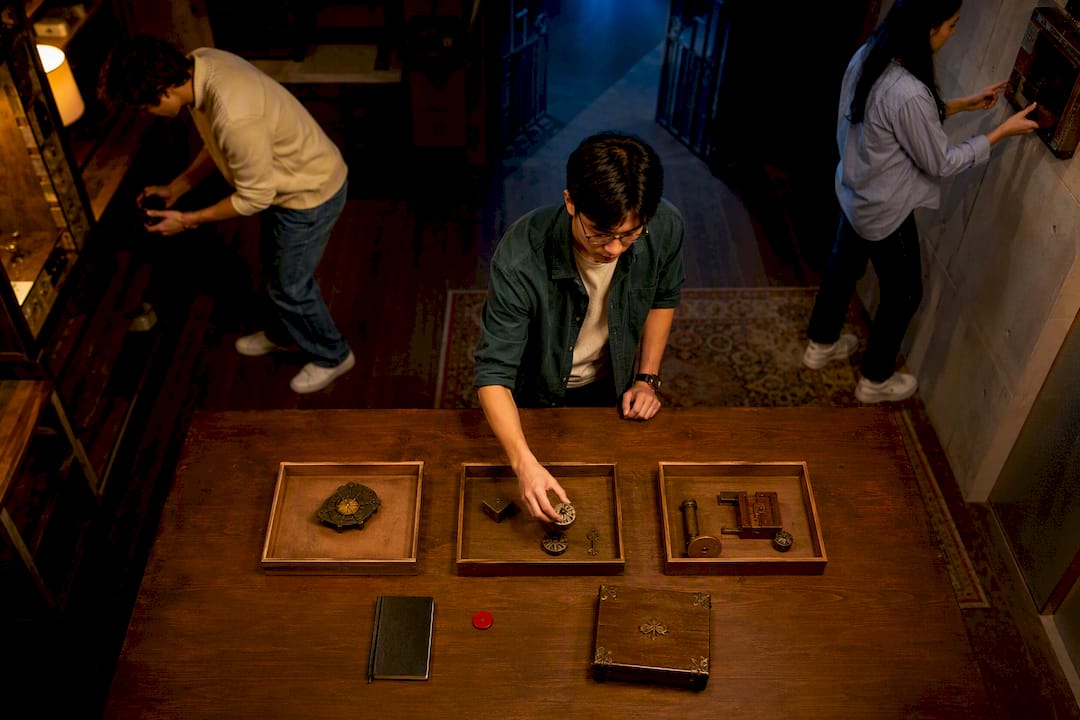
Search every inch of the room, talk out loud constantly, pick one spot for found items, split into sectors instead of clumping around one puzzle, watch the clock in ten-minute chunks, and ask for a hint the moment you stall for more than a few minutes. Teams that run these six habits waste far less time repeating searches, arguing over lost items, or staring silently at the same lock. The result isn’t just a faster escape. It’s a room that stays fun instead of turning into a scavenger hunt for your own patience.
Table of Contents
- Quick Checklist: The First Five Minutes Set the Tone
- How Do You Prepare Before an Escape Room Session?
- What’s the Best Way to Search a Room and Organize Clues?
- What Should You Do When Your Team Gets Stuck?
- Common Mistakes That Waste Time or Break Things
- What Should You Talk About After the Game?
- What Do Escape Room Operators Wish Beginners Knew?
- Why Hints Exist and How Smart Teams Use Them
- Ready to Put These Hints to the Test?
- Sources
- FAQ
Quick Checklist: The First Five Minutes Set the Tone
What you do in the opening minutes of a session decides whether the next 55 are smooth or chaotic. Here’s the order that works:
- Search everywhere, not just the obvious spots. Check under rugs, inside books, behind picture frames, and in pockets of any costume pieces in the room. Escape room design almost never hides a key clue in plain sight on a shelf.
- Designate one “item spot” immediately. Pick a table or a corner and agree that every unidentified object goes there the second someone finds it. This single habit is one of the most-repeated fixes in beginner tip rundowns for a good reason: lost items are the number one time-killer.
- Split into seekers and solvers early. Two or three people keep scanning the room while others work whatever clue is already in hand. Nobody should be standing idle watching someone else think.
- Think out loud, always. Say what you see, even if it seems irrelevant. A teammate across the room might recognize a symbol or number you just mentioned.
- Keep a visible running list of used codes and locks. A dry-erase board or a phone note works. Nothing burns time like retrying a combination nobody remembers already failing.
- Test the simple explanation before the clever one. If you find a padlock and a four-digit number, try it before hunting for a hidden cipher. Escape rooms reward the obvious move more often than beginners expect, a pattern confirmed repeatedly across community tips from beginner players.
Run through this list mentally as soon as the door locks. It costs you nothing and saves you the ten minutes most teams lose wandering aimlessly.
How Do You Prepare Before an Escape Room Session?
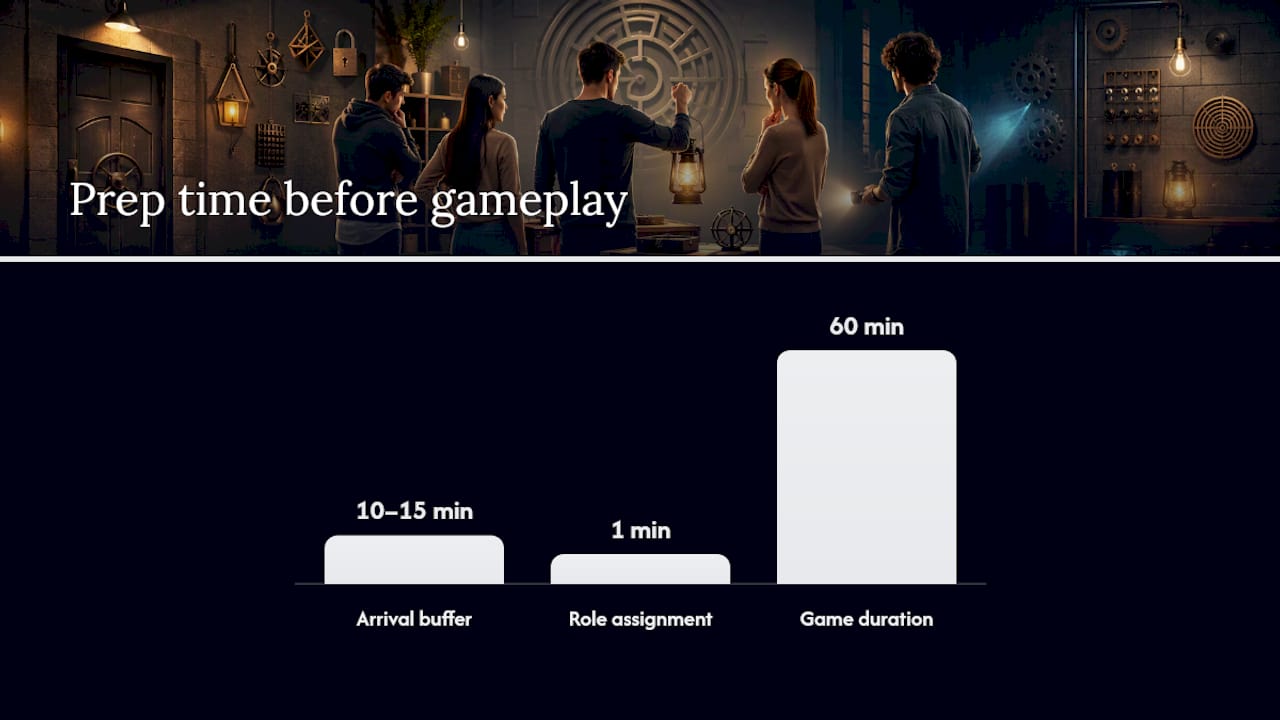
Arrive 10 to 15 minutes early. Most venues need time to check you in, store belongings, and run through waivers before the game clock even starts, and showing up late eats directly into your play time.
Before you walk in, handle a few practical details:
- Leave bulky bags, coats, and loose jewelry in a locker or your car. You’ll be crawling, reaching, and climbing.
- Use the restroom beforehand. Once the clock starts, most rooms don’t pause for breaks.
- Listen closely to the gamemaster’s intro. It almost always contains the room’s theme logic, at least one safety rule, and sometimes a subtle hint about how hints work.
- Wear clothes you can move in. Textured 80’s-themed rooms and multi-level sets reward comfortable shoes over anything fashionable.
Assigning roles takes 60 seconds and pays off for the full hour. A simple script works: “Two of us search the left side, two search the right, and whoever finds something brings it to the table in the middle. If anyone spots a lock, a number, or a symbol, say it out loud immediately.” That’s it. You don’t need a formal leader, just someone willing to call out the plan before the countdown starts.
What’s the Best Way to Search a Room and Organize Clues?
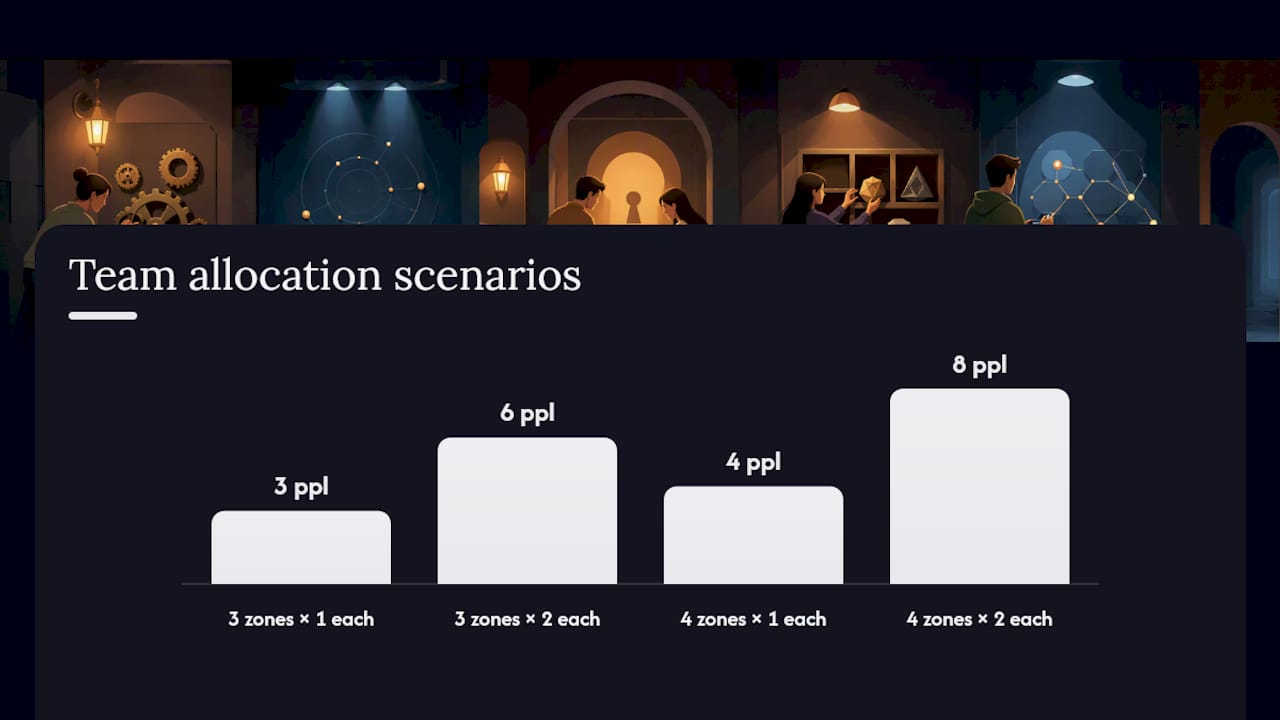
Divide the room into physical zones and assign one or two people per zone rather than letting six people wander the same six feet of carpet. A room roughly 12 by 15 feet usually breaks cleanly into three or four zones: each wall, plus any furniture cluster in the middle.
A real sweep means checking:
- Under and inside furniture, including drawers, cushions, and the undersides of tables.
- Wall decorations, frames, and anything that looks slightly askew or mismatched.
- Light switches, vents, and any panel that seems removable.
- Books, boxes, and containers, opened and shaken, not just glanced at.
Once your zones are set, treat the item spot as sacred. Every found object, no matter how random, goes there the moment someone’s hands are free. When a lock gets opened, physically move it aside or flip it over so nobody wastes three minutes retrying a combination that already worked. Keep a short running list, even scrawled on your phone, of every code attempted and its result. This habit alone prevents the single most common repeated mistake in expert-compiled escape room hacks: forgetting you already tried “1978” on that specific padlock.
Hand-offs matter too. If you’re searching and you find something that looks like it belongs to a puzzle someone else is already working, walk it over and say what it is and where you found it. Don’t just set it down and walk away. And resist the pull to have five people crowd one puzzle while a locked drawer and an unopened box sit untouched across the room. One problem, one small cluster of people, at a time.
Pro Tip: If two teammates start working the exact same puzzle without noticing, call it out immediately: “Hey, we’re both on the cipher wheel, one of us should check the bookshelf instead.” Overlap is invisible until someone names it.
What Should You Do When Your Team Gets Stuck?
Getting stuck for a minute or two is normal. Getting stuck for ten minutes without changing your approach is the actual problem. Run a simple loop: regroup, summarize, simplify, ask.
- Regroup. Stop searching and gather everyone for 30 seconds.
- Summarize. Say out loud what you have and what you’re missing. Often someone found something ten minutes ago that nobody connected to the current puzzle.
- Simplify. Ask if you’re overcomplicating an already-simple answer.
- Ask. If nothing clicks, request a hint. Now.
Vague hint requests get vague answers. “We’re stuck” tells a gamemaster almost nothing. “We have the four-digit code from the painting but the safe wants five digits” gets you a specific, useful nudge. Boxed escape games use the same logic with structured progressive hint ladders, starting with a small nudge and escalating only if you’re still stuck. Live gamemasters work the same way: confirm you’re on the right track, nudge you toward an overlooked object, or reveal a step outright if time is running low. Asking isn’t failure. It’s built into the design, and it’s often expected well before the halfway mark.
Common Mistakes That Waste Time or Break Things
Don’t force locks, pull hard on props, or yank at anything that resists. If something won’t open with reasonable effort, it’s either not the right key or not meant to open that way yet. Leave ceiling tiles, electrical outlets, and anything marked or roped off alone unless a gamemaster specifically says otherwise.
Watch for these behavior traps too:
- Fixating on one puzzle for too long while other areas go unsearched.
- Going quiet instead of narrating what you’re trying, which stops the whole team from building on your progress.
- Arguing over a theory instead of just testing it fast and moving on if it’s wrong.
Set a soft deadline for yourselves: if a specific puzzle hasn’t budged in five minutes, rotate someone else onto it or step back and search again. Momentum matters more than being right on the first guess.
What Should You Talk About After the Game?
A three-minute debrief while you’re still buzzing from the session locks in lessons you’ll actually use next time. Cover three things:
- What worked. Did the item spot save you time? Did splitting into sectors keep everyone busy?
- The biggest bottleneck. Was it one puzzle, one quiet teammate, or too many people on the same clue?
- One change for next time. Pick a single fix, not five. “Next time, we call out finds louder” beats a laundry list nobody remembers by the following weekend.
This short habit also builds real team-building value for corporate groups and friend groups who play together regularly, turning a single fun outing into a repeatable skill.
What Do Escape Room Operators Wish Beginners Knew?
Rooms with a dedicated item spot consistently move faster; teams that skip it often re-search the same drawer three times because nobody remembers who moved what. Two mistakes show up constantly among first-timers: forgetting a partial code the moment it’s found, and five people crowding one puzzle while a locked box sits ignored across the room. Veteran, family-owned operators design themed rooms, from puzzle-driven narratives to layered clue systems, specifically expecting teams to make these mistakes once and then adjust.
Why Hints Exist and How Smart Teams Use Them
Gamemasters aren’t scorekeepers. They’re pacing the room so a group stays challenged without stalling for twenty silent minutes. Treat a hint request as part of the strategy, not a concession. The teams having the most fun are usually the ones asking early and often, not the ones grinding in silence.
— CodeBusters
Ready to Put These Hints to the Test?
Reading a checklist only gets you so far. Escape rooms give groups a real room to practice sector searches, item spots, and hint requests with a live gamemaster watching your pacing instead of a stopwatch app. Sessions are private bookings, so it’s just your group and your themed room.

Whether you’re planning a family outing, a corporate team-building session, or a night out with friends who’ve never played before, you’ll find themed rooms built for a range of group sizes and difficulty levels, along with gift vouchers for entertainment and group activities. If your group leans toward tense, atmospheric settings, pairing the night with something like claustrophobic horror fiction beforehand can set the mood without giving anything away. Head to Codebusters Escape Room’s booking page to check available dates and reserve your room.
Sources
- Escape Room Hacks — Museum Hack
- Escape Room in a Box Time Drifters Isabel Hints | Mattel
- Escape rooms tips & tricks for beginners? : r/escaperooms
- Escape Room Hacks: 30 Expert Tips to Beat the Clock — Tenpin
FAQ
What Is the Trick to Escape Rooms?
There’s no single trick, but the closest thing to one is dividing the room into zones, keeping a designated spot for found items, and narrating what you find out loud so the whole team can act on it together.
What Are Some Good Clue Ideas for an Escape Room?
Well-designed clues connect a physical object (a key, a symbol, a number) to a specific action elsewhere in the room, like a locked drawer or a combination panel, so players have to search and cross-reference rather than guess randomly.
What Are the Clues in an Escape Room?
Clues are typically hidden objects, coded messages, or patterns built into the room’s set design that unlock the next stage of the story once a team finds and correctly interprets them.
What Makes for a Great Escape Room Experience?
A strong session comes down to teamwork systems as much as the puzzles themselves. Themed rooms pair immersive narrative-driven puzzle design with private group bookings so teams can move at their own pace.
Is It Okay to Ask for a Hint During an Escape Room?
Yes. Gamemasters expect hint requests and design their pacing around them, so asking for a specific, targeted nudge when you’re stuck is a normal and often encouraged part of play.