Escape Room Parent-Child Dynamics: A Guide for Families
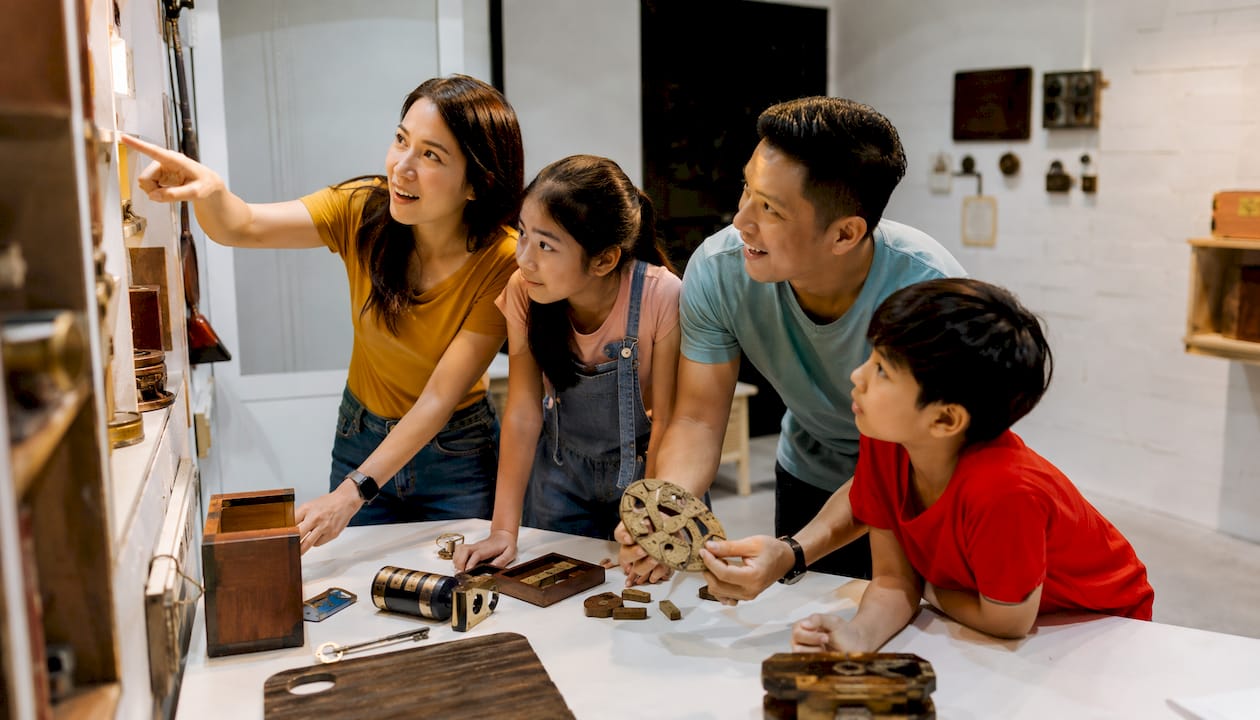
Yes, escape rooms are an effective tool for strengthening parent-child relationships and teamwork when you go in with a plan. A session at a place like Codebusters Escape Room in Colorado Springs can build executive function, sharpen communication, and create the kind of shared memory that sticks. Here’s what to do right now:
- Pick a kid-friendly room with a linear puzzle flow and a theme that won’t frighten younger players. Most commercial escape rooms, including Codebusters, use a 60-minute gameplay format.
- Adopt the CIO role (Chief Information Officer): organize clues, delegate tasks, and let your child do the solving.
- Plan a 5–10 minute debrief after the game to name what worked, celebrate contributions, and lock in the lessons.
Table of Contents
- How do escape rooms shape parent-child dynamics?
- What’s the right parental role during the game?
- How do you pick the right room for your family?
- What in-room strategies actually strengthen teamwork?
- How should you debrief after the game?
- What should you expect on the day?
- Why Codebusters Escape Room fits the family-bonding playbook
- Key Takeaways
- The part most parents get wrong
- Ready to book a family session at Codebusters Escape Room?
- Useful sources and further reading
How do escape rooms shape parent-child dynamics?
Escape rooms build teamwork by creating “shared attention” moments, the kind where both parent and child are locked onto the same problem at the same time. That shared focus is rare in daily life and research supports its role in building trust, communication, and resilience away from screens.
Here’s what’s actually developing under the surface:
- Executive function: Puzzles that build on prior clues demand working memory and task-switching. Kids must hold earlier information in mind while processing new details, a core executive function skill that transfers directly to school and daily planning.
- Patience and resilience: The ticking clock creates real pressure. When a child tries an approach that fails and tries again, that’s perseverance being practiced in real time, not lectured about.
- Collaborative communication: Escape rooms reward narrating your thinking out loud. A child who says “I found something over here” is practicing exactly the kind of verbal sharing that makes teams function.
- Observational skills: Kids are naturally strong searchers. Their lower eye level and different perspective often surface clues adults walk right past.
Watch for these in-room signals: your child spots a clue near the floor, narrates what they’re trying, or corrects your interpretation of a puzzle. Each one is a developmental win worth noticing.
What’s the right parental role during the game?
The most effective parent in an escape room acts as a Chief Information Officer, not the lead solver. That means organizing clues on a table, delegating specific tasks to each child, and validating every contribution, even the ones that don’t pan out. The Alpha Parent trap is grabbing the lock, working out the combination yourself, and moving on. It’s fast. It also erases the entire bonding value of the session.
Do this:
- Ask guiding questions instead of giving answers (“What do you notice about those numbers?”)
- Hand clues to your child first and wait before commenting
- Repeat your child’s idea back to the group so everyone hears it
- Act on your child’s suggestion before offering your own
Avoid this:
- Solving puzzles while your child watches
- Correcting their approach mid-attempt without letting them finish
- Taking over when time pressure rises
Sample prompts to use in the room:
- “What does this remind you of?”
- “You found that. What do you think it opens?”
- “I’m not sure. What would you try first?”
Bidirectional communication, listening to and acting on your child’s idea, signals that their perspective genuinely matters. That’s what builds trust, not the escape.
Pro Tip: Ask for a hint the moment energy dips, not after frustration sets in. Game guides are allies, and a well-timed hint keeps morale high and the bonding intact. Escaping unassisted is a nice bonus, not the goal.
How do you pick the right room for your family?
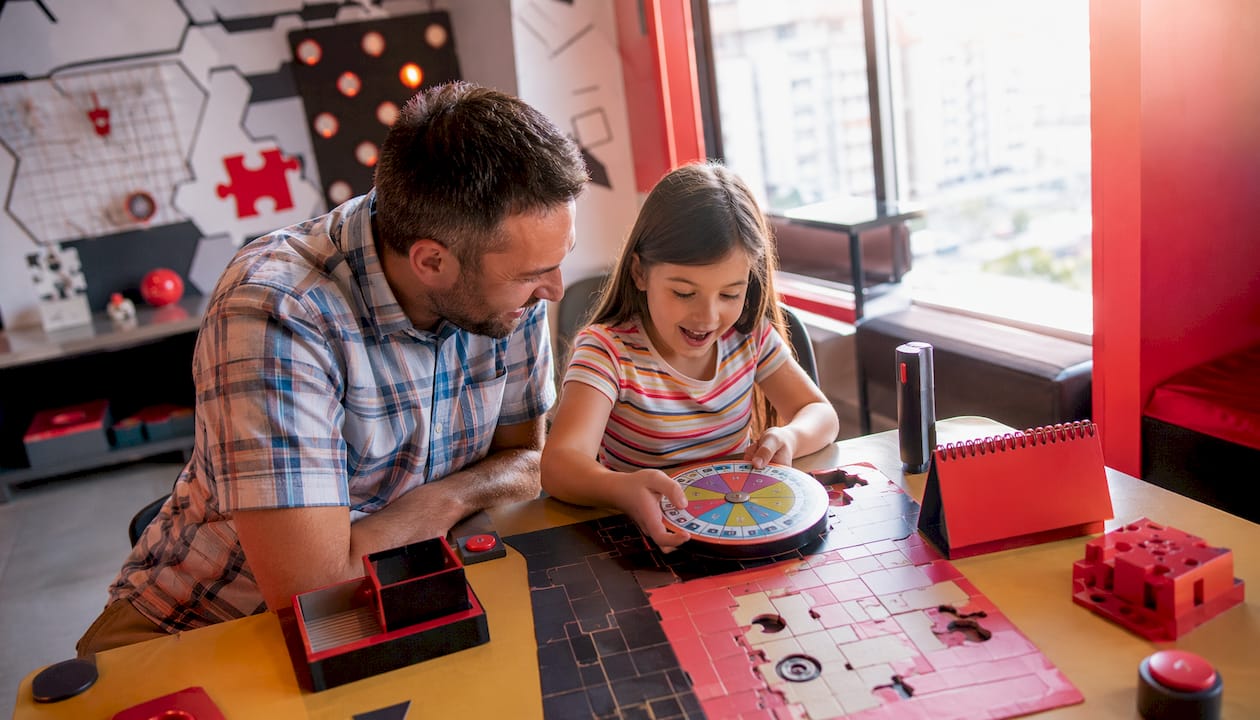
Start with a private booking. Mixing your family into a public group with strangers changes the dynamic entirely and reduces the space for child-led solving. Linear rooms are better for families because the whole group works on one puzzle at a time, keeping everyone together instead of splitting into corners.
Room selection checklist:
- Theme is age-appropriate (no horror, graphic content, or intense jump scares for younger kids)
- Difficulty is rated beginner or family-friendly
- Puzzle flow is linear, not branching
- Private booking is available
- Staff hint policy allows multiple hints without penalty
- Venue can adjust tone or skip scary elements on request
The recommended age sweet spot for full puzzle engagement is roughly 8–14 years. Younger children still contribute meaningfully, especially as searchers, but they’ll need more parental scaffolding on logic-heavy puzzles.
Codebusters Escape Room offers several themed rooms worth considering. “Stranger 80’s” works well for families with older kids who enjoy pop-culture references. “Past to the Future” suits groups that want a narrative-driven adventure. “Flight of Deception” is a stronger fit for teens and adults comfortable with a higher difficulty. When booking, mention your children’s ages so staff can guide you to the right room and flag any elements to watch for.
What in-room strategies actually strengthen teamwork?
Assign roles before the clock starts. Four roles that work well for families:
- Searcher (usually the child): scans the room for clues, especially low surfaces and unusual objects.
- Communicator: calls out discoveries to the group and keeps everyone updated.
- Recorder: holds clues, codes, and notes in one place so nothing gets lost.
- Lock-handler: tests combinations and mechanisms when the group agrees on a solution.
Rotate roles every 15–20 minutes so each child gets a turn at the communicator and recorder positions. Those two roles build the most transferable skills.
Prompts that guide without solving:
- “We have three clues. Which one do you want to start with?”
- “You noticed that earlier. Does it connect to this?”
- “What’s the one thing we haven’t tried yet?”
For the final 10–15 minutes, shift to a tighter loop: one puzzle at a time, group consensus before attempting, and a hint request if you’ve been stuck for more than three minutes. Protecting group morale in the final stretch matters more than finishing clean. Check out mixed-age group tips if your family spans a wide age range.
How should you debrief after the game?
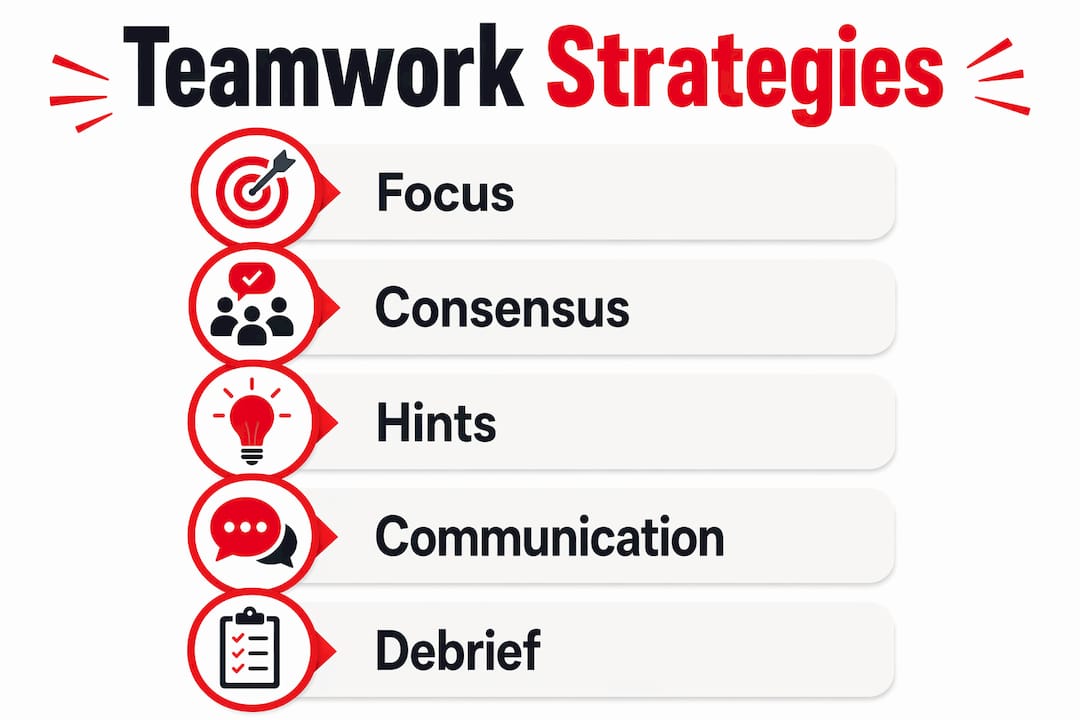
A 5–10 minute debrief immediately after the session is where the real learning gets locked in. Don’t skip it because you’re hungry or tired.
Debrief questions that work:
- “What’s one thing you noticed that helped us?”
- “Who found the clue that got us unstuck?”
- “What would we do differently next time?”
- “What was your favorite moment?”
Run a quick “favorite moment” round-robin where each person names one specific thing they’re proud of. This validates individual contributions and gives quieter kids a guaranteed moment to speak.
To extend the learning into daily life, try small follow-up activities at home: assign roles for a shared task like cooking dinner or planning a weekend trip, then debrief afterward using the same questions. These screen-free activities reinforce the same communication habits the escape room introduced.
What should you expect on the day?
| Element | Details |
|---|---|
| Session length | 60 minutes (standard for most commercial escape rooms) |
| Total time needed | Plan for 75–90 minutes including briefing, gameplay, and debrief |
| Recommended ages | 8–14 for full engagement; younger children contribute with scaffolding |
| Booking type | Private booking strongly recommended for family groups |
| Safety | Staff monitor rooms; doors open on request at any time |
Arrive 10–15 minutes early. Use that time for a short pre-brief with your kids: explain the roles, set the expectation that hints are allowed and smart, and remind everyone that finishing is a bonus, not the measure of success. That five-minute conversation reduces in-room conflict noticeably.
For accessibility, ask the venue about physical constraints in specific rooms. Most commercial rooms have clear exits and staff available throughout.
Why Codebusters Escape Room fits the family-bonding playbook
Codebusters Escape Room is a veteran and family-owned business with two Colorado Springs locations, and that ownership background shows up in how the rooms are designed and staffed.
Key features for families:
- Private bookings available so your group works without strangers
- Themed rooms including “Past to the Future,” “Stranger 80’s,” “Flight of Deception,” and others suited to different ages and difficulty preferences
- Staff hint support that keeps the experience positive rather than punishing
- Award-winning rooms and a client blog with tips, selection guides, and family-focused resources
- Gift vouchers for birthdays, holidays, or spontaneous family outings
Key Takeaways
Escape rooms work best for parent-child bonding when parents adopt the CIO role, choose a private linear room, and spend five minutes debriefing afterward.
| Point | Details |
|---|---|
| Choose the right room | Pick a linear, private, family-friendly room rated for your child’s age group (8–14 is the sweet spot). |
| Be the CIO, not the solver | Organize clues, delegate tasks, and let your child experience the reward of solving. |
| Use hints freely | Request a hint when energy drops; momentum and morale matter more than escaping unassisted. |
| Debrief for five minutes | Ask what each person noticed and celebrate specific contributions to lock in the learning. |
| Book with Codebusters Escape Room | Private themed rooms, veteran-owned staff support, and Colorado Springs locations make it a practical first choice for families. |
The part most parents get wrong
The conventional wisdom says escape rooms are just fun. They are, but treating them as pure entertainment is the reason most families leave without any lasting benefit. The bonding happens in the structure you bring, not the room itself.
Parents who walk in planning to “let the kids have fun” often drift into solving mode the moment the clock pressure hits. That’s understandable. It’s also the exact moment the child stops being a teammate and becomes an observer. The CIO approach isn’t about holding back. It’s about redirecting your instinct to fix things into an instinct to ask questions. That shift is harder than any puzzle in the room, and it’s worth practicing.
At Codebusters Escape Room, the private booking format and attentive staff make it easier to stay in that facilitative role. When your group has the room to yourselves and a game guide ready to help, you can focus on your child instead of managing strangers or racing to keep up.
Ready to book a family session at Codebusters Escape Room?
Codebusters Escape Room gives families in Colorado Springs a private, themed space to practice exactly the teamwork and communication skills this guide covers. No strangers in your room, no pressure to perform, and staff who can adjust the experience for your group’s ages and comfort level.
Choose your room, request a private booking, and mention your kids’ ages when you book so the team can point you to the best fit. Gift vouchers are also available if you want to give a family session as a present. Head to codebustersescaperoom.com to check availability and reserve your session.
Useful sources and further reading
- Escape Room Family Fun For All Ages — developmental benefits and observational strengths of children in escape rooms
- A Parent’s Guide to the Escape Game — CIO approach, room selection, and age guidance
- Listen to Your Kids in the Escape Room — hint strategy and keeping morale positive
- Our Escape Room Playdate Review — executive function and resilience in practice
- Family Fun: A Kid-Friendly Escape Room Experience — pre-game preparation and child-led solving
- UNICEF: Parent-Child Attachment — foundational research on bonding and child development
- Annual Review: Bidirectional Communication in Child Development — why acting on a child’s idea builds trust
- Codebusters Escape Room Blog: Educational Escape Rooms — learning outcomes and family-focused room guidance
- Codebusters Escape Room Blog: Families and Teamwork — strategies for family teamwork in escape rooms
For room-specific questions, contact Codebusters Escape Room staff directly or visit the booking page for current availability.