Escape Room Sibling Rivalry Explained for Families
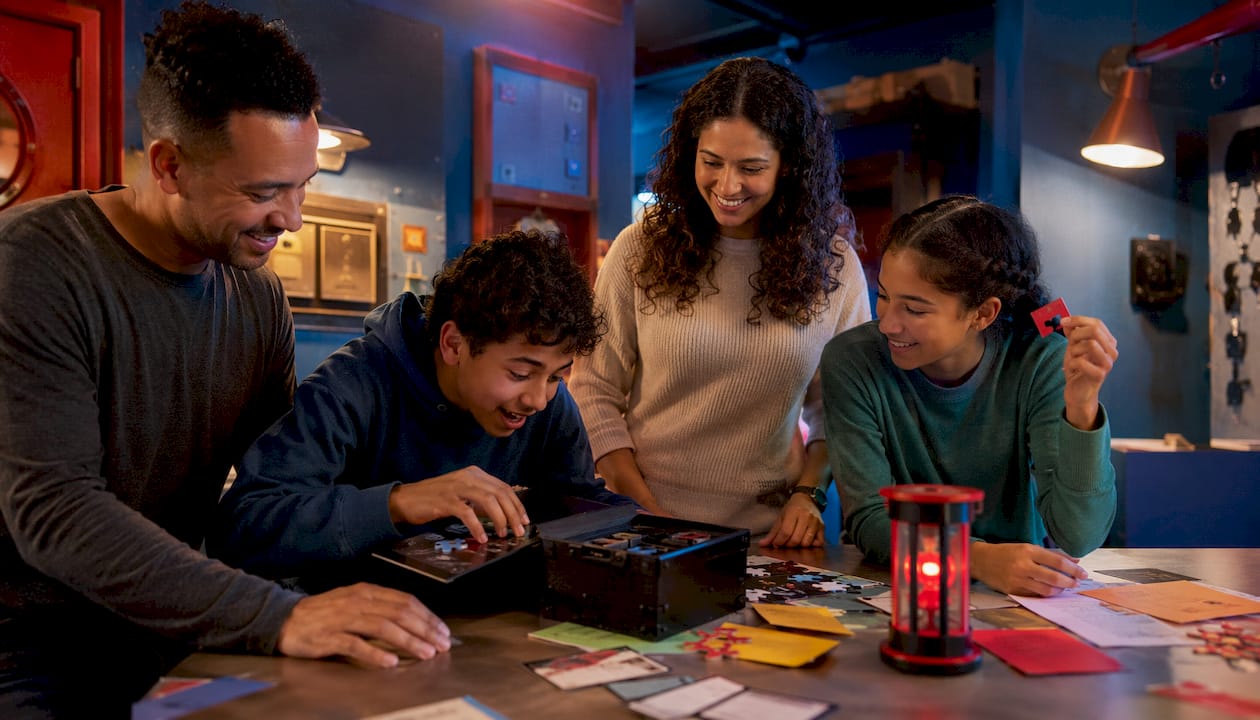
“Escape room sibling rivalry explained” covers two very different things. Most often, the phrase points to an online point-and-click puzzle game — titles like 123bee’s “Sibling Rivalry” and the CafeCafe Games version, where one brother locks the other inside a house to win a rare comic book. But families searching the phrase are usually dealing with something messier: real tension between siblings inside a live escape room, triggered by the clock, competing ideas, and years of shared history.
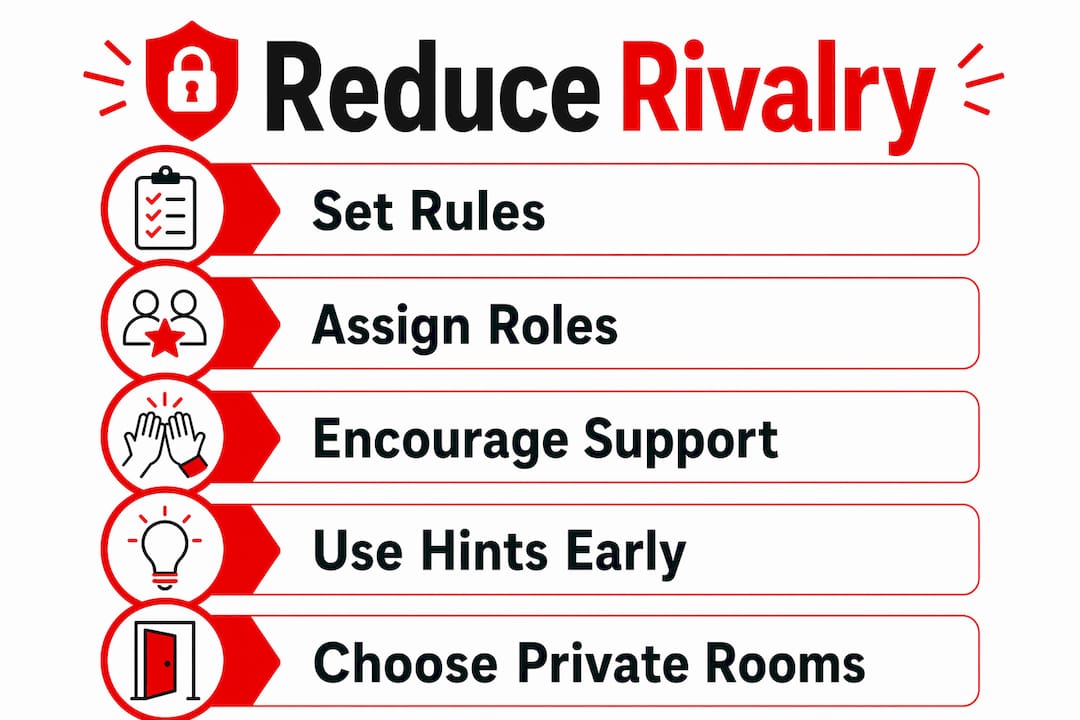
The single best step before any live booking? Assign roles before you walk in the door. Decide who searches, who solves logic puzzles, who manages found items, and who talks to the game master. That one conversation prevents most control struggles before they start.
This article covers both meanings and gives you practical, operator-backed guidance for booking, preparing, and playing.
- The phrase most often refers to an online game, not a live-room problem
- Live sibling rivalry in escape rooms is driven by clock pressure and unclear role assignments
- Private bookings and pre-game role assignment are the two most effective fixes
- Codebusters Escape Room offers private family rooms and race formats in Colorado Springs
Table of Contents
- What “escape room sibling rivalry” actually means
- Why sibling rivalry crops up in live escape rooms
- How to reduce rivalry before you book or enter the room
- What to do during the game when tension starts
- When siblings shouldn’t play together
- What to expect for session length and pricing
- Codebusters Escape Room’s tips from running family sessions
- Key Takeaways
- Why families keep coming back despite the rivalry
- Private family rooms and race formats at Codebusters Escape Room
- Useful sources
What “escape room sibling rivalry” actually means
The phrase has two lives online. The first is purely a game title. GameKB lists 123bee’s Escape: Sibling Rivalry as a classic point-and-click room-escape game: two brothers want the same rare comic book, one locks the other in the house, and you help the trapped sibling escape before the book sells out. CafeCafe Games and Games2Jolly host similar titles under the same name. People searching the phrase often land on these browser games and nothing else.
The second meaning is what families experience in a live escape room: interpersonal conflict that surfaces when siblings share a timed, high-pressure cooperative challenge. These are completely different problems with completely different remedies.
- Online game: a narrative puzzle title; no booking needed, no interpersonal stakes
- Live-room conflict: a real dynamic that affects enjoyment and success, fixable with preparation
- Why the distinction matters: if you’re booking a live session, the browser-game tips won’t help you
Why sibling rivalry crops up in live escape rooms
Clock pressure is the main accelerant. A 60-minute countdown turns ordinary disagreements into urgent power struggles. Siblings who already have established dominance patterns at home bring those patterns directly into the room, and the ticking timer makes every small dispute feel high-stakes.
Poor role assignment makes it worse. When nobody owns a task, two people grab the same clue, one person hogs the puzzle, and a third checks out entirely. Belittling or dismissing ideas causes the quieter sibling to disengage fast, which then frustrates the more vocal one. Physical room layout matters too: a single linear puzzle track forces everyone to crowd the same problem, which is a recipe for conflict.
- Clock pressure amplifies pre-existing family dynamics
- Clue hoarding and duplicate searching create friction and waste time
- Criticism and dismissal lead to disengagement, then escalation
- Linear puzzle rooms concentrate everyone on one task, increasing crowding and cross-talk
Pro Tip: Before you book, ask the operator whether the room uses parallel puzzle tracks or a single linear chain. Parallel tracks let siblings work independently and reduce crowding.
How to reduce rivalry before you book or enter the room
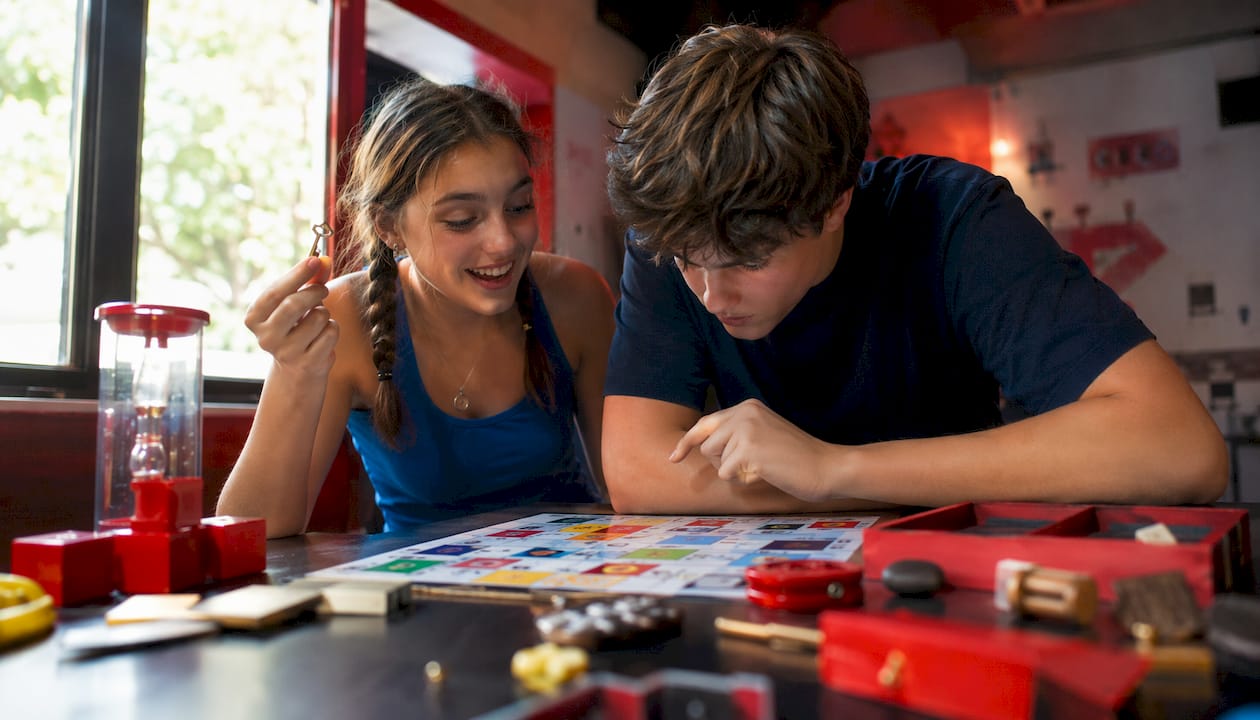
Booking choices matter more than most families realize. Private sessions remove strangers from the equation and let you set your own tone. Rooms with parallel puzzle tracks give siblings independent work streams. For mixed ages, choose a beginner or intermediate difficulty so younger players aren’t sidelined.
Pre-game role assignment by individual strength is the single most effective rivalry reducer. Decide at home, not in the lobby.
- Searcher: sweeps the room for hidden objects and calls out finds
- Puzzle solver: works logic, codes, and sequences
- Organizer: manages a visible inventory of every found item (prevents hoarding)
- Communicator: talks to the game master and tracks the timer
Set one rule before entering: encouragement only. No “that’s wrong,” no eye-rolls. Agree on when to ask for hints so that decision doesn’t become its own argument. For younger siblings, assign simple “find and hand” tasks so they stay included without slowing complex puzzle work.
Pro Tip: If one sibling is significantly more experienced, make them the Communicator rather than the Puzzle Solver. They still contribute, but they’re not dominating the hands-on work.
What to do during the game when tension starts
Stop the spiral early. The moment voices rise, pause, take three slow breaths, and restate the goal out loud: “We have 30 minutes. We need each other.” That reset costs ten seconds and saves five minutes of argument.
The fastest conflict resolver is the test-it rule: when two siblings disagree on a solution, let the one who proposed it test it immediately. A failed attempt gives everyone useful data and moves the group forward. Extended debate wastes far more time than a quick wrong try.
- Use the game master as a neutral arbiter, not a last resort. Request a structured hint to shift focus from blame to progress.
- Rotate who tries physical solutions (locks, panels, levers) so no one person dominates.
- Keep one person managing the inventory table at all times. Shout discoveries across the room rather than walking clues to each other.
- Split into sub-teams for parallel puzzles. Groups that work parallel tracks escape 40% more often than groups that huddle on one puzzle.
Pro Tip: Call for a hint before you feel stuck, not after. Early hints keep momentum and prevent the blame cycle that starts when a team stalls.
When siblings shouldn’t play together
Some combinations genuinely don’t work in a shared room. Recognize the red flags before you book.
- History of physical altercations during competitive games
- One sibling consistently dominates decisions and dismisses the other’s input
- Active, unresolved conflict in the days before the booking
- A previous escape room session that ended in a real argument
The fix isn’t canceling the trip. Book two private rooms and run a race: each sibling team works their own room simultaneously, and whoever escapes first wins. Game masters can coordinate the timing. This format channels competition productively and removes the forced-collaboration friction entirely. Alternatively, add a neutral adult facilitator to the group, or simply reschedule if tensions are high on arrival day.
What to expect for session length and pricing
Most live escape rooms run about an hour, with some venues offering longer sessions. Longer sessions reduce time pressure and give families more room to recover from a slow start without panic. For sibling groups, that extra buffer is worth asking about.
| Booking type | Typical duration | Notes for sibling groups |
|---|---|---|
| Standard public session | 60 min | Strangers may join; less control over group dynamics |
| Private room booking | 60 min | Full control over group; recommended for families |
| Multi-room race format | 60 min per room | Best for competitive siblings; channels rivalry productively |
| Party or group package | 60 min | Includes pre-game briefing time; good for larger families |
Private room flat rates vary by market and venue size. Confirm the cancellation and rescheduling policy before booking, especially for family plans where one sick child can derail the whole trip.
Groups that work on parallel puzzle tracks escape 40% more often than those that crowd a single puzzle — a strong argument for choosing rooms and booking formats that support split-team play.
Codebusters Escape Room’s tips from running family sessions
Codebusters Escape Room is an award-winning, veteran and family owned escape room operator in Colorado Springs. Running family groups across multiple themed rooms produces consistent patterns, and a few small choices make a measurable difference.
Designate an Organizer before the game master finishes the briefing. This person places every found item in one visible spot and tracks what’s been used. It eliminates the two biggest time-wasters: double-searching and arguing over who should try the next lock.
- Use the “test it” rule from the first disagreement: let the proposer try their idea immediately
- Ask the Game Guide for a hint when the group stalls, not as a defeat but as a tactical move
- For competitive siblings, ask about race formats at booking — Codebusters can advise on which rooms suit that format
- For mixed-age family groups, choose a room with beginner-to-intermediate difficulty and confirm the minimum age requirement
Pro Tip: Book a private room even if your group is small enough for a public session. The ability to set your own pace and tone is worth the difference in price for family bookings.
Key Takeaways
Sibling rivalry in live escape rooms is a role-clarity problem as much as a relationship problem — fix the structure before you enter, and most conflicts don’t start.
| Point | Details |
|---|---|
| Assign roles before entering | Designate Searcher, Puzzle Solver, Organizer, and Communicator at home, not in the lobby. |
| Use the test-it rule in-game | Let the proposing sibling test their idea immediately; a quick wrong try beats a long argument. |
| Parallel tracks reduce conflict | Groups working parallel puzzle tracks escape 40% more often than those crowding one puzzle. |
| Race format for competitive siblings | Two private rooms running simultaneously channels rivalry productively and removes forced collaboration. |
| Codebusters Escape Room | Private family rooms and race formats in Colorado Springs; book private for full group control. |
Why families keep coming back despite the rivalry
Here’s what most pre-game guides miss: the rivalry itself is often the memory. Families don’t remember the smooth sessions where everyone agreed. They remember the moment one sibling cracked the code everyone else had given up on, or the argument that turned into a breakthrough with two minutes left. Structured private rooms don’t eliminate that tension — they give it a productive channel.
The advice in this article isn’t about making escape rooms conflict-free. It’s about preventing the kind of conflict that ends the experience early or leaves someone feeling excluded. A little friction, well-managed, is actually part of what makes a family escape room session worth talking about afterward.
Private family rooms and race formats at Codebusters Escape Room
Families who’ve read this far know what they need: a private room, a pre-game role conversation, and a format that fits their group’s dynamic. Codebusters Escape Room’s themed rooms in Colorado Springs are built for exactly that. Private bookings give your family full control over pace, tone, and group composition. For siblings who compete better than they cooperate, ask about race formats when you book.
Gift vouchers are available if siblings prefer separate experiences or if you want to give the option as a present. Party packages work for larger family groups who want a structured event with a pre-game briefing built in. Every room is private by default when you book that way — no strangers, no outside pressure, just your family and the clock.
Book your private family session at Codebusters Escape Room and tell them your group’s age range and dynamic when you reserve. They’ll point you to the right room.
Useful sources
- Escape: Sibling Rivalry — GameKB: the 123bee point-and-click game listing with full narrative description
- 123bee Sibling Rivalry Escape — Games2Jolly: aggregator listing confirming the online-game origin
- Escape: Sibling Rivalry — CafeCafe Games: another hosted version of the sibling rivalry point-and-click title
- How to Beat an Escape Room: 13 Expert Tips — Escape Experience Blog: game master data on parallel tracks, role assignment, and escape rates
- Escape Room Teamwork Strategies for Families — Magic Escape Rooms: pre-game role assignment guidance for family groups
- Expert Tips: How to Solve Escape Rooms — The Codex: the test-it rule and conflict-resolution tactics from experienced players
- Parent’s Guide to The Escape Game — Screenwise: operator guidance on belittling, inclusion, and using the game master
- Escape rooms for families: better teamwork and fun: Codebusters’ own guide to mixed-age family bookings
- Escape room mixed-age group tips for every family: Codebusters’ checklist for groups with younger players