Family Game Night Ideas for All Ages and Skill Levels
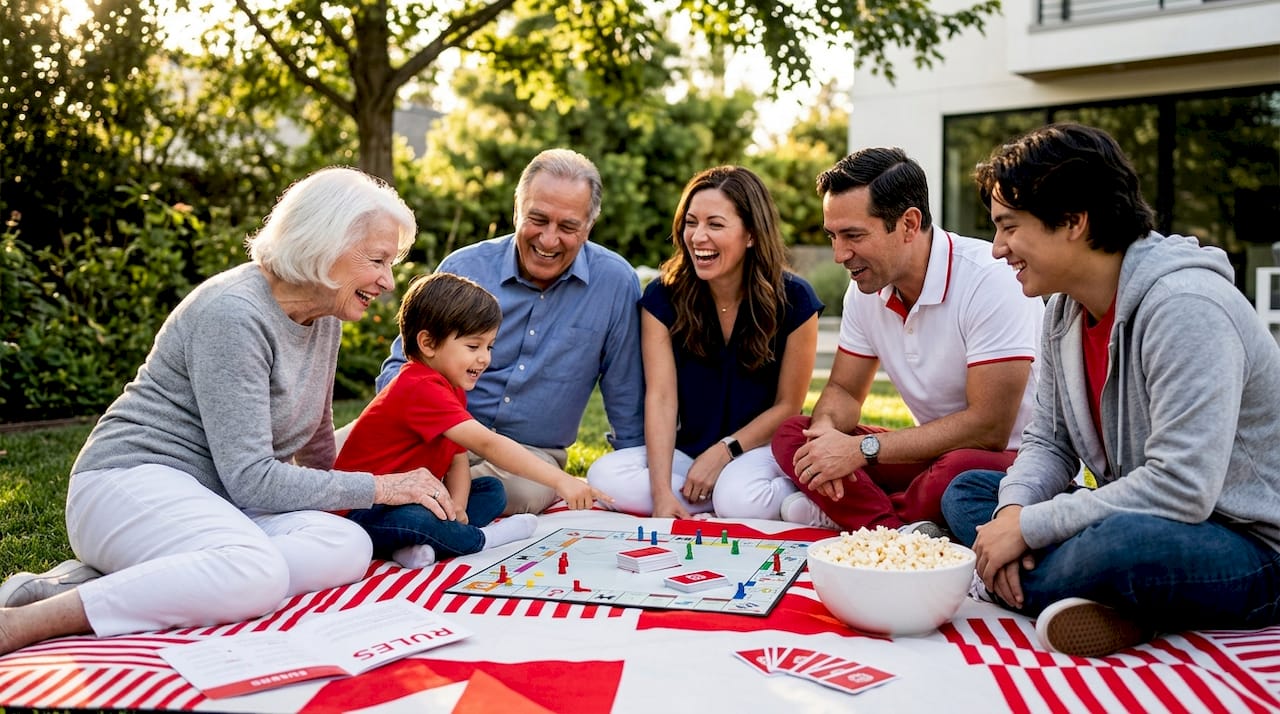
Picking the right games for your crew should be fun, not stressful. Yet most families hit the same wall: the 7-year-old wants Candy Land, the teenager is bored before the box is open, and Grandma has never heard of the game everyone else swears is “super easy.” Great family game night ideas solve that problem before it starts. This article gives you a practical framework for choosing games, a curated list of proven favorites, and planning tips that make the whole night feel effortless, including some ideas that go well beyond the usual board game stack.
Table of Contents
- Key takeaways
- 1. How to choose the right family game night ideas
- 2. Best board games for families that work across all ages
- 3. Interactive and active games that keep energy high
- 4. Planning the perfect game night from start to finish
- 5. Creative game night themes and non-traditional ideas
- Our take on making game night a real family tradition
- Take your game night beyond the living room
- FAQ
Key takeaways
| Point | Details |
|---|---|
| Match game to group first | Choose games based on your actual player count and youngest player’s age, not the box maximum. |
| Structure your night in three acts | A warm-up, main game, and wind-down keeps energy steady and everyone engaged from start to finish. |
| Prep snacks in advance | Finger foods prepared ahead of time reduce mess and keep the game moving without interruptions. |
| Mix game types for variety | Rotating between board games, active games, and trivia prevents boredom and suits different moods. |
| Connection beats competition | The best game nights prioritize laughter and togetherness over winning or following every rule perfectly. |
1. How to choose the right family game night ideas
Before you pull anything off the shelf, spend two minutes answering three questions: How many people are playing? What is the age of the youngest player? And how long does everyone actually want to play tonight?
Those answers narrow your options faster than any review site. A game listed for “2-8 players” is almost never as fun at 8 players as it is at 4. Match games to your exact headcount rather than the maximum on the box. For mixed-age groups, look for games where mixed-age play mechanics let younger kids feel clever and older players stay genuinely engaged, not just humoring the little ones.
Timing matters more than most families realize. According to research on recommended game night duration, 60 to 90 minutes works for most families, 45 minutes is better for younger children, and teens can comfortably go up to 2 hours when the game is holding their interest. Overstaying your welcome with a single game is one of the fastest ways to kill the mood.
Complexity is the other big lever. Calibrate to the least experienced player at the table, not the most experienced. A game that leaves one person confused and quiet for 20 minutes is not a good group experience for anyone.
Pro Tip: Start with a 10 to 15 minute warm-up game before your main event. Something quick and familiar builds energy and gets everyone laughing before the real challenge begins.
2. Best board games for families that work across all ages
These games have earned their spots on family tables for good reasons. Each one teaches in minutes, plays in under an hour, and holds attention across a wide age range.
-
Kingdomino. One of the best gateway games available. Kingdomino’s rule explanation takes under three minutes, and the game itself runs 15 to 25 minutes. Players draft domino tiles to build kingdoms, and the visual nature of the puzzle makes it accessible to kids as young as 6 while giving adults a real strategic decision to wrestle with. Supports 2 to 4 players.
-
Uno. Nearly zero learning curve. Uno is perfect as a warm-up game or a wind-down choice. The color and number matching keeps young kids fully involved, and the action cards create enough chaos to keep teens amused.
-
Spot It (also called Dobble). Every card in the deck shares exactly one symbol with every other card. The result is a fast-matching game that plays in about 15 minutes and works with ages 4 and up. Nobody sits out. Nobody zones out.
-
Apples to Apples. Players match noun cards to a rotating judge’s adjective card. The humor comes naturally, and because there are no “wrong” answers, every player at the table has a real chance to win a round.
-
Codenames. Two teams race to find their agents using one-word clues. This one skews older (ages 10 and up), but when the group is right, it produces some of the most memorable moments of any game night. The team dynamic means quieter players still feel included.
-
Pandemic. A cooperative game where every player is on the same team, working together to stop global disease outbreaks. Cooperative games are worth including in any family game night rotation because they eliminate the sting of losing against a sibling or parent. Everyone wins or loses together.
-
Sequence. Cards and a game board combine in a way that bridges the gap between simple card games and more complex strategy games. Works well for ages 7 and up.
Pro Tip: When introducing any new game, use a theme-first teaching approach and explain the goal and the “why” in under five minutes before touching the mechanics. Players engage faster when they understand what they are trying to accomplish.
3. Interactive and active games that keep energy high
Sitting at a table for two hours is nobody’s idea of a party, especially with kids in the mix. Building some movement into your game night suggestions makes the whole evening more dynamic and gives everyone a chance to shake off screen fatigue.
- Charades. No equipment needed. Divide into teams, act out words or phrases, and watch even the most reserved family members come alive trying to silently mime “elephant” or “baking a cake.”
- Twister. A classic for good reason. Twister works with kids as young as 5, takes about 90 seconds to explain, and produces instant laughter. For smaller spaces, shrink the playing area and allow players to use hands only.
- Scavenger hunts. A DIY family game night option that costs almost nothing. Write clues tailored to your home, hide them throughout the house, and let kids and adults race to find them. You can theme the clues around holidays, family history, or inside jokes for extra connection.
- Minute-to-Win-It challenges. Set a timer for 60 seconds and challenge players to stack Oreos on their forehead, move a cotton ball across a table using only a spoon, or build the tallest tower from index cards. These challenges are hilarious and genuinely competitive for all ages.
- Balloon keep-away. Simple, physical, and works in any living room. Keep a balloon off the ground as a team or compete to be the last one to let it fall. Adaptable for very young kids by making it purely cooperative.
Pro Tip: Active games for younger children work better when you adapt the rules slightly so nobody feels left out. Let the 5-year-old have an extra turn in Minute-to-Win-It or a head start in a scavenger hunt.
4. Planning the perfect game night from start to finish
Good planning is what separates a fun night from a frustrating one. You do not need to overthink it, but a little structure goes a long way.
Timing and pacing
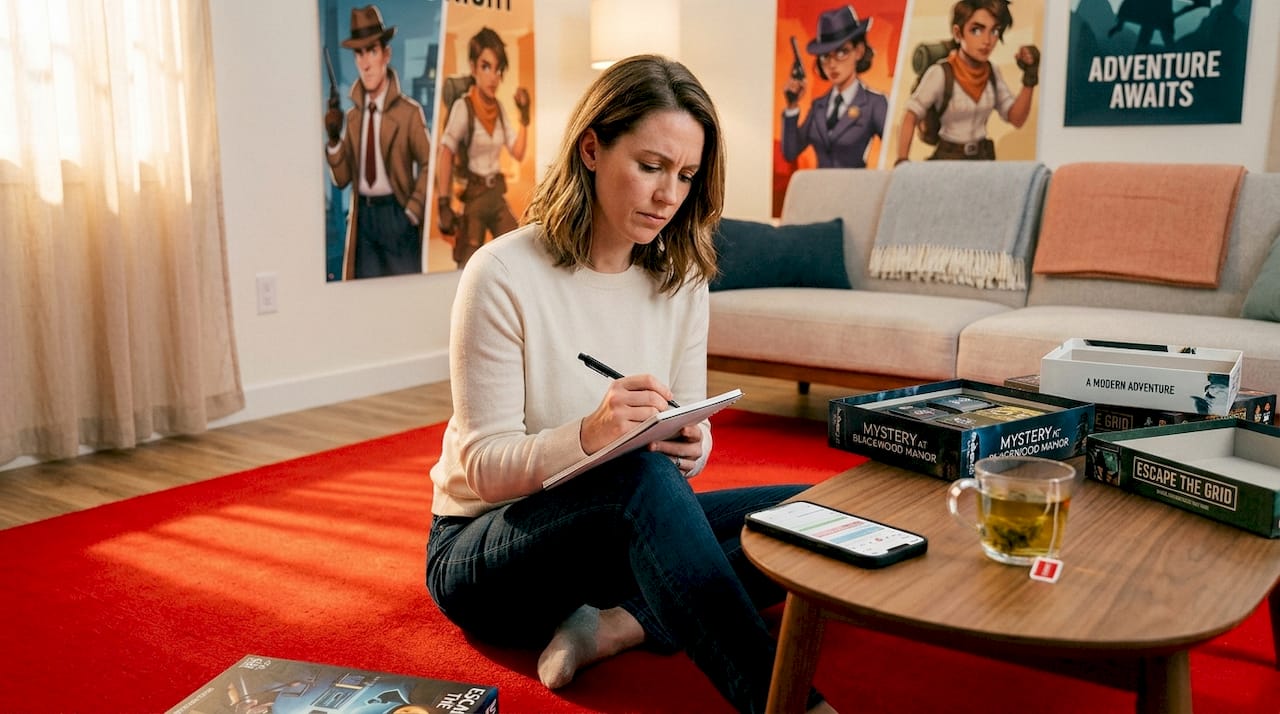
Think of your game night as having three acts. The first 15 minutes are arrival and warm-up, something low-stakes and familiar. The main event runs in the middle, with your primary game or two. The final 20 to 30 minutes are wind-down, usually a lighter game or just conversation. This three-act game night structure keeps energy from peaking too early or crashing before the night is over.
Read the room constantly. If interest is dropping, call a break or switch games before anyone checks their phone. Proactive pivots keep the energy positive.
Snacks and drinks
For gatherings lasting more than an hour, plan on 4 to 6 ounces of snacks per person and prep about 80% of your food two to four hours before guests arrive. Finger foods are your best friend here. Think pretzels, grapes, cheese cubes, and popcorn in individual cups.
To protect your games, enforce a finger food only policy and keep all drinks and food at least 12 inches away from the game table. Replacing a water-logged Pandemic board is nobody’s idea of a good follow-up.
Lighting and setup
Swap harsh overhead lights for warm lamps placed in two or three spots around the room. Research into comfortable game night lighting shows that multiple cozy pockets of warm light keep players comfortable and focused for longer. Make sure everyone can see the game board clearly without squinting.
| Element | Recommendation |
|---|---|
| Session length | 60 to 90 minutes for most families |
| Snack quantity | 4 to 6 ounces per person |
| Food distance from board | At least 12 inches away |
| Lighting | Warm lamps, multiple spots in the room |
| Screen policy | Phones face down or in another room |
Pro Tip: Put phones face down or in a basket near the door. It sounds strict but it works. Players who are not distracted by notifications actually enjoy the games more.
5. Creative game night themes and non-traditional ideas
If your family has done the standard board game rotation enough times that everyone knows which chair is “lucky,” it is time to shake things up. Rotating game types and formats is one of the most effective ways to keep game nights feeling fresh.
Here are creative game night themes that go well beyond pulling a box off the shelf:
-
Family trivia night. Build a trivia game around your own family history: the year parents met, the city where Grandpa was born, the name of the first family pet. It is personal, hilarious, and produces stories that everyone will retell. Mix in pop culture categories or local Colorado Springs history for variety.
-
Murder mystery dinner. Print free murder mystery scripts online, assign characters, and let the drama unfold over dinner. Works best for ages 10 and up and takes about two hours total.
-
Escape room at home. Create DIY puzzle chains using combination locks, coded messages, and clues hidden around the house. If you want the full, professionally designed version, a family escape room experience takes the concept to a completely different level and is worth doing at least once.
-
Holiday-themed games. Adapt any existing game to a holiday theme. Halloween Uno with costume-based house rules, Christmas charades using holiday movies only, or a Fourth of July scavenger hunt using patriotic clues.
-
Collaborative storytelling. One person starts a story with one sentence, and each player adds the next line. No materials needed. Wildly creative and surprisingly funny.
| Theme | Best for | Prep time |
|---|---|---|
| Family trivia night | All ages | 30 minutes |
| Murder mystery | Ages 10 and up | 1 to 2 hours |
| DIY escape room | Ages 8 and up | 2 to 3 hours |
| Holiday-themed games | All ages | 15 minutes |
| Collaborative storytelling | All ages | Zero |
Our take on making game night a real family tradition
I have hosted more game nights than I can count, and the ones people remember almost never had the most impressive game selection. What made them stick was the feeling in the room.
What I have learned from watching families play together is that flexibility is everything. When a 6-year-old knocks the pieces off the board for the third time, the right move is not to restart with a lecture on rules. It is to laugh and keep going. The goal of a great family game night is connection, not a flawless run-through of the rulebook.
My honest take: the families who build strong game night traditions are the ones who make it a consistent ritual, not a perfect event. Same night every month, same snacks everyone loves, a rotating host if the kids are old enough. Those embedded rituals are what turn a Tuesday night at home into something kids talk about as adults.
Start small. Pick one game you already own. Order the pizza. Turn the phones off. The memories build from there.
— CodeBusters
Take your game night beyond the living room

At Codebustersescaperoom, we see families every week discover that some of the best bonding happens when everyone is working together under pressure, laughing through a clue that makes no sense, and cheering when someone finally cracks the code. Our themed escape rooms in Colorado Springs, including “Stranger 80’s,” “Past to the Future,” and “Flight of Deception,” are designed for exactly that kind of shared experience. Groups of different ages and skill levels all find a role to play. If you are ready to take your family game night to the next level, book a private room and see what happens when the stakes are real and the teamwork actually matters. Gift vouchers are available too.
FAQ
How long should a family game night last?
Most families enjoy game nights that run 60 to 90 minutes. Keep it to 45 minutes for younger children, and stretch to 2 hours for teens only if engagement stays high.
What are the best board games for mixed-age families?
Kingdomino, Spot It, Uno, and Pandemic all support mixed-age groups well because they balance simple rules with enough depth to hold older players’ attention.
How do I keep everyone engaged during game night?
Structure your night with a warm-up game, a main event, and a lighter wind-down. Reading the room and switching games early when energy drops is the single most effective move a host can make.
What snacks work best for game night?
Finger foods like pretzels, grapes, cheese cubes, and individual cups of popcorn work best. Plan on 4 to 6 ounces per person and keep all food away from the game table to protect your games.
Are escape rooms a good idea for family game night?
Yes. Escape rooms offer a cooperative group experience that no board game fully replicates. They work for mixed-age groups and create the kind of shared memories that become family stories.