Leadership Skills for Teams: Colorado Springs Escape-Room Runbook
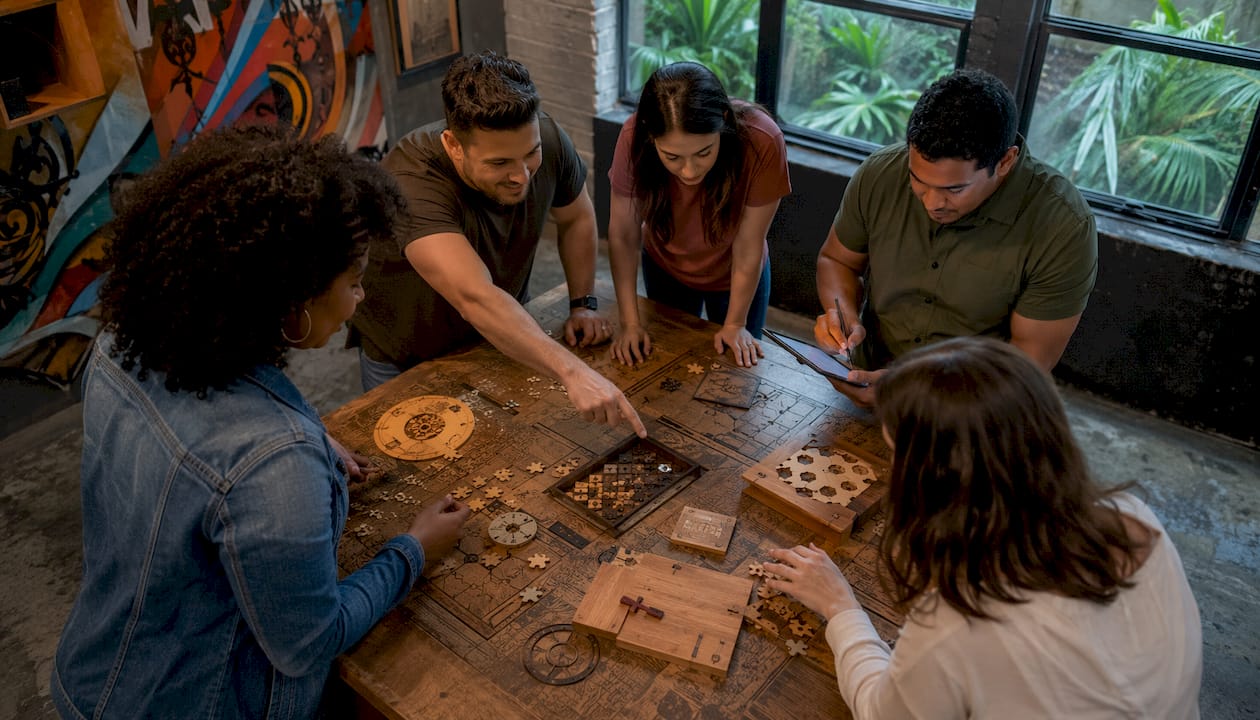
One escape-room session can sharpen seven high-impact leadership skills when you run it with intention. The target skills: communication, delegation, decision-making, situational awareness, adaptability, trust-building, and conflict management. The simplest runbook: pre-brief (10 min) → assign roles (leader, timekeeper, communicator, observers) → about an hour game → structured debrief (20–30 min) → 30-day follow-up action. Leadership skills improve with deliberate practice and feedback, and escape rooms compress that cycle into a single afternoon.

Before you arrive, assign your observers. Their job is to watch, not play. Give each observer one skill to track.
Quick observation checklist for the session:
- Communication: Are instructions passed clearly, or does information get lost between players?
- Delegation: Does the designated leader assign tasks, or try to solve every puzzle alone?
- Decision-making: When the team hits a dead end, who calls the pivot and how fast?
- Adaptability: How does the group respond when an early assumption turns out to be wrong?
- Trust-building: Do quieter team members get heard, or does one voice dominate?
Pro Tip: Assign roles before arrival so the designated leader walks in with a mandate, not an awkward first-minute negotiation. It makes the leadership behaviors visible from minute one.
Gallup’s CliftonStrengths research recommends matching roles to natural strengths. Run a quick strengths conversation in your pre-brief: who’s analytical, who’s relational, who’s decisive under pressure? Then assign accordingly. The Institute of Directors makes the point plainly: subject-matter expertise doesn’t automatically translate to leadership. Delegation is a learned skill, and the escape room is where you practice it without real stakes.
For the debrief, skip vague impressions. Leadership IQ research shows most leaders don’t change behavior without structured, specific feedback. Ask observers to share one concrete moment they recorded per skill. Then ask the group: “What would you do differently in the first five minutes?” and “Who made a decision that changed the outcome?” Schedule a 30-day check-in to see which behaviors transferred back to the office. Behavior-focused questions at 30 and 60 days track real transfer far better than a post-game survey alone.
Table of Contents
Codebusters Escape Room brings leadership training to Colorado Springs
Codebusters Escape Room is a veteran- and family-owned business with two Colorado Springs locations, and its private-room format is built for exactly this kind of focused group session. You get the room to yourselves, no strangers, no distractions, and space to run your pre-brief and debrief on-site.
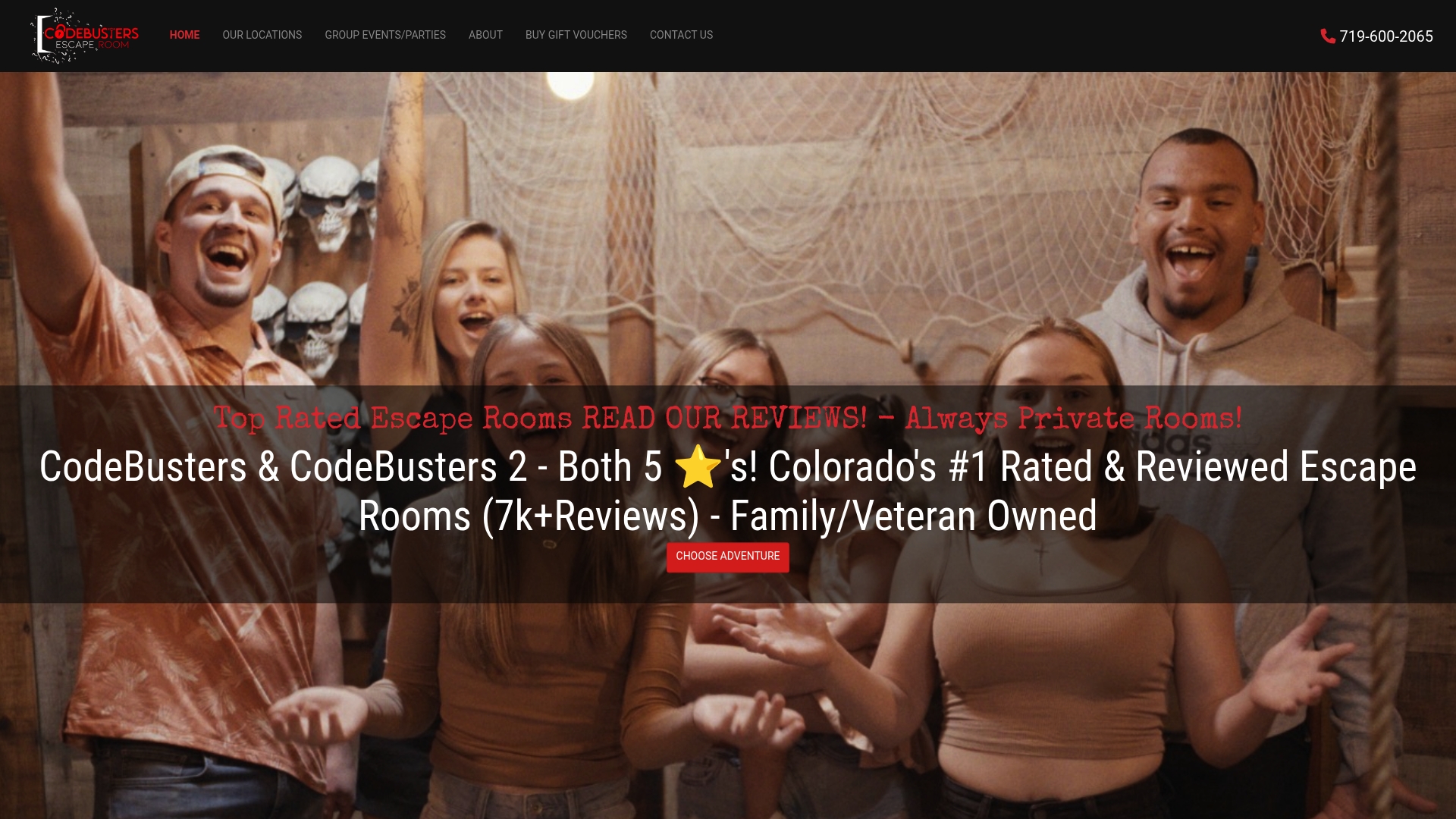
Three rooms map cleanly to specific skill emphases. Past to the Future puts the team inside a time-travel narrative that demands constant situational awareness and rapid decision-making as clues shift the story. Stranger 80’s leans hard on communication and trust: the puzzles reward teams that share information freely rather than hoarding it. Flight of Deception is the highest-pressure option, designed for groups that want to stress-test delegation and conflict management under a ticking clock. For leadership development for groups, Flight of Deception is the room that surfaces the most observable behaviors.
Practical logistics: most corporate groups run best at several players per room, as discussed in corporate team building Chicago activities that actually work. Difficulty scales by room, so first-time groups often start with Stranger 80’s before moving to harder rooms on a second booking. Budget roughly an hour and a half total: time for pre-brief, game, and debrief. Codebusters Escape Room is ADA-accessible; confirm any specific accessibility needs when you book. Pricing varies by group size and room; check availability and book your session directly on the site.
Key Takeaways
A single escape-room session develops seven concrete leadership skills when paired with role assignments, observer notes, and a structured debrief.
| Point | Details |
|---|---|
| Seven target skills | Communication, delegation, decision-making, situational awareness, adaptability, trust-building, and conflict management. |
| Runbook structure | Pre-brief → role assignment → about an hour game → about a half-hour debrief → 30-day follow-up. |
| Observer role | Assign one skill per observer before the session; their notes drive the debrief. |
| Feedback cadence | Behavior-focused questions at 30 and 60 days track real skill transfer back to the workplace. |
| Codebusters Escape Room | Private rooms at two Colorado Springs locations; Past to the Future, Stranger 80’s, and Flight of Deception each target distinct leadership skill sets. |