90 Day Team Offsite Agenda for Organizers: Decision First Templates

A productive team offsite agenda is built around one primary decision and a 90-day follow-through plan, not a packed schedule of activities. Time-blocking matters less than what each block is designed to force: a real choice, owned by a real person, due on a real date. Everything below, from one-day templates to the 90-day plan, exists to protect that single idea from getting buried under icebreakers and status updates.
Table of Contents
- What Should a Team Offsite Agenda Actually Decide?
- How Do You Design an Agenda That Forces Real Decisions?
- Time-Blocked Offsite Agenda Templates You Can Copy
- Who Should Run Each Session, and What Do They Need?
- What Does an 8 to 12 Week Offsite Planning Timeline Look Like?
- How Do You Pick Activities That Actually Reinforce Your Outcome?
- What Happens After the Offsite Ends?
- What Organizers Get Wrong About Offsite Agendas
- Add a Reinforcing Activity to Your Offsite Agenda
- Sources
- FAQ
What Should a Team Offsite Agenda Actually Decide?
Before you touch a template, answer three questions: what decision this offsite must produce, what conversation your team has been avoiding, and what needs to be different in 90 days. Skip this step and you’ll end up with an agenda that’s really just a long meeting with better snacks.
Harvard Business Review’s research on offsite design backs this up directly. Leaders should walk in asking five outcome-oriented questions: how they want the team to feel afterward, what’s blocking success right now, what behavior needs to shift, what the team should stop doing, and how the change will stick past the first week back. Answer those five honestly and the agenda writes itself.
Naming the primary decision. Get specific. Not “align on strategy” but “decide whether we cut the enterprise product line or double down on it by Q3.” Not “improve collaboration” but “agree on who owns the handoff between sales and delivery.” A decision you can state in one sentence is a decision you can build a working session around. A vague goal produces a vague agenda.
Finding the avoided conversation. Every team has one. It’s the topic that comes up in one-on-ones but never in the group room. Interview five to eight people beforehand and ask two things: “What are we not talking about that we should be?” and “If this offsite fails, what will have caused it?” The answers cluster fast, usually around two or three real issues.
Writing the 90-day success sentence. This is the test for every session you’re tempted to add. Something like: “In 90 days, the two teams have a shared intake process and shipped their first joint project.” If a session doesn’t move you toward that sentence, cut it.
These three answers also determine format. As a rough guide:
- One clear decision, low complexity → a one-day agenda is enough.
- One decision plus real trust repair needed → 1.5 days.
- A decision plus a rollout plan the team has to co-own → two days.
- A full reset touching vision, strategy, and culture → three days.
- Distributed team, tight budget, or travel restrictions → virtual or hybrid, compressed into shorter blocks across more sessions.
Match the format to the job, not to how much budget or calendar time you happened to book.
How Do You Design an Agenda That Forces Real Decisions?
Work backward from your decision and your 90-day sentence, then build only the sessions that serve them. If a session doesn’t obviously connect to one of those two things, it doesn’t belong on the agenda, no matter how good it sounds in a planning doc.

Energy management is the part organizers underestimate most. Cognitive load isn’t unlimited, and the World Health Organization’s recognition of burnout as an occupational phenomenon is a useful reminder that a jam-packed two-day agenda can do more damage than good. Put your hardest thinking, the strategy work and the tough decisions, in the morning, when people are fresh and before a heavy lunch flattens the room. Save connection-building, storytelling, and lighter facilitated exercises for late afternoon and evening, when analytical energy is already spent but social energy still has gas in the tank.
Session length should match cognitive demand, not just fit the clock:
- Strategy and framing blocks: 60 to 90 minutes. Long enough to build shared context, short enough that attention doesn’t drift.
- Working sessions (the core decision work): 2 to 3 hours, ideally with a 10 to 15 minute break at the midpoint.
- Report-backs from small groups: 5 to 8 minutes per group, hard stop. Longer than that and you’re watching a status meeting, not making a decision.
- Action-planning and ownership sessions: 45 to 60 minutes, always at the end of a working block, never squeezed into the last five minutes before a meal.
Decision-forcing mechanics separate agendas that produce change from agendas that produce good conversation. The rule that matters most: nothing goes in the parking lot without an owner and a date attached. A parking lot item with no name on it is a decision that quietly died in the room. Every major session should close against explicit criteria, not just run out of time. Ask before the session starts: “What does this session need to produce to count as a success?” Write that answer on the wall and hold the group to it.
Pro Tip: Assign one person per working session whose only job is to ask “what’s the decision here?” every time the conversation drifts into pure discussion. That single role prevents more wasted time than any facilitation technique.
Don’t schedule every minute. Offsite template repositories consistently note that unstructured time produces some of the highest-value conversations of the whole event. Leave real gaps, not just transition buffers.
Time-Blocked Offsite Agenda Templates You Can Copy
These templates come from a decision-first framework: pick your format based on the decision complexity and trust level you identified above, then adapt the blocks to your team’s actual size and topic. None of these need to be followed exactly. They need to be followed in spirit: one decision, protected energy, forced closure.
1. The one-day agenda (single forced decision)
- 8:30–9:00 a.m. Arrival and framing: state the decision, the stakes, and what “done” looks like by 5:00 p.m.
- 9:00–11:00 a.m. Core working session on the decision, broken into small groups by 10:15 a.m.
- 11:00–11:15 a.m. Break.
- 11:15 a.m.–12:15 p.m. Report-backs and synthesis. Identify the two or three real options on the table.
- 12:15–1:00 p.m. Working lunch, informal, no agenda.
- 1:00–2:30 p.m. Decision session. The group commits to one option or a named leader does, with reasoning documented live.
- 2:30–3:15 p.m. Action-planning: owners, dates, first milestone.
- 3:15–4:00 p.m. Open time or a short connection activity.
- 4:00–5:00 p.m. Close: recap decision, recap owners, set the first check-in date out loud.
2. The 1.5-day leadership agenda (strategy plus trust)
Day one runs the strategy content: framing, working session, and a first-pass decision by end of day, followed by a facilitated trust or communication exercise over dinner. Day two mornings are reserved for activation: converting yesterday’s decision into a rollout plan, assigning owners, and rehearsing how the decision gets communicated to the wider team before everyone leaves by early afternoon.
3. The two-day agenda (decision, then activation)
Day 1 mirrors the one-day template through the decision session, but with more time. Push the action-planning block to the next morning instead of cramming it into the final hour.
- Day 1, 8:30 a.m.–5:30 p.m.: framing, working sessions, decision session, informal dinner.
- Day 2, 8:30–10:30 a.m.: revisit the decision with fresh eyes, stress-test it, adjust if needed.
- Day 2, 10:30 a.m.–12:30 p.m.: build the activation plan with named owners and a rollout timeline.
- Day 2, 12:30–1:30 p.m.: closing lunch and public commitment, everyone states their owned action out loud.
4. The three-day full-reset agenda (vision, strategy, culture)
Reserve three days only for genuine resets: new leadership, a merger, a strategic pivot, or a team that’s been running on fumes for a year. Day one addresses vision and where the team stands today, including the avoided conversation from your pre-offsite interviews. Day two moves into strategy and the primary decision, structured like the two-day template above. Day three focuses on culture and behavior. What will the team stop doing? What replaces it? Close day three with the same action-planning and public-commitment structure used in the shorter formats. A three-day format only works if each day ends with something concrete, not only good discussion.
5. Virtual and hybrid adaptations
Compress every block by roughly a third and never run more than 90 minutes without a real break. Cognitive fatigue hits faster on video than in person. Send prework asynchronously, framing document, pre-read data, individual reflection prompts, so live time goes straight to discussion instead of context-setting. Use a dedicated remote facilitator (see the next section) and digital tools like shared whiteboards or live polling to replace the whiteboard-and-sticky-notes work of an in-person room. Split multi-day virtual offsites across separate calendar days rather than back-to-back, since screen fatigue compounds in a way in-person fatigue doesn’t.
Practical field guides describe similar anchor-block structures for in-person days, generally 60 to 90 minutes of strategic content, 2 to 3 hours of working sessions, and 60 to 90 minutes of reflection or team-building per day, which lines up closely with the time blocks above. If you want more copy-paste starting points, OffsiteIO’s template library and ConsultClarity’s executive offsite templates both offer additional day-by-day breakdowns worth cross-referencing against your own decision and team size.
Who Should Run Each Session, and What Do They Need?
Every session on your team offsite agenda needs an owner, a purpose, and a clear structure before the offsite starts, not during it.
Start with who facilitates. You have three real options, each with tradeoffs:
- Internal facilitator (usually the organizer or a manager): Knows the context and the politics, but risks steering outcomes or being seen as biased, especially in sessions involving conflict.
- External professional facilitator: Neutral, skilled at managing group dynamics, but costs money and needs real briefing time to understand the decision and the avoided conversation.
- Rotating session lead: Different team members facilitate different blocks. Builds ownership and surfaces facilitation talent, but requires more prep support and coaching beforehand.
Whoever leads a session, build it on the same five-part structure: ten minutes of context-setting (what decision this session serves), small-group work, report-back, synthesis, and a decision or named next step. Skip any of those five and the session tends to drift into open discussion with no output.
Before the offsite, prepare the physical and digital tools each session needs:
- A visible timer for every working block, projected or on a shared screen, not just on the facilitator’s phone.
- A shared document or project tool open and populated with the decision, the 90-day sentence, and a live action-item log.
- Whiteboards or large sticky-note walls for small-group synthesis work.
- Remote polling or a shared digital whiteboard tool if any participants join virtually.
Remote inclusion needs deliberate design, not just a video link. Send remote participants the same prework as everyone in the room, and put one person on the ground whose only job is representing the remote view: relaying what’s on the physical whiteboard, making sure remote voices get called on during report-backs, and flagging when the room’s side conversation has drowned out the call. Camera setup matters more than most organizers expect. A wide shot of the whole room, not a laptop camera pointed at one person’s face, lets remote attendees actually read the group’s energy.
What Does an 8 to 12 Week Offsite Planning Timeline Look Like?
Good facilitation can’t rescue a badly organized offsite meeting plan. Logistics failures, a missing AV cable, a venue that can’t seat your group, catering that shows up an hour late, eat into the working time you built the whole agenda around.
Work backward from the offsite date using an 8 to 12 week runway. Template libraries built around this planning cycle consistently recommend locking major decisions early and treating the final two weeks as execution only, not planning.
| Timeframe | Milestone |
|---|---|
| 8 weeks out | Confirm venue, dates, and headcount; name the primary decision and 90-day outcome |
| 6 weeks out | Book AV, catering, and transport; send save-the-date and prework survey |
| 4 weeks out | Finalize agenda and session owners; confirm accessibility needs and dietary requirements |
| 2 weeks out | Send full agenda and prework to attendees; confirm remote participant tech setup |
| 1 week out | Print materials; confirm final headcount with venue and caterer; brief facilitators |
| — | Reconfirm all vendors; test AV and remote-access tools on site if possible |
| — | Pack materials, timers, and signage; distribute session-owner briefing notes |
| — | Room setup walk-through; confirm note-taker and action-item capture process |
Budget allocation tends to follow a rough pattern across the categories that matter most: venue and lodging typically claim the largest share, catering and food logistics the next largest, with facilitation, materials, and any experiential activities splitting the remainder. If your team is traveling for the offsite, coordinating meals in advance avoids the scramble of last-minute reservations for a group your restaurant wasn’t expecting. Guides like Wild Foodz’s business travel meal planning guide cover exactly this kind of group meal logistics for business travel.
Your vendor checklist should cover AV and internet reliability, catering with dietary accommodations confirmed in writing, transport for anyone flying in, accessibility needs for the venue itself, and a contingency plan if a key vendor falls through. On the day, set the room up to match the session structure, small tables for group work, one wall cleared for the whiteboard synthesis, and assign a dedicated note-taker whose only job is capturing decisions and action items live into your shared project tool, not the general discussion.

How Do You Pick Activities That Actually Reinforce Your Outcome?
Every activity on your team offsite agenda should map to one of four purposes: connection, skills practice, problem-solving, or experiential reinforcement of the offsite’s central lesson. An activity that doesn’t fit one of those four is filler, and filler is exactly what turns a decision-first offsite into a forgettable one.
- Connection activities (shared meals, informal walks, low-stakes games) work best in evening slots when analytical energy is already spent. Group size doesn’t matter much here; facilitation needs are minimal.
- Skills-practice activities (role-play, negotiation drills, feedback exercises) need small groups of four to six and a facilitator who can redirect when practice drifts into venting.
- Problem-solving activities (case studies, live business problems, structured brainstorms) belong in the morning working blocks, alongside your core decision work, and scale from small teams to the full group with breakout structure.
- Experiential reinforcement activities (immersive, high-stakes scenarios like an escape room) work best when they’re built to mirror the exact behavior the offsite is trying to change, not as a generic reward at the end of a long day.
External experiential vendors earn their place on the agenda when internal exercises can’t replicate the pressure or novelty needed to make a lesson stick. A team that struggles with communication under time pressure will learn more from a genuinely high-stakes shared problem than from another slide deck about active listening. HBR’s research on offsite design makes a related point worth repeating here: bonding activities alone rarely change long-term performance, so pick an activity for what it teaches, not just for the fun of it.
Briefing the vendor matters as much as picking the right activity. Tell them your primary decision and your 90-day outcome, not just your headcount and preferred time slot. Ask how their format surfaces communication, delegation, or problem-solving behavior specifically, and build 20 to 30 minutes immediately after the activity for a structured debrief that ties what happened back to the real working sessions from earlier in the day. Skip that debrief and the activity becomes a nice memory instead of a lesson anyone acts on.
What Happens After the Offsite Ends?
An offsite without a follow-up plan is a very expensive meeting. The work of locking in ownership starts before anyone leaves the room, not in a recap email sent three days later when the energy has already faded.
- Name an owner and a firm deadline for every decision before the offsite closes. No “we’ll figure out who owns this later.” If no one will commit to owning it on the spot, that’s a sign the decision wasn’t as final as it felt.
- Schedule the first check-in within 14 days, while the offsite is still fresh enough that people remember exactly what they agreed to.
- Set recurring checkpoints across the full 90 days, typically every two to three weeks, each one focused on progress against the 90-day sentence, not a general status update.
- Capture every action item into a shared project tool before people leave the building, whether that’s a simple shared document, a task board, or whatever system your team already uses daily. The gap between a great offsite and a forgotten one is almost always this single step, skipped in the rush to catch a flight home.
- Track two or three simple signals of progress, things like “the joint intake process is live” or “the roadmap decision has shipped its first milestone,” and report them back to the wider organization on a fixed schedule so the offsite’s impact stays visible past the first month.
Pro Tip: Assign the 90-day tracking to someone who wasn’t the main facilitator. The person who ran the room is often too close to the outcome to hold the group accountable to it later.
What Organizers Get Wrong About Offsite Agendas
The biggest mistake isn’t a bad agenda template. It’s overprogramming: filling every slot because an empty block feels like wasted planning effort, when an empty block is often where the real conversation happens. Close behind it is the habit of letting decisions leave the room without a name attached, and the classic failure of capturing notes on a laptop that never gets opened again until someone asks what happened three weeks later.
Experiential activities, including something as structured as an escape room, only reinforce an offsite’s outcome when they’re briefed against that outcome beforehand and debriefed against it afterward. Run one cold, with no connection to the day’s real work, and it’s just a fun hour. Run one tied to the communication or problem-solving gap your team actually has, and it becomes evidence the group can point back to for months. That’s the difference between an activity and a lesson.
— CodeBusters
Add a Reinforcing Activity to Your Offsite Agenda
If your team offsite agenda already has its decision session and its activation plan locked in, the evening slot is exactly where an experiential activity earns its place, not as a reward, but as a stress test for the same skills your working sessions spent the day building. An escape room vendor can provide corporate groups with a private, themed problem-solving scenario designed for exactly this kind of use: real communication pressure, a shared puzzle, and a natural debrief moment right after, without needing to book a separate off-site venue or hire a second facilitator.
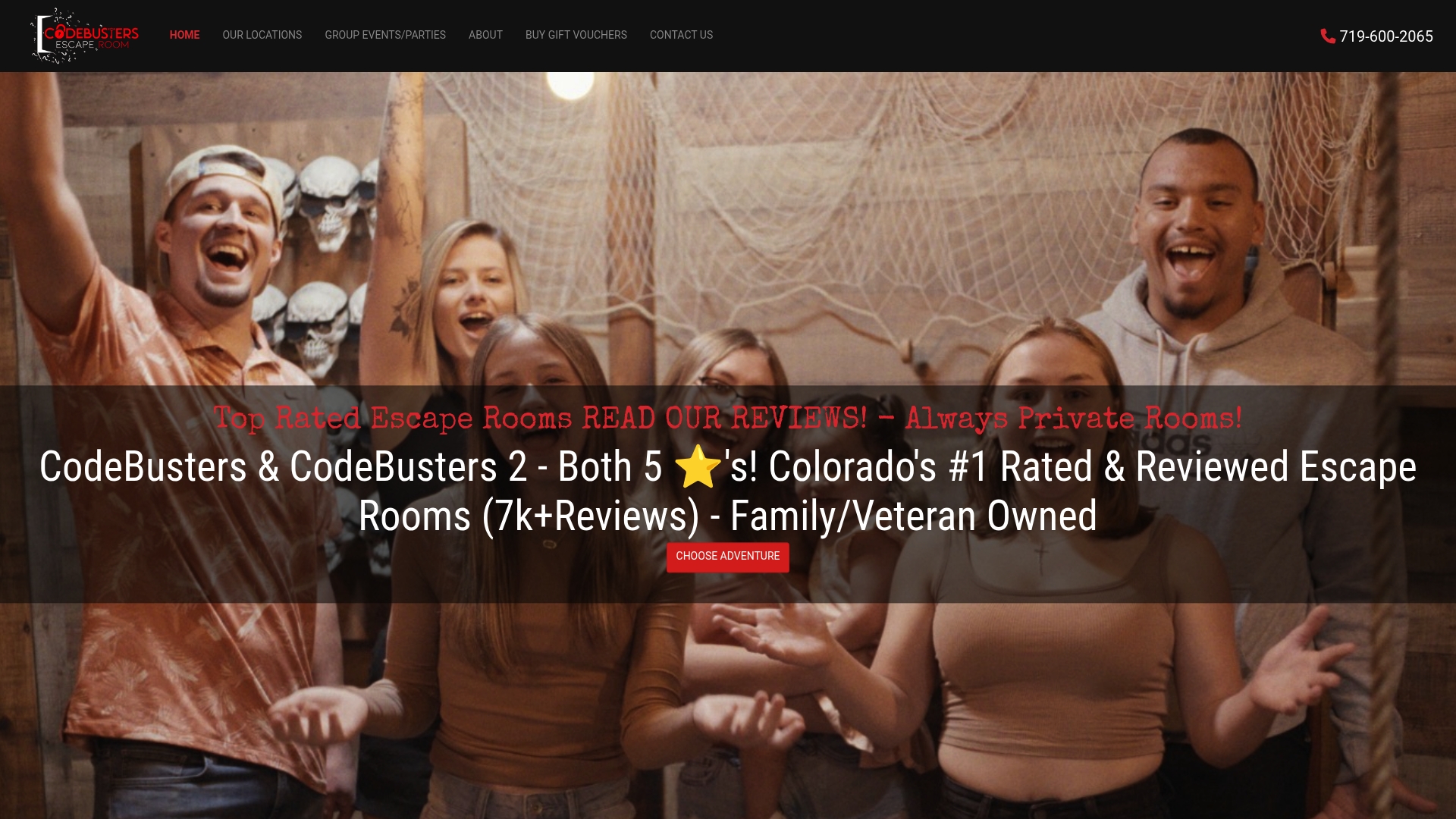
Rooms scale from small leadership teams to large group offsites, and every booking is private, so teams typically do not share the room or the clock with strangers. Pair the activity with the debrief habits covered above: tie what happened in the room back to the day’s real decision, and it stops being a fun aside and starts reinforcing the actual point of the offsite. Browse the full lineup of themed rooms, including options built for larger corporate groups, on the Codebusters Escape Room booking page, and check availability for the date your offsite is already locked around.
Sources
For deeper reading beyond this guide, Harvard Business Review’s five-question framework for leadership offsites and its companion piece on why bonding alone doesn’t work both make the case for decision-first design in more depth. ConsultClarity’s executive offsite templates and iTILite’s practical planning sequence offer additional day-by-day structures worth comparing against your own team’s needs before you finalize an agenda.
- Planning an Offsite for Your Leadership Team? Ask These 5 Questions. — HBR
- Executive offsite agenda templates — ConsultClarity
- 10 essential offsite templates for planning a memorable team retreat in 2026 — OffsiteIO Learn
- How to plan offsite meeting — iTILite
FAQ
What Are Some Good Ideas for Offsite Team Meetings?
The strongest ideas are activities that map directly to your offsite’s primary decision: structured problem-solving sessions in the morning, connection-building or experiential activities like an escape room experience in the evening, and a dedicated action-planning block before anyone leaves. Avoid picking activities just because they’re popular; pick them because they reinforce the behavior change the offsite is meant to produce.
What Is a Good Agenda for a Team Meeting?
A good team meeting agenda states one clear decision or outcome upfront, time-blocks the day around working sessions rather than presentations, and ends every major segment with a named next step and owner. For a full-day offsite, that typically means a morning built around the hardest decision work and an afternoon built around action-planning and lighter connection activities.
How Do You Structure a Team Offsite?
Structure it backward from three answers: the primary decision, the conversation your team has been avoiding, and what needs to be true in 90 days. Those answers determine whether you need a one-day, two-day, or three-day format, and each day should follow an energy arc that puts strategic and cognitively demanding work in the morning and lighter, connection-focused work later.
What Are the 5 C’s of a Team?
Definitions of the “5 C’s” vary depending on the source, and there’s no single agreed-upon list specific to offsite planning. Rather than relying on an unverified framework, focus your agenda on the concrete factors covered above: a clear decision, honest conversation, committed owners, a follow-up cadence, and measurable change.
How Far in Advance Should You Plan a Team Offsite?
Most well-run offsites follow an 8 to 12 week planning runway, with major decisions like venue, dates, and the primary agenda locked by the 8-week mark and the final two weeks reserved for execution only. Shorter timelines are workable for smaller, single-day offsites but leave little room to fix vendor problems if something falls through.