The Role of Lighting in Escape Rooms: 2026 Guide
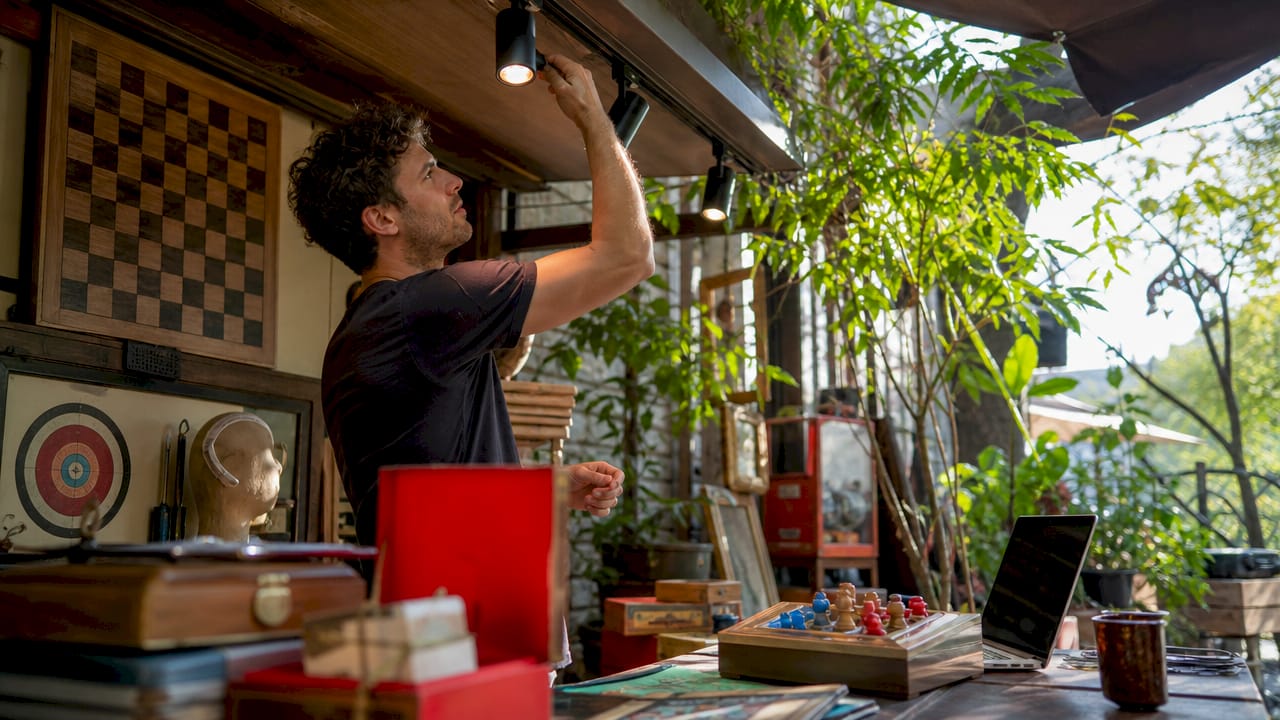
Lighting is the single most powerful design tool in an escape room, shaping where players look, what they feel, and how fast they solve puzzles. The role of lighting in escape rooms goes far beyond basic visibility. It directs attention, signals progress, and builds the emotional tension that makes a 60-minute session feel like a genuine adventure. Designers who treat lighting as an afterthought produce rooms that feel flat and confusing. Those who treat it as a storytelling medium produce experiences players talk about for weeks.
How does lighting direct player attention and reveal clues?
Visual gravity is the core principle behind effective escape room lighting. Players’ eyes move instinctively toward focused light in a dark space. Skilled designers use this reflex to pull attention toward puzzle elements without posting a single sign or giving a verbal hint. The result is a room where players feel like they discovered clues on their own, which deepens immersion considerably.
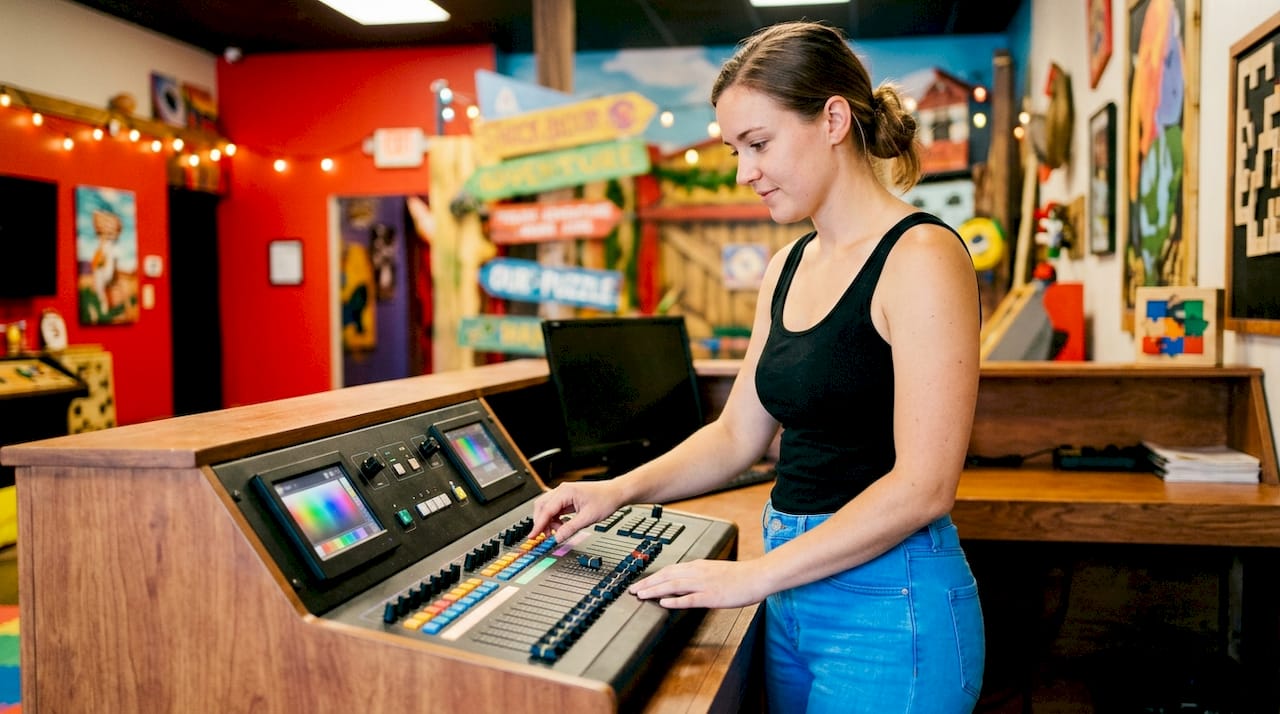
Diegetic lighting takes this further. A naturally integrated clue is one that exists as part of the environment, not as an obvious game mechanic. A lamp that flickers when a player stands near a hidden switch, or a UV-reactive symbol that appears only under a black light, communicates information without breaking the fictional world. These techniques keep players inside the story rather than reminding them they are playing a game.
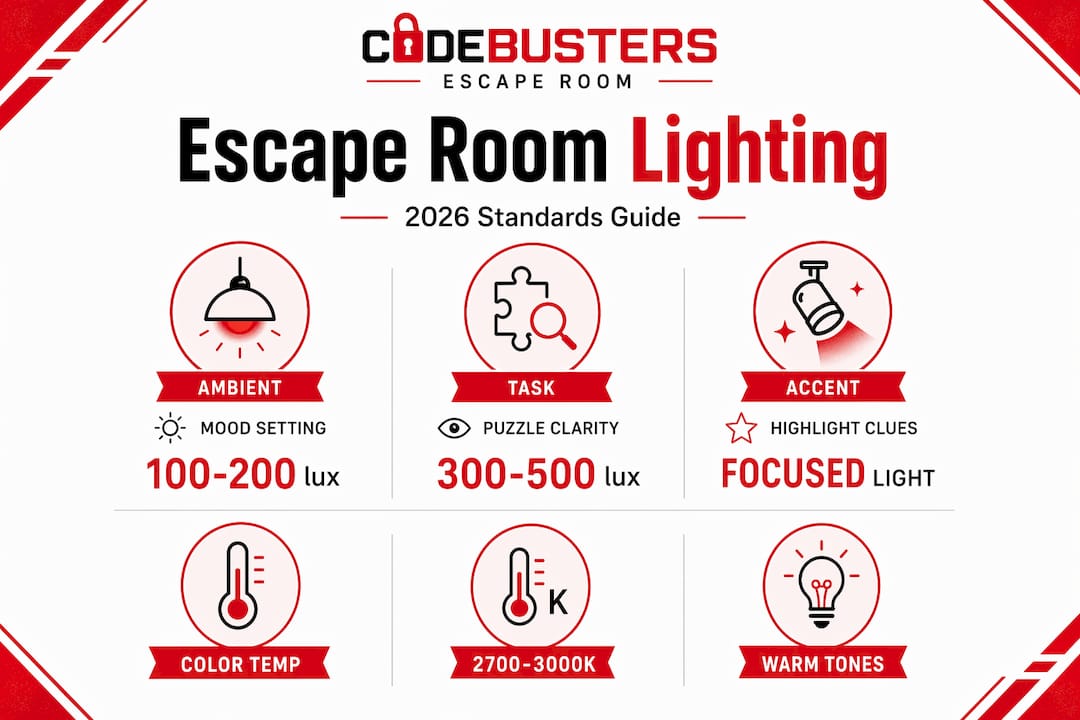
Balancing ambient, task, and accent lighting is what separates readable rooms from chaotic ones. Each layer serves a distinct purpose:
- Ambient lighting fills the room with a base level of light that sets mood without revealing everything at once.
- Task lighting illuminates specific puzzle areas so players can read, manipulate, and interact with objects clearly.
- Accent lighting draws the eye to critical props, hidden compartments, or narrative focal points.
Glare and reflections are the enemies of clue visibility. Shiny surfaces impair clue detection and cause player fatigue during longer sessions. Designers fix this by shielding light sources, bouncing light off matte surfaces, and avoiding direct spotlights aimed at reflective props.
Pro Tip: Test every lighting scene with a fresh group of players before opening. Watch where their eyes go first. If they miss a key prop in the first two minutes, the lighting is not doing its job.
Lighting also communicates game state non-verbally. A slow pulse that quickens as the timer runs down, or a color shift from cool blue to warm amber when a puzzle is solved, tells players they are making progress without a game master interrupting the narrative.
What are the recommended lighting standards for escape rooms in 2026?
Current industry guidance sets clear targets for each lighting layer. These numbers come from standards applied across immersive entertainment design and reflect what actually works in practice.
| Lighting type | Recommended level | Primary purpose |
|---|---|---|
| Ambient | 100–200 lux | Mood setting and general orientation |
| Task | 300–500 lux | Puzzle readability and object interaction |
| Accent | 400–600 lux | Critical clue reveals and focal points |
Ambient lighting at 100–200 lux creates the dim, atmospheric base that makes an escape room feel distinct from a well-lit office. That low baseline is what makes accent lights feel dramatic and purposeful by contrast.
Color temperature is equally important. Warm tones at 2700–3000K build a sense of mystery and intimacy, which suits horror or historical themes. Midrange temperatures at 3500–4000K promote investigative clarity, making them ideal for detective or science-lab rooms where players need to read fine details. A sharp 5000K white light signals urgency and works well for climactic final puzzles where tension should peak.
The layered illumination approach that combines all three lighting types improves both puzzle readability and atmosphere control. Designers who rely on a single overhead source lose the ability to guide attention or shift mood during the session. Layering gives you control over every beat of the experience.
Color itself carries psychological weight. Red light raises heart rate and signals danger. Blue light creates calm and distance. Green light reads as alien or unnatural. Designers who understand how lighting affects escape room experience at a psychological level can use color to make players feel anxious, curious, or triumphant on cue.
How can lighting enhance immersion and storytelling in escape room design?
Lighting is a narrative tool, not just a functional one. Visual storytelling through lighting focuses player cognition on observation and collaboration rather than physical navigation. When the light tells the story, players stop looking for the exit and start living inside the fiction.
“The most immersive escape rooms use lighting to mark every emotional beat of the story. A cold, flickering fluorescent at the start signals instability. A warm, golden glow when the final lock opens signals triumph. Players feel these shifts before they consciously register them.”
Mood transitions are where lighting design earns its keep. A room that starts in cool, clinical white and slowly shifts to deep red as the narrative tension builds creates a physical sensation of escalating stakes. Players do not need to be told the situation is getting worse. They feel it in the light around them.
Lighting also controls spatial flow and pacing across a multi-room experience. Designers use brighter pathways to draw groups forward and darker corners to reward exploration. This prevents bottlenecks where all players cluster around one puzzle and ignores the rest of the room.
Key techniques for narrative lighting include:
- Color transitions tied to story beats signal chapter changes without any spoken narration.
- Silhouette lighting creates dramatic reveals when a prop or character is backlit at a critical moment.
- UV and black light reveals hide information in plain sight until the right moment in the story.
- RGB paint layering combined with cycling environmental colors creates multiple visual puzzle states within a single room, effectively giving designers two or three rooms in one.
Dynamic lighting synchronized with AV elements produces the smoothest atmosphere transitions. When a sound effect, a video clip, and a lighting shift all happen simultaneously, the effect is cinematic. Players stop noticing the technology and start believing the world.
What technologies and techniques can automate escape room lighting?
Automation is what separates a static lighting setup from a living, responsive environment. Modern escape room designers have access to affordable and powerful tools that were previously reserved for professional theater productions.
- DMX control systems are the industry standard for programmable lighting. DMX protocols allow designers to set precise intensity, color, and timing for every fixture in a room from a single controller.
- ESP32 microcontrollers make DMX automation accessible at low cost. A budget DMX system built around an ESP32 costs approximately $50, enabling puzzle-triggered lighting changes that previously required expensive commercial hardware.
- Puzzle-triggered lighting links specific game events to lighting changes. Solving a cipher might unlock a spotlight on the next puzzle. Opening a hidden drawer might flood the room in red. These triggers make the environment feel alive and responsive.
- Blink patterns and UV reveals encode information directly into the light itself. A fixture that pulses in Morse code, or a UV lamp that reveals a hidden map, turns lighting into an active puzzle element rather than a passive backdrop.
- Integrated AV and lighting systems ensure that consistent atmosphere is maintained across every session, regardless of which game master is running the room.
Pro Tip: Program a “reset” lighting state that returns every fixture to its starting position automatically between sessions. Manual resets introduce inconsistency and slow down turnaround time between groups.
Safety considerations matter in automated systems. Strobing effects require clear warnings for guests with photosensitive conditions. Minimum ambient light levels should be maintained even in the darkest scenes so players can move safely without tripping.
What are common lighting design pitfalls and how do you avoid them?
Over-lighting is the most common mistake in escape room design. Excess brightness creates visual noise that obscures puzzles and strips the room of atmosphere. When everything is equally lit, nothing stands out, and players have no visual cues about where to focus.
Common pitfalls and their fixes:
- Over-lighting: Reduce ambient levels and rely on accent lights to create contrast. Reserve high-intensity lighting for critical moments only.
- Glare on reflective surfaces: Use shielded fixtures, matte finishes on props, and bounced light to eliminate hot spots that blind players or hide clues.
- Inconsistent color temperature: Mixing warm and cool sources without intent creates visual confusion. Choose a dominant temperature for each room and use deviations deliberately.
- Static lighting throughout: A room with no lighting changes feels flat. Build at least three distinct lighting states into every room: opening, mid-game, and climax.
- Ignoring player sightlines: Light a prop from the wrong angle and it disappears into shadow from where players actually stand. Always test lighting from player positions, not designer positions.
The clue detection experience depends directly on how well lighting guides the eye without making the guidance obvious. A well-designed room feels fair. Players feel clever, not manipulated.
Testing is non-negotiable. Run multiple groups through a new room before opening and track where they get stuck. If players consistently miss a clue, the lighting is failing, not the players. Adjust accent intensity, reposition fixtures, or change color temperature until the room reads correctly without hints.
Key Takeaways
Lighting is the primary tool escape room designers use to guide attention, set mood, and communicate story without a single spoken word.
| Point | Details |
|---|---|
| Visual gravity drives discovery | Focused light in dark spaces pulls player attention to puzzles without explicit instructions. |
| Layer all three light types | Ambient (100–200 lux), task (300–500 lux), and accent (400–600 lux) each serve a distinct purpose. |
| Color temperature sets emotion | Use 2700–3000K for mystery, 3500–4000K for clarity, and 5000K for climactic urgency. |
| Automation makes rooms responsive | DMX systems with ESP32 microcontrollers enable puzzle-triggered lighting for approximately $50. |
| Test before you open | Player testing reveals lighting failures that designers cannot see from their own perspective. |
Lighting as a silent game master: our perspective
The most underrated thing about escape room lighting is how much it does without players ever noticing it. At Codebusters Escape Room, we have watched hundreds of groups move through our themed rooms, and the pattern is consistent. Players who feel stuck are almost always in a space where the lighting is not doing enough work. They are not missing intelligence. They are missing a visual cue.
What I have found is that designers often over-explain with props and text while under-investing in light. A well-placed accent spot on a single object communicates more than a paragraph of in-room lore. The moment a player’s eye lands on that object and they say “wait, what’s that?” is the moment the room is working correctly.
The other lesson is that lighting and sound are inseparable. A lighting shift without a corresponding audio cue feels incomplete. A sound effect without a lighting change feels disembodied. When both happen together, the room feels like it has a pulse. That synchronization is what separates a good escape room from a great one.
My advice to designers: spend as much time programming your lighting scenes as you spend building your puzzles. The puzzles are the content. The lighting is the delivery mechanism. One without the other is half an experience.
— CodeBusters
What a great escape room looks like in practice
Codebusters Escape Room in Colorado Springs puts every one of these lighting principles to work across its themed rooms, from the time-bending “Past to the Future” to the tension-filled “Flight of Deception.” Each room uses layered lighting, color transitions, and puzzle-triggered effects to create an experience that feels genuinely cinematic.

If you want to see how quality escape room design translates into a real, bookable experience, Codebusters Escape Room is the place to start. The rooms are private, the puzzles are original, and the lighting does exactly what it should: it makes you feel like the story is real. Book your session and find out what a well-lit escape room actually feels like from the inside.
FAQ
What is the role of lighting in escape rooms?
Lighting guides player attention, sets emotional atmosphere, and communicates puzzle progress without verbal instructions. It is the primary non-verbal storytelling tool in immersive room design.
What lux level is recommended for escape room puzzle areas?
Task lighting for puzzle areas should reach 300–500 lux for clear readability. Ambient mood lighting sits lower at 100–200 lux, while accent spotlights on critical clues reach 400–600 lux.
What color temperature works best for mystery-themed escape rooms?
Color temperatures of 2700–3000K create warmth and mystery, making them ideal for horror, historical, and thriller themes. Higher temperatures at 5000K signal urgency and suit climactic final puzzles.
How does lighting affect the escape room experience for players?
Lighting shapes where players look, how anxious or confident they feel, and how quickly they identify clues. Poor lighting causes fatigue and missed puzzles; well-designed lighting makes players feel clever and immersed.
Can escape room lighting be automated on a small budget?
DMX-controlled systems built with ESP32 microcontrollers cost approximately $50 and enable full puzzle-triggered lighting automation. This makes professional-grade responsive lighting accessible to independent escape room designers.