Unique Puzzle Rooms for Locals: Find Your Best Escape
A truly unique puzzle room for locals is a privately hosted, story-driven experience that goes beyond a generic lock-and-key setup — think live actors, speakeasy bars, VR/hybrid tech, or outdoor mystery hunts woven into your city’s own character. If you’re in Colorado Springs, Codebusters Escape Room is the local, veteran- and family-owned option worth booking first.
The formats that actually qualify as “unique” break down into four categories locals should know: live-actor/theatrical rooms where a costumed performer drives the narrative; speakeasy hybrids that pair cocktails with puzzles for adult groups; VR/tech rooms that swap physical props for digital environments; and outdoor walking mystery hunts that turn your neighborhood into the game board. Private bookings and roughly 60-minute sessions are the industry standard for all of them.
Table of Contents
- How do you find genuinely unique puzzle rooms near you?
- What formats actually count as a unique local escape experience?
- What should you expect on the day of your booking?
- How do you pick the right room for your specific group?
- What are the best alternatives when a unique room isn’t available?
- Key Takeaways
- Why immersive local rooms beat generic chains every time
- Ready to book a private escape room in Colorado Springs?
How do you find genuinely unique puzzle rooms near you?
Generic search terms return generic results. To surface the immersive, locally themed experiences worth your time, use specific search strings:
- “immersive escape room near me”
- “live actor escape room [your city]”
- “speakeasy escape room [your city]”
- “private escape room [your city]”
- “outdoor mystery hunt [your city]”
Where to search: Google Maps reviews surface photos and recent visitor comments faster than most dedicated listing sites. Yelp and TripAdvisor filter by “escape room” and let you sort by recency. Facebook Events and Eventbrite catch pop-up puzzle nights and seasonal immersive theater runs that never make it onto venue websites. Local community Facebook groups and Reddit city threads often surface hidden-gem venues before they hit mainstream listings.
Vetting checklist before you click “book”:
- Does the listing explicitly offer private bookings?
- Is the session length stated (look for ~60 minutes of actual game time)?
- Are difficulty levels and recommended group sizes listed?
- Does the venue describe the narrative or theme, not just the puzzle count?
- Is there accessibility information (mobility, sensory warnings, age minimums)?
- Are there recent photos or a video walkthrough?
Pro Tip: Call or message the venue directly and ask: “Can you describe two or three interactive elements that make this room different from a standard padlock room?” A venue that can answer that question confidently — with specifics about actors, tech, or set design — is the real deal. One that hedges or sends you back to the website probably isn’t.
Prefer venues that state private bookings, a clear 60-minute game window, and explicit difficulty guidance. Those three signals together almost always indicate a venue that takes the experience seriously.
What formats actually count as a unique local escape experience?
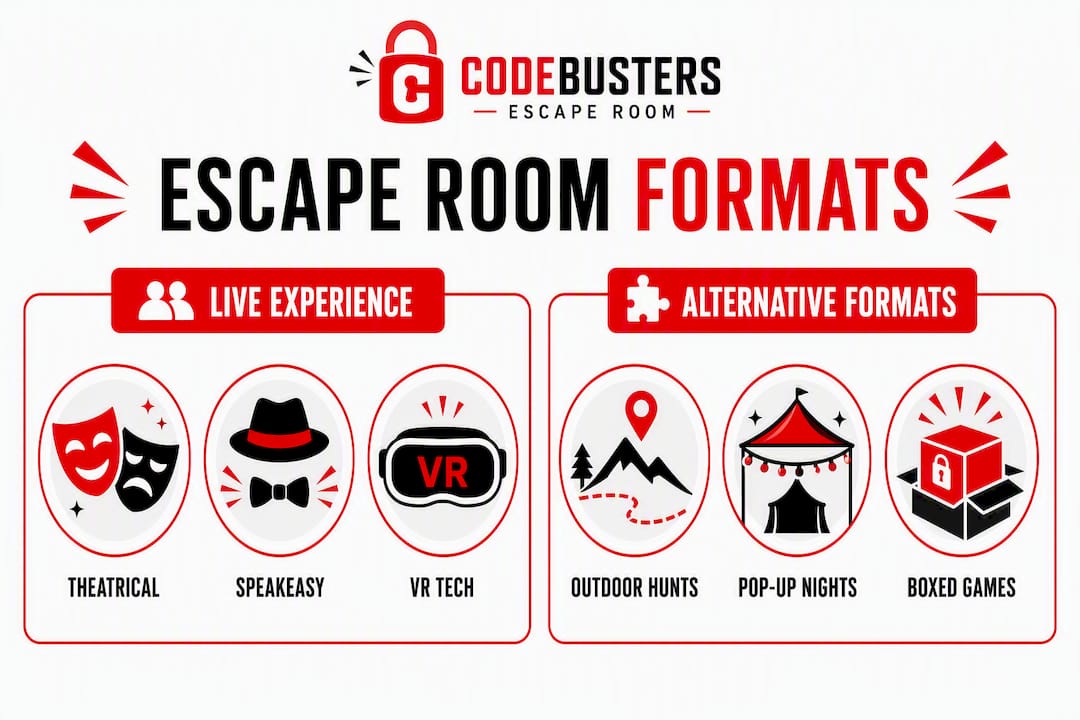
Not every room with a padlock earns the “unique” label. Here’s what each genuinely distinct format looks like from the inside.
Live-actor / theatrical rooms
A performer stays in the room with your group, reacts to your decisions, and pushes the story forward in real time. The puzzle logic matters less than the atmosphere — you’re solving a mystery with a character, not just clicking through props. Look for listings that mention “actor-led,” “immersive theater,” or “role-play elements.” Age minimums tend to run 13+ because the storytelling intensity can unsettle younger kids.
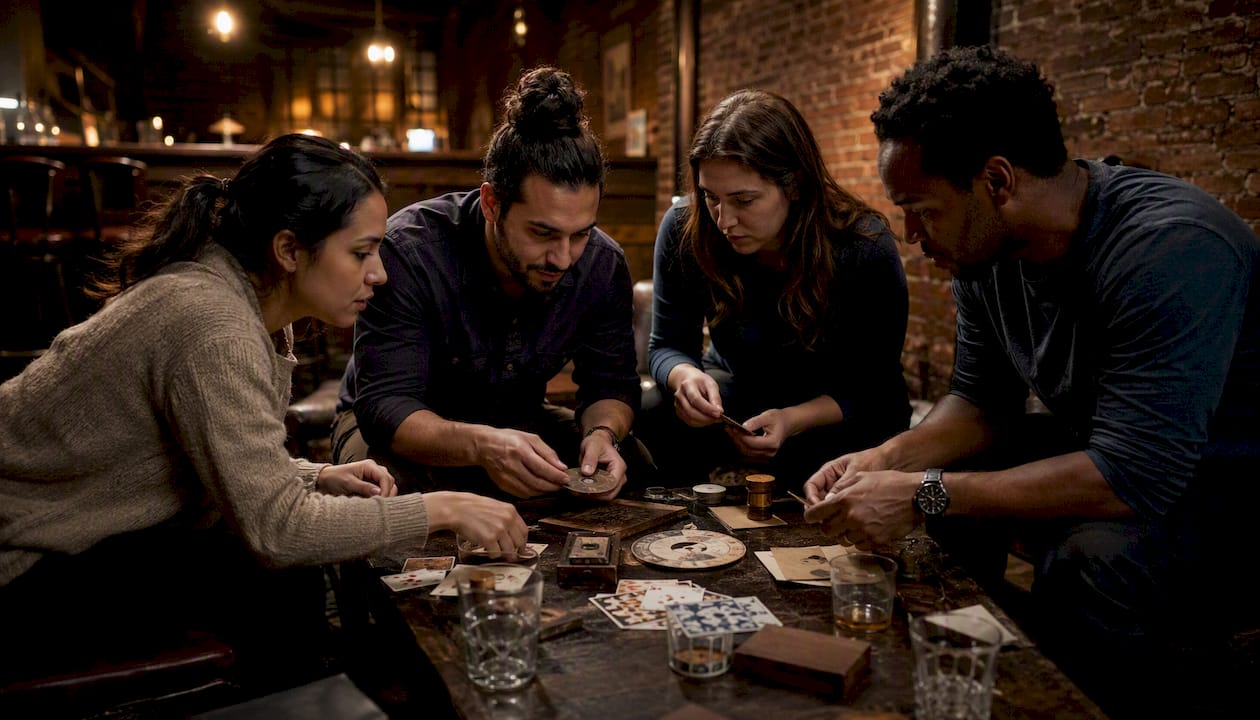
Speakeasy / bar hybrids
These combine a 45–60 minute puzzle session with a pre- or post-game bar experience. The cocktail menu is usually themed to the room’s era or narrative, which makes them the strongest choice for adult birthday groups or date nights. Check whether drinks are included or add-on, and confirm the bar is on-site rather than a nearby recommendation.
VR / tech-hybrid rooms
High-tech rooms use VR headsets, projection mapping, or app-connected props to create environments that physical sets can’t replicate. Before booking, ask about headset hygiene, motion-sickness warnings, and whether the experience works for glasses wearers. These rooms tend to cap at 4–6 players because the hardware limits scale. Best for groups comfortable with tech; less ideal for young children or anyone prone to motion sensitivity.
Outdoor / walking mystery hunts
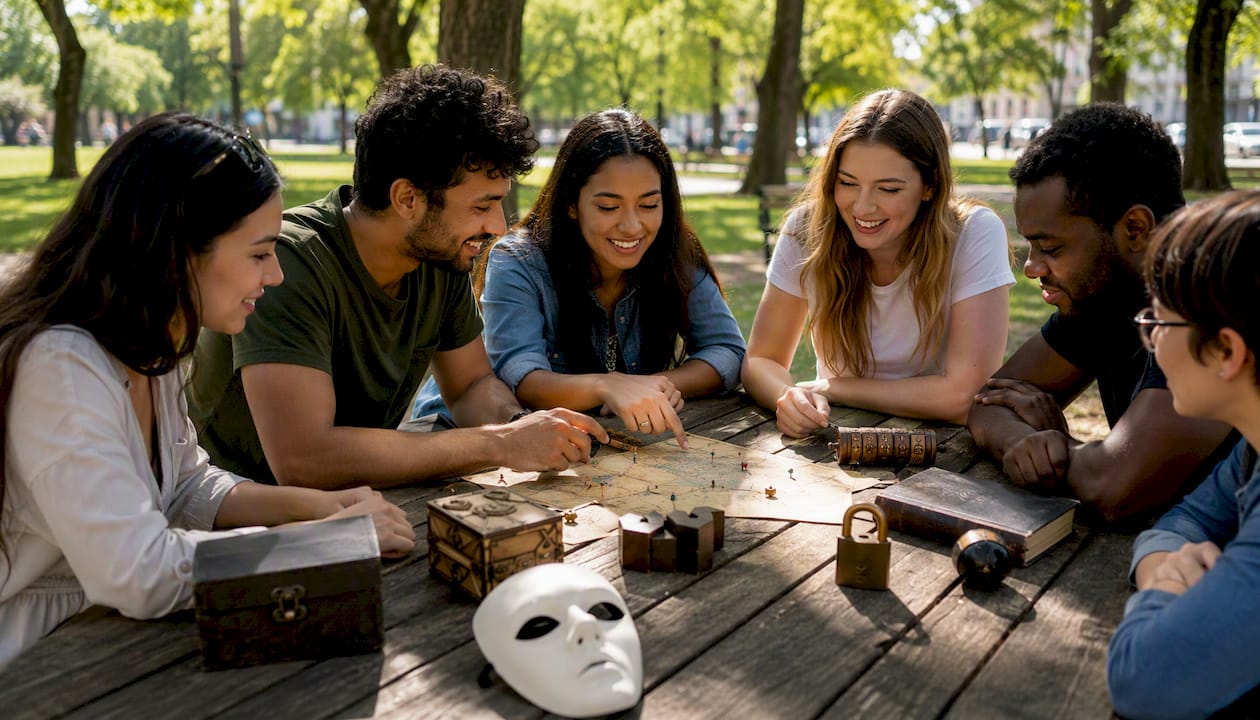
Walking mystery tours typically concentrate clues within a local neighborhood area, weaving local businesses and landmarks into the puzzle trail. They’re weather-dependent and require comfortable shoes, but they double as a neighborhood discovery experience. Some producers offer VIP packages that bundle the game with food, a personal guide, and local vendor stops — a strong option for corporate outings or large friend groups.
Pop-up puzzle nights and boxed alternatives
Boxed puzzle games typically offer multiple hours of gameplay and work for small groups, often with online hint systems for pacing. They’re repeatable and portable, making them a solid fallback when venue availability is tight. Pop-up puzzle festivals and immersive theater nights appear seasonally on Eventbrite and local arts calendars — worth following if you want variety without committing to a recurring venue.
What should you expect on the day of your booking?
Knowing the session structure before you arrive removes the friction that ruins the first 10 minutes of a room.
| Stage | What happens | Typical duration |
|---|---|---|
| Arrival and check-in | Sign waivers, meet your game master, stow phones/bags | 10 minutes |
| Briefing | Rules, safety notes, story setup | 5–10 minutes |
| Game time | Active puzzle solving | ~60 minutes |
| Debrief and photos | Review your performance, group photos, hints revealed | 10 minutes |
Group size and cost: Most rooms accommodate 2–10 players, and venues often list age recommendations (commonly 8+ or 10+ for family rooms, 18+ for bar hybrids). Per-person cost shifts with the day of the week: weekday sessions typically run in the low-30s per player, while weekend sessions are somewhat higher. Private bookings, add-on food or drinks, and premium room tiers push the total higher. Booking a room for fewer players than its minimum often means paying for the minimum headcount anyway — confirm that policy before you finalize.
Accessibility and safety: Ask the venue directly about mobility requirements (some rooms involve crawling or climbing), strobe or sound effects, and whether children under a stated age can participate even with an adult present. Listen to the game master’s safety briefing in full — they’ll tell you which props are off-limits and how to call for help if someone needs to exit early.
Etiquette: Don’t describe specific puzzles in public reviews — future players deserve the surprise. Use the hint system if your group is stuck for more than five minutes; most venues offer unlimited hints, and using them keeps the experience moving rather than stalling. Arrive on time. A late start eats into your 60 minutes, not the venue’s schedule.
How do you pick the right room for your specific group?
The room that’s perfect for a corporate team-building session is rarely the right call for a family with a 9-year-old. Work through this checklist before you book.
- Define your group size. Most rooms cap at 6–8 players for the best experience. For larger groups, ask whether the venue can book multiple rooms simultaneously — some venues support events for 24 or more by running parallel sessions.
- Set your intensity level. Casual groups (first-timers, mixed ages) should look for rooms rated beginner or intermediate. Enthusiasts who’ve done 10+ rooms need a venue that offers hard or expert difficulty.
- Match the format to the occasion. Date night: speakeasy hybrid or theatrical room. Family outing: family-rated room with an 8+ age minimum and no jump-scare elements. Corporate team-building: private multi-room booking with a split-start option so subgroups compete simultaneously.
- Check your budget. Weekday bookings save money. Private sessions cost more per head than public split-starts but deliver a better experience for groups who know each other.
- Confirm accessibility needs. Ask specifically — don’t assume the website covers every detail.
Questions to ask the venue before booking:
- “Is this a fully private session, or could strangers join our group?”
- “What’s the recommended minimum and maximum group size for this room?”
- “Do you offer a split-start or multi-room option for groups over 8?”
- “What’s your hint policy?”
Red flags in listings and reviews: vague descriptions that mention “puzzles” without any narrative detail; inconsistent opening hours across Google, Yelp, and the venue’s own site; safety complaints in recent reviews; no photos of the actual room interior.
Codebusters Escape Room offers private bookings across multiple themed rooms and can advise on which room fits your group’s size and experience level before you commit.
What are the best alternatives when a unique room isn’t available?
Sometimes the venue you want is booked out, or your group wants something lower-key. These alternatives hold up well.
Walking mystery tours work best for groups of 4–12 who want to move through a neighborhood rather than stand in one room. Clues are spread across local businesses within roughly a one-mile radius, so the experience doubles as a city tour. Weather is the main variable; have a backup plan.
Boxed puzzle games suit smaller groups (1–6) and work on any night without a reservation. The 1.5–3+ hour playtime is comparable to a venue visit when you factor in travel. The tradeoff: no game master, no atmosphere, and no shared adrenaline of a countdown clock in a physical space.
Pop-up immersive theater and puzzle festivals appear seasonally and often sell out fast. Follow local arts organizations and Eventbrite alerts for your city. These tend to be more narrative-heavy and less puzzle-dense than a traditional escape room.
Pros and cons at a glance:
- Walking mystery hunt: outdoor, city-connected, weather-dependent, great for large groups
- Boxed puzzle game: flexible, repeatable, no atmosphere, no game master
- Pop-up/immersive theater: high narrative quality, seasonal availability, often sells out
- Live local escape room: highest group energy, time-pressured, best for repeat social outings when venues rotate their room catalog
For a direct comparison of when a live room beats these alternatives, the escape rooms vs. other games guide breaks down the decision by group type and occasion.
Key Takeaways
The most reliable path to a great local puzzle outing is choosing a privately hosted, narrative-driven room that matches your group’s size, skill level, and occasion — then confirming the booking details before you pay.
| Point | Details |
|---|---|
| Format first | Match the room type (theatrical, speakeasy, VR, outdoor) to your group’s interests and occasion before comparing prices. |
| Private booking matters | A private session guarantees your group controls the pace and atmosphere — always confirm this before booking. |
| Session length and cost | Standard game time runs ~60 minutes; per-person pricing typically ranges from $33 on weekdays to $36 on weekends, varying by venue. |
| Vet before you book | Check for difficulty ratings, age minimums, accessibility info, and recent photos — vague listings usually mean generic rooms. |
| Codebusters Escape Room | A veteran- and family-owned Colorado Springs venue offering private bookings, multiple themed rooms, and difficulty options for any group. |
Why immersive local rooms beat generic chains every time
Generic chains build rooms to work anywhere, which means they work perfectly nowhere. The rooms feel interchangeable because they are — the same prop set, the same puzzle logic, the same briefing script, whether you’re in Denver or Dallas. What locals actually gain from a locally owned, privately hosted room is something a franchise can’t manufacture: a designer who knows the city, cares about repeat visitors, and builds rooms that reference the community’s own history and character.
At Codebusters Escape Room, that’s the design philosophy behind every room — private sessions that let groups move at their own pace, difficulty tuning that works for first-timers and veterans alike, and themes that hold up on a second or third visit because the storytelling is layered, not linear. The veteran- and family-owned structure means the people who built the rooms are usually the ones running them, which shows in the details. Awards and reviewer recognition follow from that kind of ownership, not the other way around.
The deeper point: immersive, locally owned rooms are better for repeat social activities because they give a group something to talk about afterward that’s specific to their experience. A generic room gives you a timer and a padlock. A good local room gives you a story.
Ready to book a private escape room in Colorado Springs?
Codebusters Escape Room offers what most generic venues don’t: fully private sessions, multiple themed rooms across two Colorado Springs locations, and difficulty options that work whether your group has never touched an escape room or has a dozen under their belt.
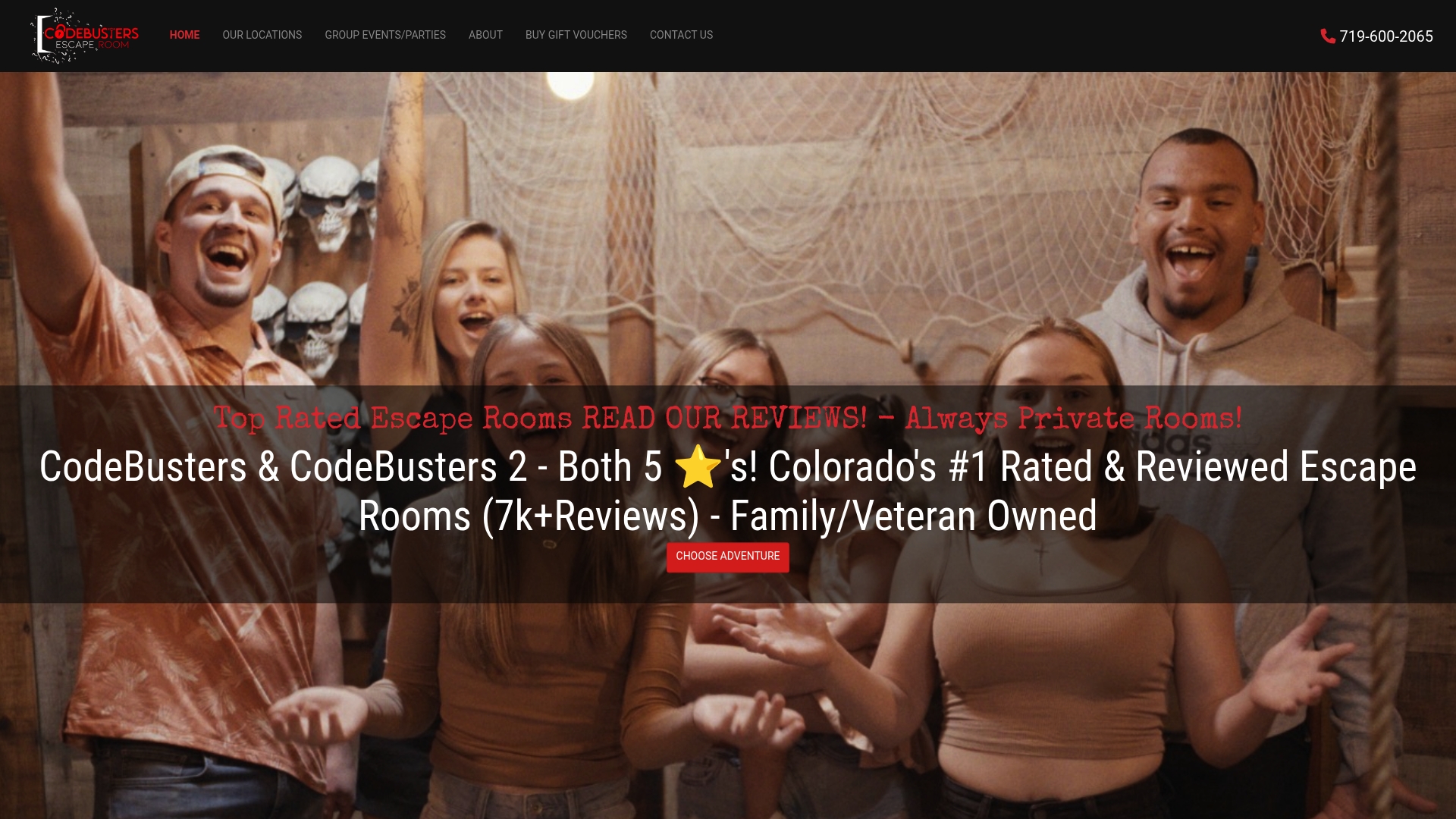
Rooms like Past to the Future, Stranger 80’s, and Flight of Deception are built for groups of friends, families, and corporate teams who want a real story, not just a puzzle count. Private bookings mean no strangers joining your session. Gift vouchers are available for birthdays, holidays, and corporate gifting. Large groups can ask about multi-room availability to keep everyone engaged at the same time.
Check availability and book your private escape room session directly on the Codebusters Escape Room website. If you’re planning a corporate event or a party for a larger group, reach out before booking to confirm room combinations and split-start options.