What Is Recreational Puzzle Solving? Benefits and Tips
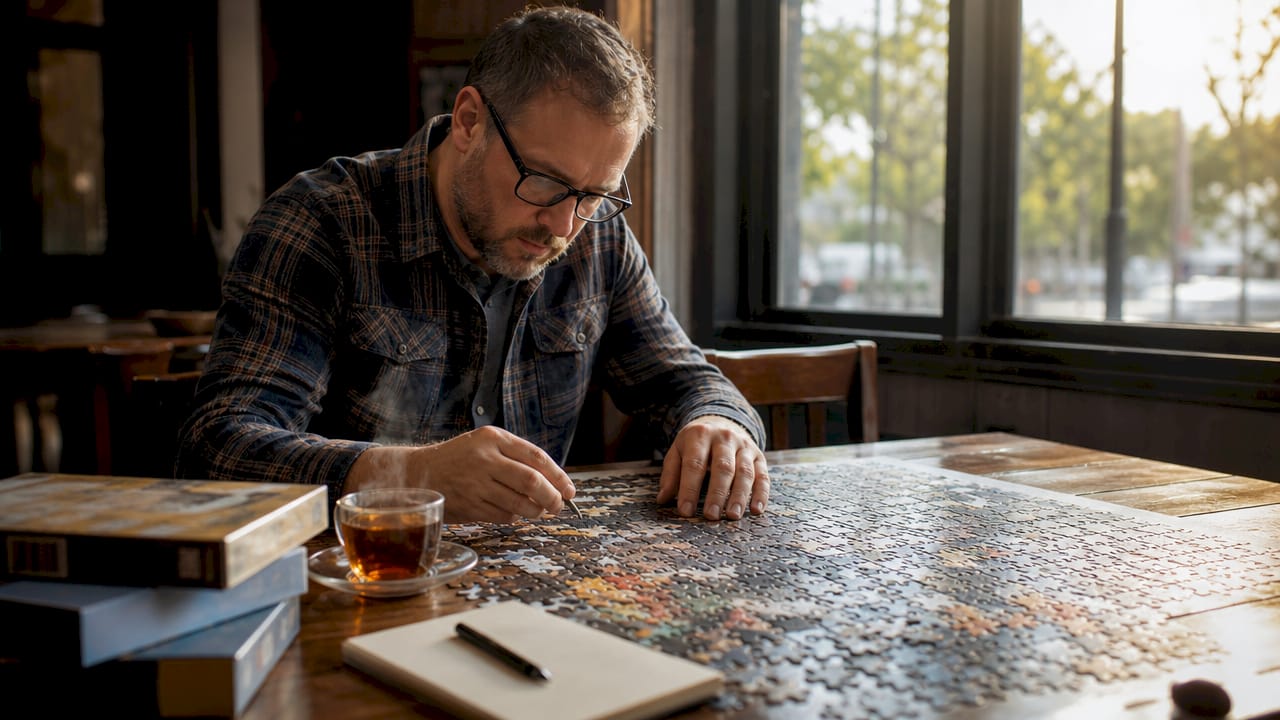
Recreational puzzle solving is defined as the practice of engaging with puzzles primarily for entertainment and mental stimulation, under specific rules, to find solutions that satisfy given conditions. Unlike formal academic study, this activity treats logic and rule-based challenges as leisure. Puzzle genres like Sudoku, Rubik’s Cubes, jigsaw puzzles, and word games all fall under this category. Prof. Graham Niblo of the University of Southampton has noted that puzzles push the brain into unfamiliar reasoning territory, building mental flexibility in ways that feel more like play than work. That combination of fun and cognitive challenge is exactly what makes recreational puzzle solving one of the most popular hobbies across all age groups.
What is recreational puzzle solving and what types are involved?
Recreational puzzle solving covers a wide spectrum of puzzle types, each demanding a different mental skill set. The four main categories are logic puzzles, mathematical puzzles, word puzzles, and mechanical puzzles. Each type requires rule adherence and active problem solving, but the experience and mental demands vary considerably from one format to another.
Here is a breakdown of the most common types:
- Logic puzzles: Grid-based deduction games like Nonograms or Einstein’s riddle, where you eliminate possibilities using given clues.
- Mathematical puzzles: Sudoku, KenKen, and number sequences that rely on operations like PEMDAS (order of operations) rather than speed or competition.
- Word puzzles: Crosswords, anagrams, and word searches that train vocabulary, lateral thinking, and spelling.
- Mechanical puzzles: Physical objects like the Rubik’s Cube or jigsaw puzzles that combine spatial reasoning with tactile problem solving.
| Puzzle type | Example | Typical difficulty | Mental skills engaged |
|---|---|---|---|
| Logic puzzle | Nonogram, Einstein’s riddle | Medium to hard | Deductive reasoning, elimination |
| Mathematical puzzle | Sudoku, KenKen | Easy to hard | Pattern recognition, arithmetic |
| Word puzzle | Crossword, anagram | Easy to medium | Vocabulary, lateral thinking |
| Mechanical puzzle | Rubik’s Cube, jigsaw | Medium to hard | Spatial reasoning, persistence |
The variety matters because different puzzle types train different cognitive pathways. Rotating between formats keeps the brain challenged and prevents the kind of plateau that comes from repeating the same puzzle style indefinitely.
What cognitive and psychological benefits does puzzle solving provide?
Recreational puzzle solving activates brain regions tied to real-world problem solving and cognitive flexibility, according to research from Case Western Reserve University. That means the mental skills you build while solving a crossword or a logic grid transfer directly to work, school, and daily decision-making. This is not a trivial side effect. It is the central reason puzzle solving has earned serious attention from psychologists and educators alike.
The specific benefits include:
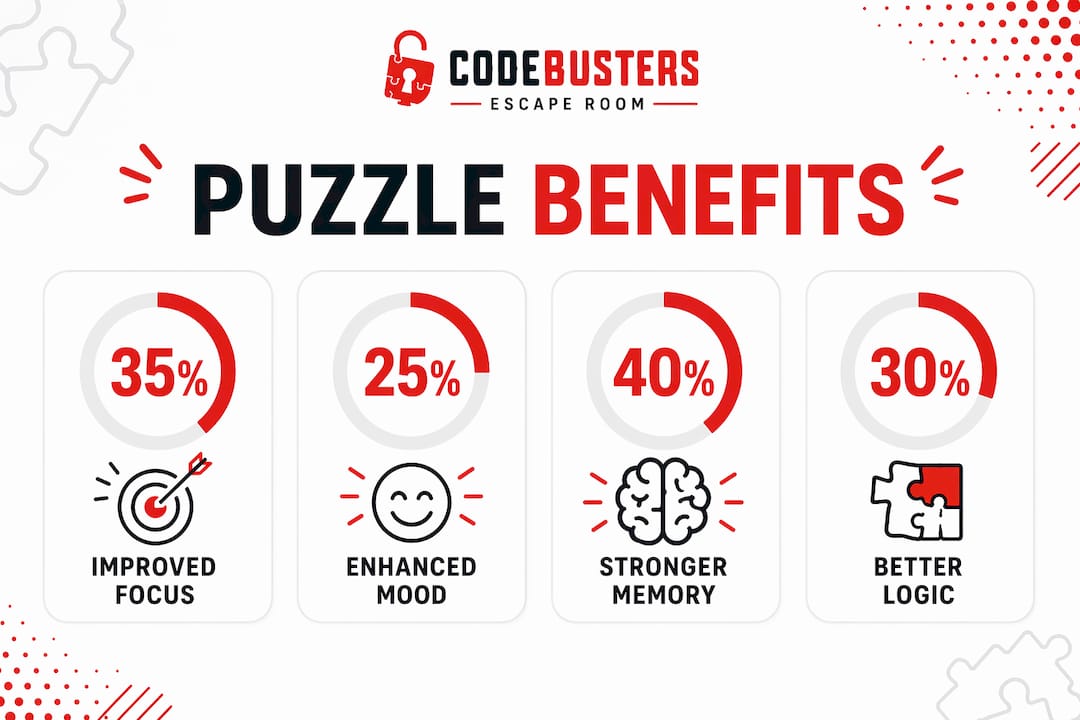
- Improved focus: Puzzles require sustained attention on a single problem, training the brain to resist distraction.
- Flexible thinking: BBC Bitesize credits puzzles with forcing the brain into unfamiliar reasoning spots, making it better at connecting disparate ideas.
- Resilience: Tough puzzles that resist quick solutions teach persistence and tolerance for frustration, two skills that carry over into professional and personal life.
- Mood benefits: Short, consistent puzzle sessions sharpen attention and improve mental well-being across age groups, from children to older adults.
- Critical thinking: Practicing deductive and inductive reasoning in a low-stakes environment builds the habit of thinking systematically before acting.
“Puzzles train flexible thinking and resilience, describing how tough puzzles encourage persistence.” — BBC Bitesize
The psychological payoff is real precisely because the stakes are low. When you fail a puzzle, nothing bad happens. That safety allows you to practice patience and resilience without the emotional cost of real-world failure.
Pro Tip: Choose puzzles that are “just hard enough” to reveal their constraint system within the first few minutes. If a puzzle feels completely opaque after five minutes of effort, it is likely too advanced. If it feels solved before you finish reading the rules, it is too easy. The sweet spot is where you can make progress but still feel genuinely challenged.
How do puzzle solving techniques improve with practice?
The core techniques behind recreational puzzle solving are pattern recognition, deductive reasoning, and constraint satisfaction. These are not innate gifts. Skill development comes from consistent engagement with rule-based systems, not from natural talent. That is an important distinction because it means anyone can become a better puzzle solver simply by practicing regularly.
Here is how the core techniques work in sequence:
- Read the rules completely. Every puzzle defines what counts as a valid move or solution. Skipping this step is the single most common reason solvers get stuck early.
- Identify fixed constraints. In Sudoku, the numbers already placed are your anchors. In a jigsaw, the edge pieces are your frame. Start with what is certain before addressing what is uncertain.
- Apply deductive reasoning. Work from what you know to eliminate what cannot be true. Mathematical puzzles often require applying BODMAS or PEMDAS to resolve ambiguity in expressions before any logical deduction can begin.
- Update your hypothesis iteratively. Each new piece of information changes the constraint landscape. Good solvers treat every deduction as a prompt to re-examine earlier assumptions.
- Manage local constraints systematically. Whether you are fitting jigsaw pieces or placing numbers in a grid, systematic constraint tracking beats random trial and error every time.
Repeated engagement with these steps builds what researchers describe as a more systematic approach to challenging problems. The brain begins to recognize constraint patterns faster, which is why experienced Sudoku solvers can spot a “naked pair” or “hidden triple” almost instantly while beginners stare at the same grid for minutes.
Pro Tip: When you are completely stuck, do not guess. Instead, write down every constraint you have confirmed so far and look for the one you have not yet applied. Most puzzle dead ends are caused by an overlooked rule, not an unsolvable puzzle.
How does recreational puzzle solving work in group settings?
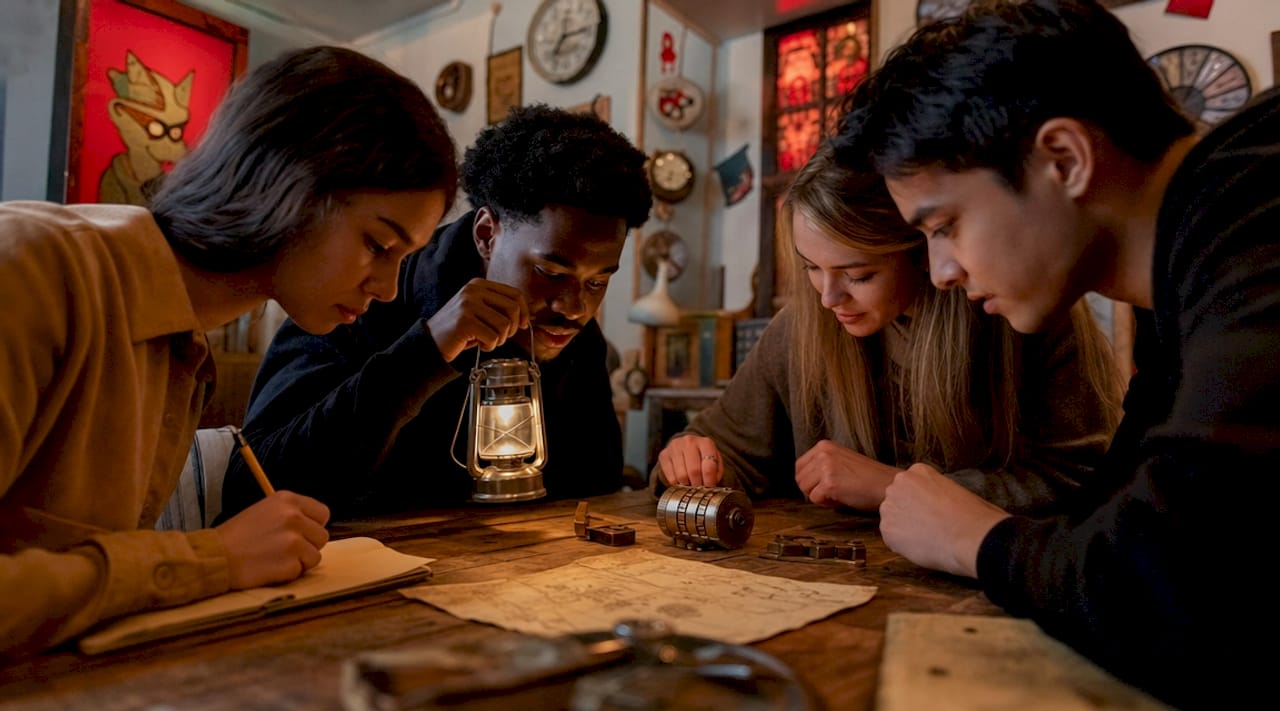
Group puzzle solving shifts the dynamic from solo concentration to shared reasoning. Cooperative puzzle play focuses on reaching a shared solution rather than competing against other players. This distinction matters because it changes how groups communicate, divide tasks, and celebrate success. The absence of competition removes ego from the equation and replaces it with collective momentum.
Escape rooms are the most prominent modern example of group recreational puzzle solving in action. At venues like Codebustersescaperoom in Colorado Springs, teams work through themed rooms such as “Stranger 80’s” and “Flight of Deception,” solving interconnected puzzles under a time limit. The logic and deduction skills required mirror those in solo puzzle solving, but the social layer adds communication and task delegation as additional challenges.
Group puzzle activities and their social benefits include:
- Escape rooms: Build communication, task delegation, and shared problem solving under pressure.
- Cooperative board games: Games like Pandemic or Exit: The Game train groups to pool information and make collective decisions.
- Puzzle hunts: Multi-stage challenges where teams solve a series of connected puzzles, rewarding both individual expertise and group coordination.
- Jigsaw puzzles as a group: Low-pressure, meditative, and effective at building patience and spatial reasoning in a social setting.
Research on family entertainment benefits confirms that shared recreational activities strengthen relationships and improve group communication. Puzzle solving, specifically, adds the cognitive dimension that most passive entertainment lacks. You are not just spending time together. You are thinking together, which is a qualitatively different experience.
How to start and enjoy recreational puzzle solving effectively
Starting a puzzle hobby does not require special equipment or prior experience. The most effective approach is to match your first puzzles to your current skill level and expand from there. Beginning with a 500-piece jigsaw or a beginner Sudoku grid gives you early wins that build confidence and establish the habit.
Practical steps to get started:
- Choose by interest, not prestige. If word games appeal to you more than math, start with crosswords or word searches. Enjoyment drives consistency, and consistency drives skill.
- Set a regular practice window. Even 15 minutes a day produces measurable cognitive benefits. Short, consistent sessions sharpen focus and improve brain fitness across age groups.
- Vary your puzzle types. Rotating between logic, word, and mechanical puzzles trains a broader range of cognitive skills than sticking to one format.
- Use apps and physical formats. Apps like NYT Games (which includes Wordle, Spelling Bee, and the Mini Crossword) offer daily puzzles with built-in difficulty scaling. Physical puzzle books from publishers like Nikoli or Penny Press provide screen-free alternatives.
- Try group formats early. Joining a puzzle hunt, visiting an escape room, or simply doing a jigsaw with friends introduces the social dimension of puzzle solving before you have fully developed solo skills.
Pro Tip: Track your solving time on the same puzzle type over several weeks. Improvement in speed and accuracy is the clearest signal that your pattern recognition is developing. It also makes the practice feel more like a game, which keeps motivation high.
The goal is not to become a competitive solver. Recreational puzzle solving is defined by enjoyment first. The cognitive benefits are a byproduct of consistent, pleasurable engagement, not a target to optimize.
Key takeaways
Recreational puzzle solving delivers genuine cognitive and social benefits because it trains the brain through structured, enjoyable challenge rather than passive entertainment.
| Point | Details |
|---|---|
| Core definition | Recreational puzzle solving is entertainment-focused problem solving under defined rules, not academic study. |
| Cognitive benefits | Puzzles build focus, flexible thinking, resilience, and mood benefits transferable to real-world challenges. |
| Technique over talent | Pattern recognition and deductive reasoning improve with practice, not innate ability. |
| Group dynamics | Cooperative puzzle formats like escape rooms add communication and teamwork to the cognitive challenge. |
| Starting point | Match puzzle difficulty to your current skill level and rotate types to maximize mental engagement. |
Why puzzle solving is more serious than it looks
People often assume puzzle solving is a passive way to kill time. After years of watching guests work through the rooms at Codebustersescaperoom, I can tell you that assumption falls apart the moment a group of strangers starts solving a multi-step logic sequence together under a 60-minute clock.
What I have observed is that the people who struggle most are rarely the least intelligent. They are the ones who skip the rules, guess instead of deduce, and treat the puzzle as an obstacle rather than a system to understand. The people who perform best treat every clue as a constraint to be mapped, not a hint to be acted on impulsively. That is a thinking habit, and it is one that puzzle solving builds directly.
The other thing I have noticed is that the social version of puzzle solving reveals things about group dynamics that most team-building exercises miss entirely. When a team solves a room, you see who listens, who leads, who gets tunnel vision, and who synthesizes information from multiple sources. Those are real skills, and the puzzle environment surfaces them without the political weight of a workplace setting.
Physical and digital puzzle formats each have their place. Apps offer convenience and daily habit formation. Physical puzzles and escape rooms offer presence, tactile engagement, and the kind of shared memory that sticks. My honest recommendation is to use both, but do not underestimate what happens when you put a group of people in a room with a hard puzzle and a ticking clock.
— CodeBusters
Experience recreational puzzle solving at Codebustersescaperoom
Codebustersescaperoom in Colorado Springs offers one of the most direct ways to experience group recreational puzzle solving in a fully designed environment.

Each themed room, from “Past to the Future” to “Flight of Deception,” is built around interconnected puzzles that require deductive reasoning, pattern recognition, and team communication to solve. Private bookings are available for families, corporate teams, and friend groups of all experience levels. Whether you are new to puzzle hobbies or a seasoned solver looking for a physical challenge, the rooms are designed to match a range of difficulty levels. Book your session and find out what your group is capable of when the clock starts.
FAQ
What is recreational puzzle solving?
Recreational puzzle solving is the practice of solving puzzles for entertainment and mental stimulation under defined rules, rather than for academic or professional purposes. Common formats include logic puzzles, Sudoku, crosswords, and mechanical puzzles like the Rubik’s Cube.
What are the main benefits of puzzles for the brain?
Puzzles improve focus, flexible thinking, resilience, and mood, with research from Case Western Reserve University confirming that these skills transfer to real-world problem solving. Short, consistent sessions are enough to produce measurable cognitive benefits.
How do puzzle solving techniques develop over time?
Deductive reasoning and pattern recognition improve with repeated engagement rather than innate talent. Consistent practice with rule-based constraint systems builds a more systematic approach to solving challenging problems.
How does group puzzle solving differ from solo solving?
Group puzzle solving is cooperative rather than competitive, requiring communication, task delegation, and shared reasoning to reach a solution. Escape rooms are the most structured modern example of this format.
What is the best way to start a puzzle hobby?
Start with puzzles matched to your current skill level, choose formats that genuinely interest you, and practice for short sessions daily. Rotating between logic, word, and mechanical puzzles builds the broadest range of cognitive skills.