Escape Room Gift Ideas That Actually Get Used
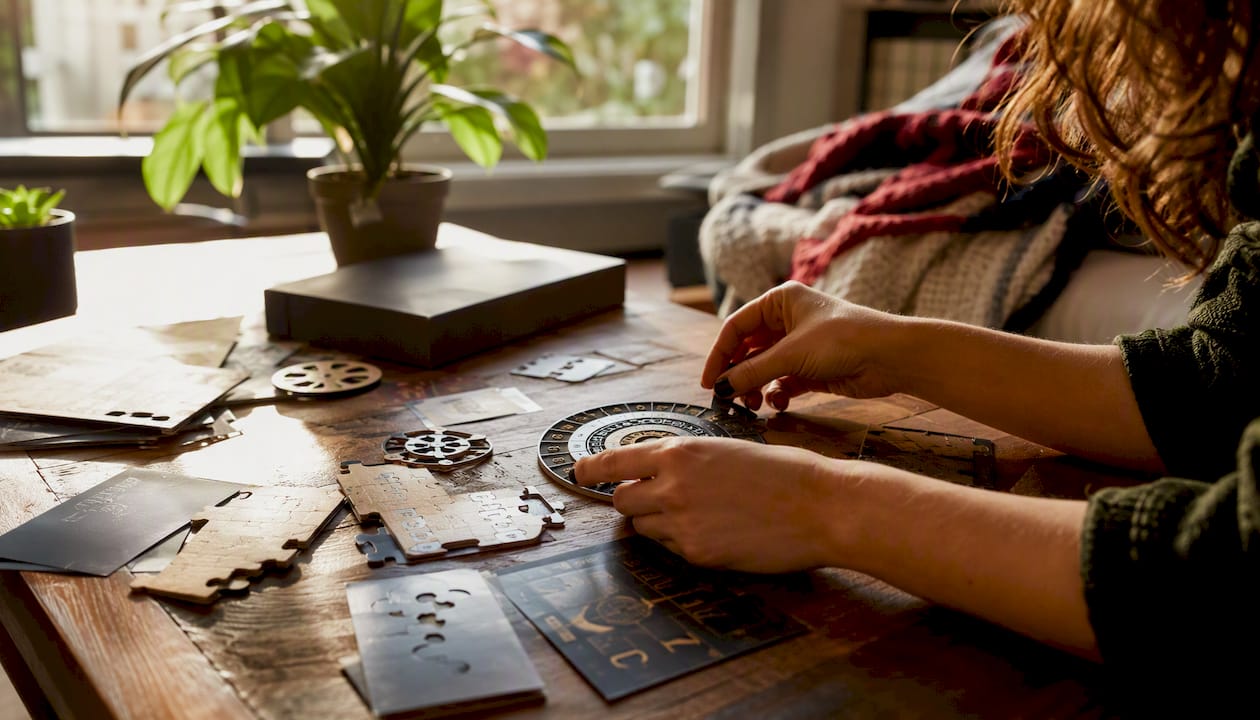
The four best escape room gift ideas are an in-person experience voucher, an at-home boxed escape game, a subscription or standalone mystery box, and a mechanical puzzle box. Which one wins depends entirely on the recipient, not the price tag.
- Experience voucher — best for someone who wants a social night out with friends or family, no setup required.
- Boxed game (Exit, Unlock!, Deckscape) — best for a puzzle lover who wants to play tonight, on their own couch.
- Subscription or standalone mystery box (Hunt A Killer, Deadbolt Mystery Society) — best for a fan who loves a slow-burn narrative they can return to.
Key Takeaways
The best escape room gift matches the recipient’s play style, group size, and appetite for replayability more than it matches any single trending product.
| Point | Details |
|---|---|
| Match format to personality | Pick a voucher for social players, a boxed game for solo or couple play, and a mechanical puzzle for collectors. |
| Watch replayability | Single-use Exit titles suit experienced players; app-assisted Unlock! titles suit anyone who hates a one-and-done game. |
| Choose standalone over subscription when unsure | A one-off Hunt A Killer box tests interest without locking a recipient into a recurring charge. |
| Presentation adds real value | Wrap a voucher inside a locked box or cipher envelope instead of handing over a plain gift card. |
| Book a private experience through Codebusters Escape Room | Gift vouchers for private rooms at either Colorado Springs location let recipients pick their own date and group size. |
Where to Buy Escape Room Gifts
Specialty hobby shops and publisher sites carry the most reliable stock of boxed games and mechanical puzzles, while Amazon covers fast shipping and price comparisons across categories. Etsy is the best source for printable DIY kits and custom puzzle makers, and Uncommon Goods curates novelty unlock gifts and stocking stuffers in one place. For subscription mystery boxes, buy directly from the brand’s own site to control activation timing and gift-length options.
Table of Contents
- Quick Escape Room Gift Ideas You Can Buy Right Now
- How Do At-Home Escape Room Games Compare?
- Are Subscription Mystery Boxes Worth Gifting?
- Why Mechanical Puzzle Boxes Make Great Gifts
- What DIY Escape Room Kits Should You Buy?
- Best Novelty and Stocking-Stuffer Escape Room Gifts
- What Are the Best Escape Room Gifts for Kids?
- How Do You Present an Escape Room Gift?
- How Do You Choose the Right Escape Room Gift?
- Give an Escape Room Gift Without the Guesswork
- Sources
Quick Escape Room Gift Ideas You Can Buy Right Now
If you need a fast decision, start here. Each of these six picks solves a different gifting problem, from the person who has everything to the coworker whose interests you barely know.
- Best experience voucher: A private-room gift card from a local escape venue (budget to mid-range, $25 to $40 per person). Great when you’re not sure of their schedule, since most vouchers let the recipient book their own date.
- Best at-home boxed game: An Exit: The Game title (budget, under $20). Perfect for someone who wants to play the same night they open it.
- Best standalone mystery box: A one-off Hunt A Killer release rather than a subscription (mid-range, $30 to $50). Ideal for a true-crime fan who doesn’t want a recurring charge.
- Best mechanical puzzle box: A sequential brass puzzle or wooden box (mid-range to splurge, $25 to $150). Suited to the person who already owns every board game.
- Best DIY prop kit: A padlock and clue-envelope starter set (budget, $20 to $35). Works for the host who wants to build their own game night.
- Best stocking stuffer: A Phone Jail box or bottle puzzle (budget, under $25). A quick add-on when the main gift needs a little more under the tree.
How Do At-Home Escape Room Games Compare?
At-home boxed games fall into four rough categories, and mixing them up is the fastest way to disappoint a recipient. Some are single-use. Some are designed to be played dozens of times. Knowing the difference before you buy matters more than the brand name on the box.
Exit: The Game titles are single-use. Players fold cards, tear pieces, and decode wheels that get physically altered as the game progresses, which is exactly what makes them feel like a real room instead of a board game. Difficulty runs at a moderate level depending on the title, play time is about an hour or so, and they’re built for small groups of players. Community discussion on BoardGameGeek points to Exit as a recurring pick for mixed-age family game nights, largely because the puzzles scale from simple to genuinely tricky within the same box.
Unlock! series games use a companion app instead of physical alteration, so nothing gets destroyed and a friend can technically replay a title they haven’t tried. Difficulty tends to land around 3 out of 5, sessions run close to an hour, and they suit 1 to 6 players.
Deckscape leans lighter and faster, often finishing in 45 minutes, which makes it a strong pick for a beginner or a group with a shorter attention span.
ThinkFun’s Escape the Room line is built with families in mind, with sturdier components and simpler mechanics that hold up for 8-and-up players.
- Where to buy: publisher websites, hobby and game shops, and general marketplaces like Amazon all carry the major lines.
- Price band: most titles run $15 to $25 per box.
An editorial roundup of top escape-room gift formats places Exit, Unlock!, and Deckscape among the most recommended at-home options, alongside subscription boxes and mechanical puzzles.
Pro Tip: Buy two single-use Exit titles instead of one. A single box gets solved in an evening and then sits on a shelf, but two gives a puzzle-loving couple or family a second game night without repeating the same mechanics.
Are Subscription Mystery Boxes Worth Gifting?
Subscription boxes and standalone mystery boxes solve different problems, and confusing them is the most common gifting mistake in this category. Hunt A Killer and Deadbolt Mystery Society both build episodic true-crime and mystery narratives where each box picks up where the last left off, delivered monthly to the recipient’s door.
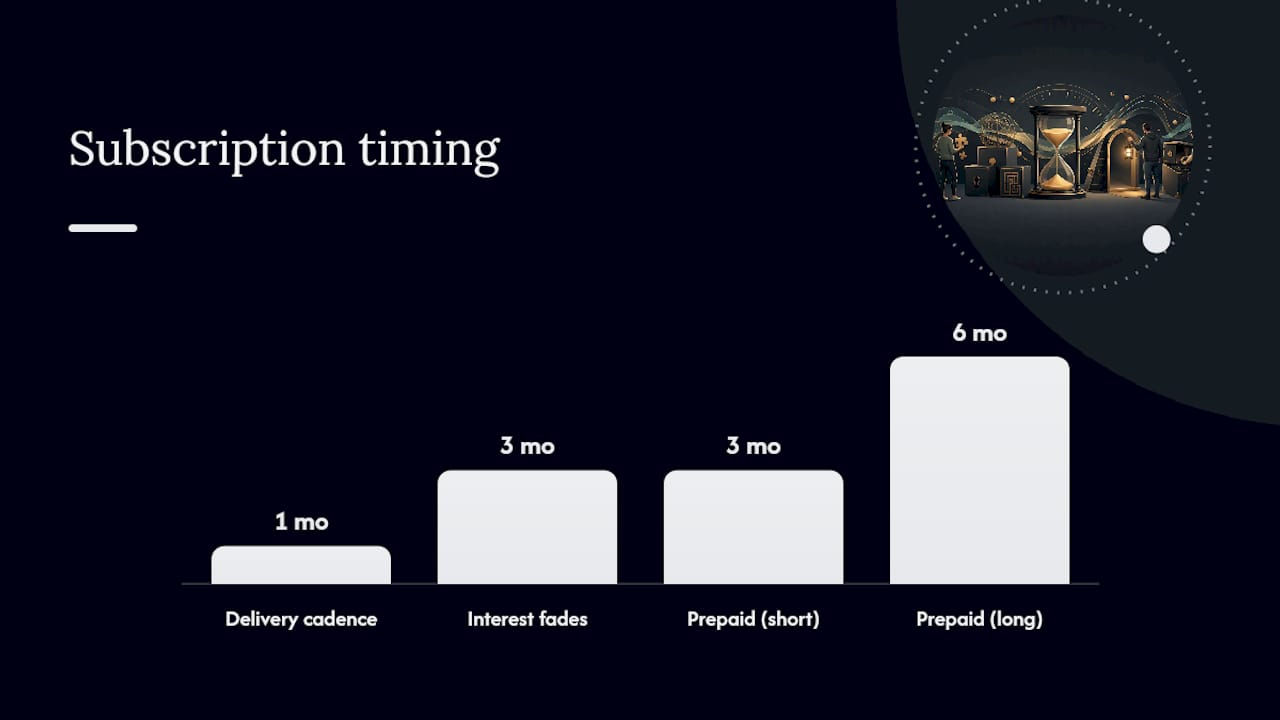
A subscription rewards someone who genuinely wants an ongoing commitment. It also risks becoming a chore if the recipient’s interest fades by month three, since most services require an active cancellation rather than a natural stopping point.
A standalone box sidesteps that problem entirely. Hunt A Killer and similar brands sell one-off releases that deliver the same production quality (physical evidence, character dossiers, forensic-style clues) without asking for a recurring commitment.
- Pros of subscriptions: high production value, a built-in reason to look forward to the mail, strong fit for a dedicated true-crime or mystery fan.
- Cons of subscriptions: recurring cost, requires active cancellation, can feel like homework if life gets busy.
- Gift-card advice: if you’re buying a subscription as a gift, purchase a prepaid gift subscription (usually 3 or 6 months) rather than setting up an auto-renewing plan under your own card. Write the activation code and the first episode’s estimated arrival date on a card so the recipient isn’t guessing.
Choose a subscription for a serial-story fan who already devours limited series and true-crime podcasts. Choose a standalone box for someone you’re not sure will stick with a monthly commitment, or for a first-time gift where you want to gauge interest before locking in a longer subscription.
Why Mechanical Puzzle Boxes Make Great Gifts
Mechanical puzzles skip the narrative entirely and hand the recipient a physical object that fights back. There’s no app to open, no story to follow, and no expiration date on the fun. That’s exactly why they work as gifts for people who already have every board game on their shelf: the puzzle itself is the entire product, and a well-made one gets picked up and fiddled with for years.
Sherlocked puzzle boxes lean into a detective aesthetic, layering multiple locking mechanisms that need to be solved in sequence before the box opens. Sequential brass puzzles and traditional Japanese-style wooden boxes require a specific, often lengthy series of moves, sometimes dozens of steps, to release the lid. Cryptex-style locks use rotating letter or number dials instead of a mechanical trick, which makes them a gentler entry point for a beginner.
- Label difficulty honestly before wrapping: a 20-move sequential box will frustrate a first-timer, while a simple cryptex will bore a collector.
- Check for small parts or sharp brass edges if the gift is headed to a household with young kids.
- Well-made wooden and brass puzzles double as desk displays even after they’ve been solved, which adds real collectability for repeat gift-giving occasions.
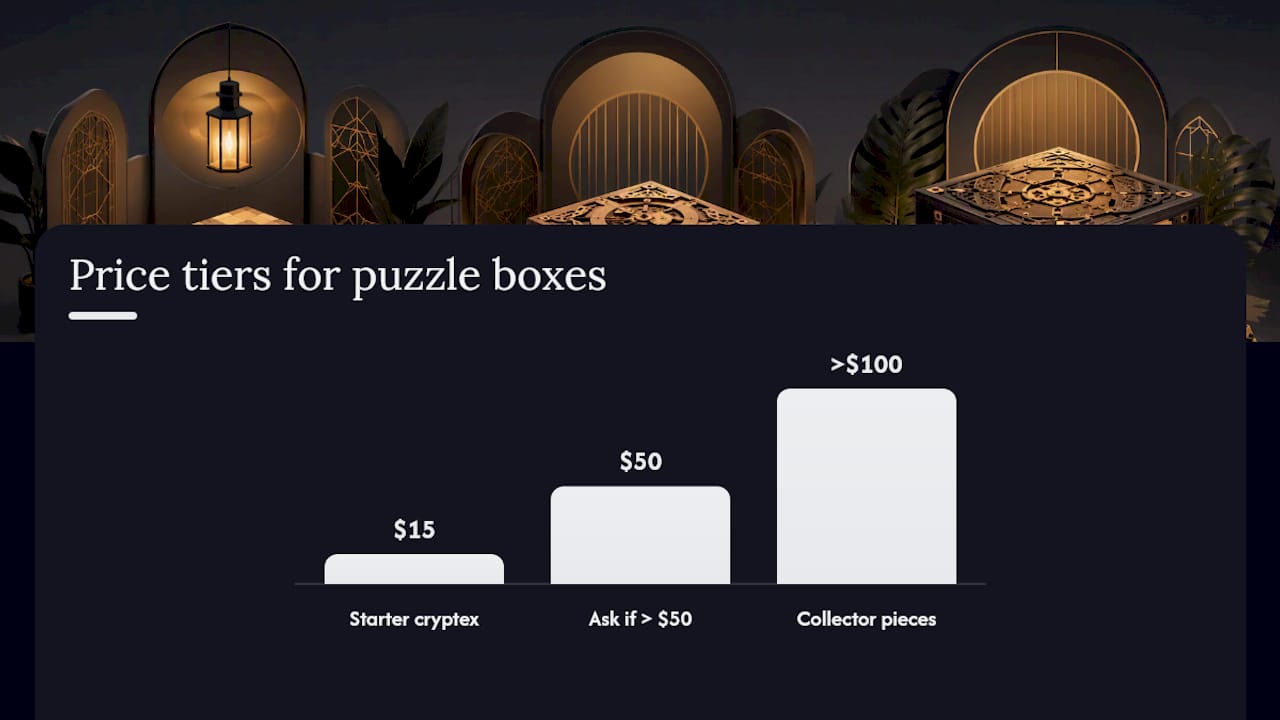
Pro Tip: Ask about the recipient’s current collection before buying a puzzle box above $50. Serious collectors often know exact models they’re missing, and a duplicate is a wasted splurge.
Specialty puzzle makers and general marketplaces both carry these, with beginner cryptex locks starting around $15 and hand-crafted collector pieces climbing past $100.
What DIY Escape Room Kits Should You Buy?
Some puzzle fans don’t want to receive a game. They want the pieces to build their own. A DIY prop kit hands them the raw materials to design a home escape night for friends or family, which is its own kind of gift for someone who already runs game nights.
Core categories worth stocking:
- Combination, directional, and word-based padlocks
- A keyed lock or two for variety
- UV flashlight and invisible-ink pens
- Clue folders, sealed envelopes, and wax seals
- A lockbox or small chest to hide the final prize
Starter-kit checklist for a first-time builder:
- Three padlocks in different styles (combination, directional, word)
- One UV pen and blacklight flashlight combo
- A pack of blank clue cards and sealed envelopes
- A small lockbox to serve as the final reveal
- A notepad for the giver to sketch a simple puzzle chain
Reliable prop supplies show up on general marketplaces, hobby shops, and specialty puzzle sites, usually running $30 to $60 for a starter bundle. Skip anything involving real firearms, live wiring, or actual fire, no matter how “authentic” it looks in photos. Present the kit in a labeled box with a one-page “starter puzzle” already built in, so the recipient can test-run it before designing their own.
Best Novelty and Stocking-Stuffer Escape Room Gifts
Not every gift needs to be a two-hour commitment. Novelty unlock gifts and small puzzle items work as the perfect finishing touch on a bigger present, or as a standalone stocking stuffer for the puzzle fan on your list.
- Phone Jail: a lockbox that keeps a phone out of reach until a combination is solved, popular as an office-desk novelty.
- Wine and whiskey bottle puzzle boxes: the recipient has to solve a mechanical trick before they can pour a drink, which turns a bottle of wine into an actual gift instead of an afterthought.
- Small mechanical brainteasers: metal disentanglement puzzles or mini cryptex keychains, usually under $15.
- Puzzle books and lateral-thinking collections: portable, no batteries, and genuinely tricky for anyone who likes riddles on a plane or in a waiting room.
Pair a novelty item with a small gift card or wrap it inside a themed “clue envelope” for extra presentation points. Keep novelty gifts as the add-on, not the headline. A serious puzzle collector will appreciate a bottle puzzle box, but it shouldn’t be the only thing under the tree for someone who solves escape rooms competitively.
What Are the Best Escape Room Gifts for Kids?
Family-friendly escape gifts need shorter play times, simpler setups, and puzzles that don’t punish a wrong guess too harshly. Match the product to the age group rather than the theme.
- Ages 6 to 9: simple activity kits with sticker-based clues and physical objects to manipulate, not reading-heavy puzzles.
- Ages 10 and up: cooperative boxed games like ThinkFun’s family line, which balance challenge with forgiving hints.
- Mixed-age groups: assign younger players simpler tasks (matching symbols, finding hidden objects) while older kids and adults handle ciphers and math puzzles.
Look for washable components and sturdy cardboard pieces that can survive a few enthusiastic hands. If you’re adapting an adult-level Exit or Unlock! title for a family night, read through the first puzzle beforehand and quietly assign the easier steps to younger players so nobody feels stuck for too long.
How Do You Present an Escape Room Gift?
A gift card sitting in an envelope is fine. A gift card wrapped in a small puzzle the recipient has to solve to find it is memorable. Presentation is where escape-room gifts get to have a little fun with their own format.
- Buy the voucher or game first, then confirm the recipient’s likely availability before locking in any date-specific booking.
- Check the voucher’s terms: expiration window, minimum or maximum group size, and any blackout dates around holidays.
- Include scheduling notes with the gift, such as two or three suggested weekend dates, so the recipient isn’t left guessing how to redeem it.
- Wrap it with a clue, not a bow. Tuck the voucher inside a locked box, a sealed envelope with a simple cipher, or a small puzzle box that has to be opened first.
- Pair it with something immediate, like a small stocking-stuffer puzzle, so the recipient has something to actually open on the day, even if the experience itself is weeks out.
Some venues also extend discounts to specific groups, including a 10% military discount at select escape venues, so it’s worth asking before you buy.
How Do You Choose the Right Escape Room Gift?
Match the product to the person, not the trend. Run through this short checklist before you commit:
- Experience level: a first-timer does better with a guided in-person room or a simple boxed game; a veteran wants higher difficulty or a mechanical puzzle.
- Play style: does this person love a story (subscription box, boxed game) or a physical challenge with no narrative (mechanical puzzle)?
- Group size: solo puzzlers lean toward mechanical boxes and puzzle books; couples and families do better with boxed games or a private voucher.
- Replayability: someone who hates finishing something forever should get an app-assisted Unlock! title or a mechanical puzzle, not a single-use Exit box.
- Budget: stocking stuffers under $25, boxed games in the $15 to $25 range, experience vouchers around $25 to $40 per person, and collector puzzle boxes climbing past $100.
Red flag to avoid: gifting a single-use, component-altering game to someone who’s already told you they hate throwing things away after one use. A replayable Unlock! title or a reusable puzzle box solves that problem without sacrificing the escape-room feel.
Rule of thumb: pick an experience voucher when the recipient values social time and group energy over solo focus. Pick a subscription box or mechanical puzzle when they’d rather solve something on their own schedule.
When Is a Live Experience the Better Gift?
A physical escape room wins when the recipient cares more about shared memory than solving something alone. Immersive sets, a countdown clock, and a team scrambling together create a kind of pressure no boxed game fully replicates. If the person on your list already plans group outings or works better collaborating out loud than reading clue cards silently, a private booking beats a product every time.
The move is simple: buy a private room voucher from Archers Battlefield and hand over two or three suggested dates so scheduling isn’t left to guesswork. Private bookings, like the themed rooms Codebusters Escape Room runs at both Colorado Springs locations, let a group claim the entire room rather than getting paired with strangers.
Pro Tip: Ask the recipient’s group size before buying a private voucher. Most rooms have a minimum and maximum headcount, and a voucher sized for six people is wasted on a group of two.
Why We Recommend Pairing a Voucher With a Small Game
We keep coming back to the same combination when someone asks for a single recommendation: an experience voucher paired with a small boxed game. The voucher gives the recipient something to look forward to and schedule around their own life. The boxed game gives them something to open and play that same night. Codebusters Escape Room’s flexible private bookings make the voucher half of that pairing easy to give without pinning down an exact date up front.
Give an Escape Room Gift Without the Guesswork
Codebusters Escape Room is the shortcut when you’d rather hand someone a real night out than another box to assemble. A gift voucher for a private room at either Colorado Springs location skips the scheduling back-and-forth that comes with buying a public-session ticket, since the recipient picks their own date and claims the whole room for their group.
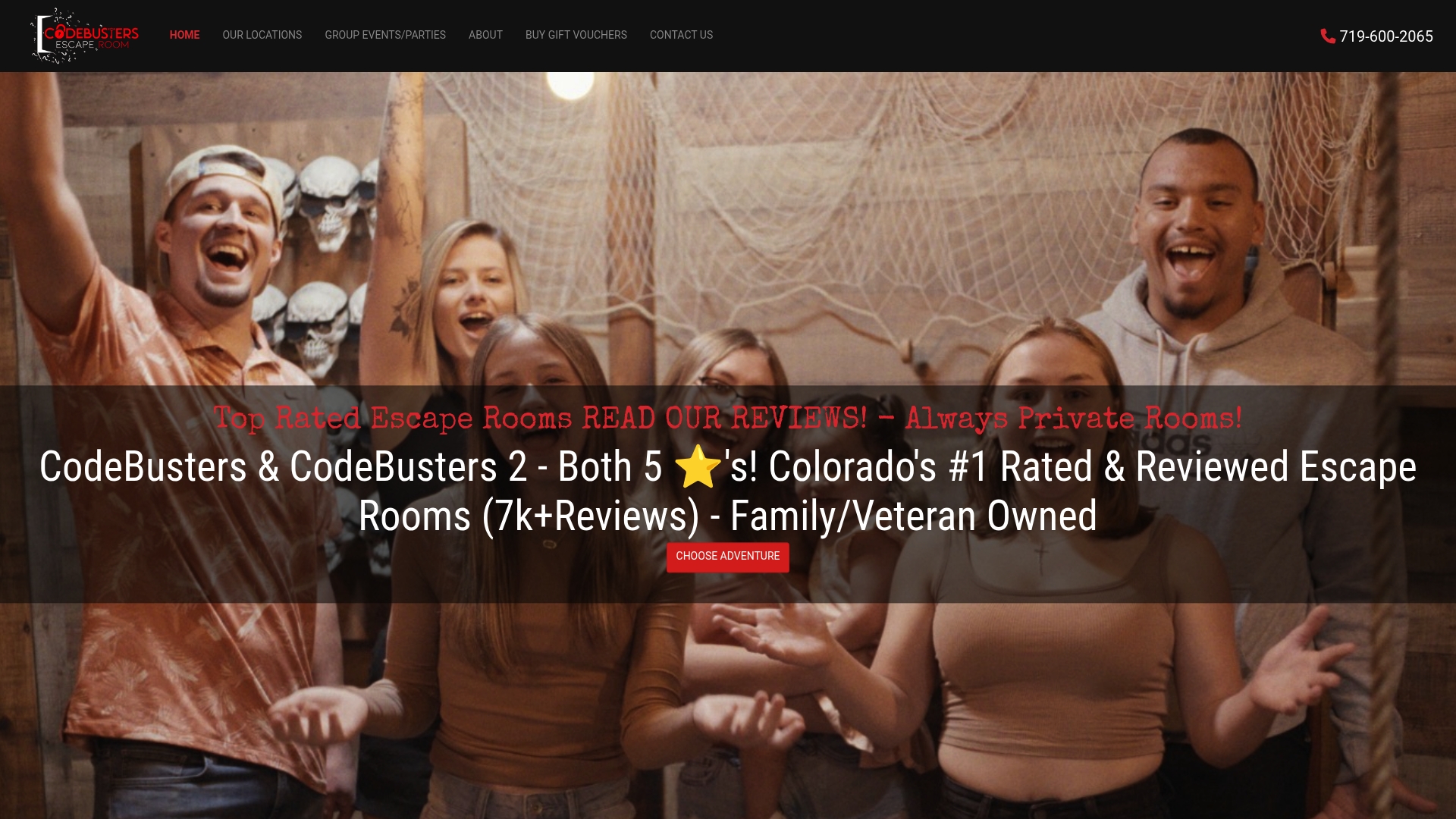
Buying one takes two steps: pick a themed room from the Codebusters Escape Room lineup, then choose a gift voucher amount at checkout. Before you send it, check the group-size range for the room you’re gifting toward, since private bookings have minimum and maximum headcounts that vary by theme. If the recipient’s crew tends to run larger, a private corporate or party booking might fit better than a standard voucher. Either way, visit Codebusters Escape Room to lock in a gift voucher or a private room date today.
Sources
- Gifts for Escape Room Enthusiasts | TheDrop
- Uncommon Goods | Escape Room Gifts
- Escape room type game for a mixed age family gift. - BoardGameGeek
- Escape Room Gift - Etsy