Escape Room Selection Guide 2026: Boost Group Fun 40%
Choosing the wrong escape room can turn an exciting group outing into a frustrating experience. Many groups struggle to match room capacity, themes, and difficulty to their specific needs, leading to disengagement and wasted time. This guide walks you through proven selection strategies to ensure your group enjoys a memorable, bonding escape room adventure tailored perfectly to your size, interests, and skill level.
Table of Contents
- Prerequisites: What You Need Before Booking An Escape Room
- Step 1: Assessing Your Group Size And Capacity Needs
- Step 2: Matching Escape Room Themes To Your Group’s Interests
- Step 3: Selecting Difficulty Levels Based On Experience And Objectives
- Step 4: Booking Logistics And Private Room Options
- Step 5: Corporate Team-Building Benefits And Considerations
- Step 6: Common Mistakes And Troubleshooting
- Step 7: Expected Results And Success Metrics
Key Takeaways
| Point | Details |
|---|---|
| Match group size to room capacity | Groups of 4 to 8 participants ensure optimal engagement and manageability |
| Align themes with interests | Theme relevance increases participation by 40% and boosts immersion |
| Choose appropriate difficulty | Matching difficulty to experience reduces early abandonment by 30% |
| Book early for availability | Reserve 1 to 2 weeks ahead, especially for weekends and holidays |
| Leverage corporate benefits | Post-game debriefs can raise team cohesion by 30% for work groups |
Prerequisites: What You Need Before Booking an Escape Room
Before you commit to any escape room booking, gather essential information about your group and local options. Start by determining your exact group size and noting participant ages and physical abilities. Clarify your primary goal, whether it’s pure entertainment, family bonding, or corporate team building.
Research local escape room offerings in Colorado Springs to understand available themes, difficulty levels, and capacity limits. Review each venue’s safety protocols, accessibility features, and current COVID-19 policies to ensure a comfortable experience for everyone. Understanding group size and composition improves room selection and helps avoid mismatches that can derail your outing.
Plan your booking timing carefully to avoid peak unavailability. Consider these preparation steps:
- Confirm exact participant count and any special needs
- Identify preferred themes based on group interests
- Check escape room participation guidelines for age recommendations
- Review venue safety and emergency exit information
- Compare pricing and group discount options
This upfront preparation saves time and ensures you select an escape room that delivers maximum enjoyment for your specific group.
Step 1: Assessing Your Group Size and Capacity Needs
Group size directly impacts your escape room experience quality. Groups of 4 to 8 participants are optimal for most escape rooms to balance engagement and manageability, allowing everyone to contribute without overcrowding puzzle stations. Smaller groups may struggle with complex multi-step challenges, while oversized groups often experience frustration as participants compete for limited puzzle interaction.
For larger parties exceeding eight people, consider booking multiple rooms or splitting into staggered sessions. This approach maintains the intimate problem-solving dynamic that makes escape rooms effective. Private bookings offer a controlled environment particularly valuable for families with young children or corporate teams requiring confidentiality.
Carefully evaluate children’s ages and participation abilities. Most venues set minimum age requirements around 8 to 10 years, though family-friendly rooms may accommodate younger participants with parental supervision. Check escape room capacities before booking to ensure your group fits comfortably.
Pro Tip: If your group sits at the upper capacity limit, ask venue staff about puzzle distribution. Some rooms concentrate challenges in tight spaces, making maximum capacity feel cramped.
Consider these capacity factors:
- Ideal group size ranges from 4 to 8 for balanced interaction
- Groups of 2 to 3 may miss collaborative puzzle elements
- Groups exceeding 8 should split into multiple bookings
- Private rooms eliminate distractions from unknown participants
- Age and ability diversity requires rooms with scalable difficulty
Review official escape room group size guidelines to finalize your booking strategy and ensure everyone actively participates throughout the experience.
Step 2: Matching Escape Room Themes to Your Group’s Interests
Theme selection dramatically affects engagement levels. When escape room themes align with your group’s interests, participation rates jump by approximately 40% as players become emotionally invested in the narrative and challenges. A sci-fi enthusiast will engage more deeply with a space station mystery than a historical detective story.

Families with children typically prefer lighter, story-driven themes featuring adventure or fantasy elements suitable for all ages. These rooms emphasize exploration and discovery over intense psychological horror or complex technical puzzles. Corporate groups often benefit from challenge-based themes requiring logical problem-solving and clear communication, reinforcing workplace skills in an entertaining context.
Research unique escape room themes available in Colorado Springs to find options matching your group’s preferences. Popular categories include:
- Mystery and detective investigations for analytical thinkers
- Adventure and treasure hunts for action-oriented groups
- Horror and suspense for thrill-seekers comfortable with jump scares
- Sci-fi and time travel for technology and innovation fans
- Historical and period pieces for culture enthusiasts
Ask your group about favorite movies, books, or games to identify shared interests. A quick poll reveals common ground that translates into higher escape room enjoyment. Venues often provide detailed theme descriptions and sample puzzles, helping you gauge whether the narrative will resonate.
Don’t overlook room aesthetics and production quality. High-quality set design and authentic props enhance immersion, making players feel transported into the story. This attention to detail separates memorable experiences from forgettable ones, especially for groups celebrating special occasions or seeking Instagram-worthy moments.
Step 3: Selecting Difficulty Levels Based on Experience and Objectives
Difficulty matching prevents the common problem where groups either breeze through too quickly or abandon in frustration. Adaptive difficulty rooms raise satisfaction by approximately 25% compared to static challenge levels, allowing mixed-experience groups to succeed together. These systems provide escalating hints or unlock alternative puzzle paths based on team progress.
For groups mixing first-timers with escape room veterans, choose venues offering scalable puzzles and robust hint systems. Clear hint delivery through screens, audio, or staff intervention keeps momentum without spoiling the achievement feeling. Higher difficulty can strengthen corporate team building by forcing creative collaboration, but it risks increased frustration if the challenge exceeds group capabilities.
Rooms with transparent rules and multiple hint options significantly reduce early abandonment. Underestimating difficulty causes 30% of groups to abandon the escape room early, wasting time and money. Start with beginner or intermediate rooms if your group includes multiple first-timers, saving advanced challenges for future visits.
Pro Tip: Ask venue staff about average completion rates for each room. Success rates between 30% and 50% indicate well-balanced difficulty that challenges without overwhelming most groups.
This comparison helps match difficulty to your situation:
| Difficulty Level | Best For | Completion Rate | Key Features |
|---|---|---|---|
| Beginner | First-timers, families with kids | 60-70% | Straightforward puzzles, generous hints |
| Intermediate | Mixed experience, casual groups | 40-50% | Moderate complexity, balanced hints |
| Advanced | Veterans, corporate challenges | 20-30% | Complex logic, minimal hints |
| Expert | Enthusiasts only | 10-15% | Brutal difficulty, rare hints |
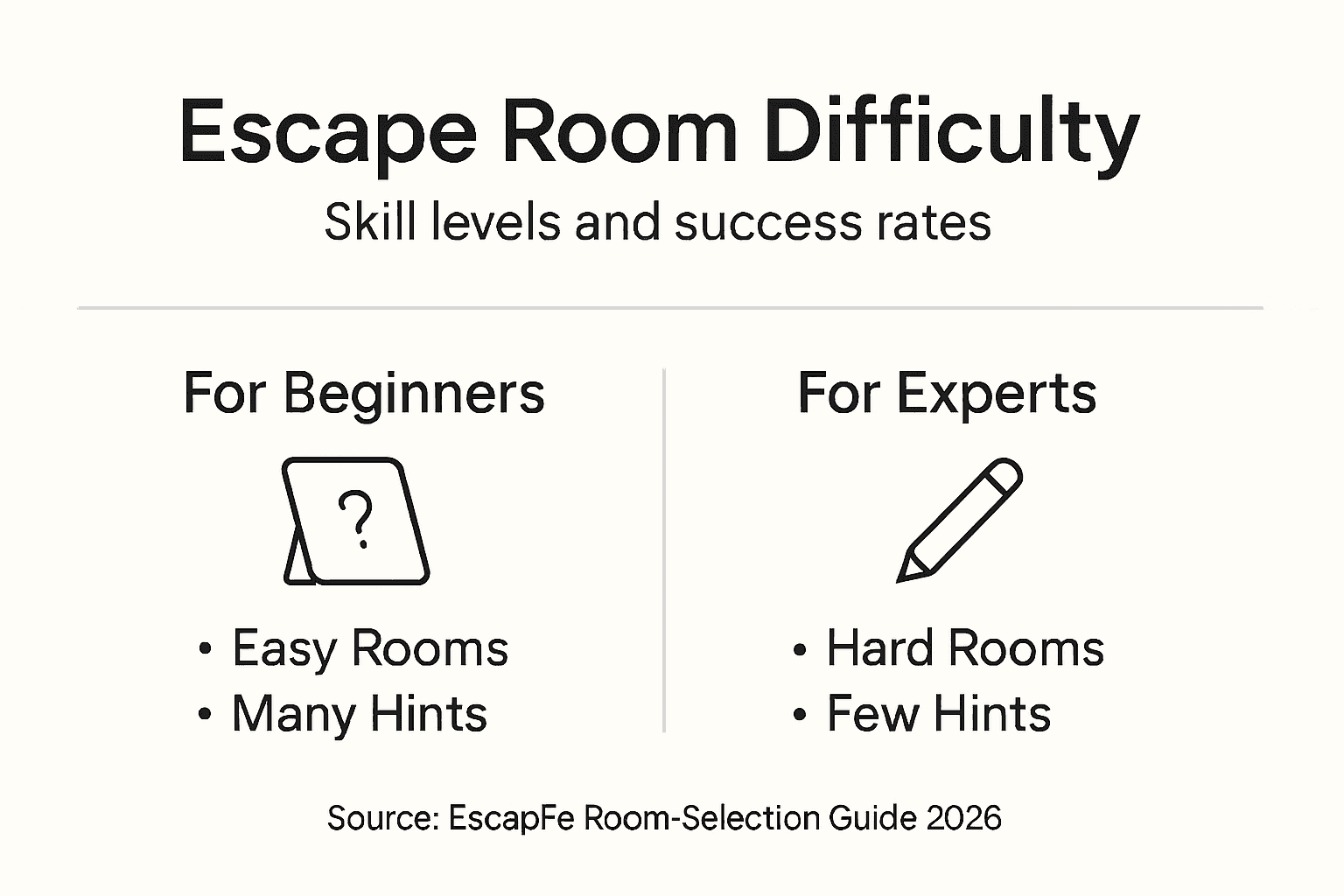
Check whether adaptive difficulty escape rooms are available in your area, as these provide the most flexible and satisfying experiences for diverse groups.
Step 4: Booking Logistics and Private Room Options
Secure your preferred escape room by booking 1 to 2 weeks in advance, especially for weekend evenings and holiday periods when demand peaks. Last-minute bookings often force compromises on theme, time slot, or group splitting. Prices in Colorado Springs typically range from $28 to $40 per person, varying by room complexity and peak versus off-peak timing.
Private room bookings carry premium value for specific group types. Corporate clients overwhelmingly prefer this option, with 78% choosing private rooms to ensure confidentiality and eliminate distractions from strangers. Families also benefit from private bookings, allowing parents to guide younger children without external pressure or strangers witnessing family dynamics.
Look for group discounts, promotional packages, and off-peak pricing to maximize value. Many venues offer reduced rates for bookings of six or more participants or weekday afternoon slots. Gift certificates and seasonal promotions provide additional savings opportunities.
Review booking and pricing details carefully, confirming:
- Total cost including taxes and any additional fees
- Cancellation and rescheduling policies
- Arrival time requirements before start time
- Payment methods accepted
- Age restrictions and supervision requirements
- Accessibility accommodations if needed
Confirm your booking details in writing and arrive 10 to 15 minutes early for orientation and rule explanations. Late arrivals may lose reserved time or forfeit deposits. Understanding team cohesion strategies helps corporate bookers maximize their investment through proper pre-game preparation.
Step 5: Corporate Team-Building Benefits and Considerations
Escape rooms deliver measurable improvements in workplace communication and collaboration. 65% of corporate teams report improvement in communication skills after escape room activities, as the time pressure forces clear information sharing and active listening. The neutral, playful environment removes workplace hierarchies, allowing quieter team members to contribute leadership and creative problem-solving.
Post-escape debrief sessions amplify these benefits. Structured discussions about team decision-making, communication patterns, and individual contributions can raise team cohesion by 30% compared to the escape room experience alone. These conversations help translate game insights into workplace applications.
Customizable corporate bookings address specific organizational goals beyond generic team building. Venues can adjust difficulty, provide facilitator-led debriefs, or incorporate company messaging into the experience. Private rooms remain essential for sensitive team dynamics or confidential discussions during debrief sessions.
Explore corporate team-building options that include:
- Facilitated debrief sessions analyzing team performance
- Custom difficulty adjustments matching team experience
- Private booking guarantees for confidentiality
- Flexible scheduling for large department groups
- Performance metrics and feedback reports
Schedule corporate escape rooms during work hours rather than after-hours to ensure full participation and signal organizational commitment to team development. Budget for the full experience including debrief time, as rushing through post-game discussion eliminates valuable learning opportunities.
Step 6: Common Mistakes and Troubleshooting
Avoiding frequent booking errors ensures your escape room investment delivers maximum enjoyment. The most damaging mistake involves mismatching group size with room capacity, causing either overcrowding frustration or insufficient puzzle coverage. Always verify participant count before booking and choose rooms designed for your exact group size.
Difficulty mismatch ranks as the second most common error. Groups attempting advanced rooms without prior experience face 30% higher abandonment rates, while veterans selecting beginner rooms report boredom and disappointment. Request honest difficulty assessments from venue staff rather than relying solely on marketing descriptions.
Follow these steps to prevent common problems:
- Confirm final participant count 48 hours before booking to avoid last-minute capacity issues
- Request difficulty recommendations based on your group’s actual experience level
- Clarify hint system mechanics and availability before starting
- Ask about emergency exit procedures and safety protocols
- Arrive early to complete waivers and receive thorough rule explanations
- Communicate special needs or accessibility requirements during booking
Poor communication with venue staff leads to preventable frustrations. Ask specific questions about puzzle types, physical requirements, and scare intensity rather than making assumptions. Clear instructions and proactive staff support limit confusion and keep your group engaged throughout the experience.
Review booking mistakes to avoid in related entertainment industries for additional insights that translate to escape room reservations.
Step 7: Expected Results and Success Metrics
Understanding success benchmarks helps you evaluate your escape room experience objectively. Groups completing their escape within the time limit report 85% higher satisfaction compared to those who don’t escape, though many participants still enjoy the experience even without full completion. The journey and teamwork matter more than raw success rates.
Theme relevance correlates strongly with engagement and repeat visit intentions. When participants connect emotionally with the narrative and setting, they rate the experience higher regardless of completion status. This explains why themed room selection deserves careful attention during the booking process.
Corporate teams often demonstrate measurable communication improvements following escape room activities. Managers report increased cross-functional collaboration and creative problem-solving in subsequent work projects. These soft skill enhancements justify the team-building investment beyond the immediate entertainment value.
Positive feedback typically highlights balanced challenge levels where groups feel stretched but not overwhelmed, combined with fun atmosphere and high-quality production design. Track your group’s performance using these metrics:
| Success Metric | Target Range | Measurement Method |
|---|---|---|
| Completion rate | 30-50% typical | Time to escape or puzzles solved |
| Participant engagement | 85%+ actively involved | Post-game survey responses |
| Would recommend | 90%+ yes | Direct feedback collection |
| Communication improvement | 20-30% increase | Corporate team assessments |
| Repeat visit intent | 70%+ interested | Follow-up interest tracking |
Review escape room success metrics to understand how your performance compares to typical groups. Engagement metrics for escape rooms provide additional context for evaluating your experience quality and team dynamics.
Safety Considerations and Warnings
Escape rooms maintain excellent safety records, with incident rates below 0.01% per 10,000 participants. This exceptional safety results from rigorous venue standards and clear emergency procedures. However, groups should still verify specific safety features before booking, particularly for participants with physical limitations, anxiety disorders, or claustrophobia.
Confirm that your chosen venue maintains clearly marked emergency exits accessible at all times without puzzle-solving requirements. Staff should monitor all games through cameras or audio, ready to intervene immediately if participants signal distress or medical emergencies arise. Reputable venues conduct regular safety inspections and maintain current insurance coverage.
Review the venue’s COVID-19 protocols including sanitization frequency, ventilation systems, and mask policies if applicable. Ask about accessibility accommodations for wheelchair users, hearing impaired, or visually impaired participants to ensure inclusive experiences.
“Our industry prioritizes participant safety above all else. Every escape room must provide unrestricted emergency exits, continuous monitoring, and immediate staff intervention capabilities. Groups should never feel truly trapped or endangered during any experience.” - Escape Room Industry Safety Standards
Verify age-appropriate content for family bookings, as some horror or intense themes may frighten younger children despite meeting minimum age requirements. Trust your judgment about your group’s comfort levels rather than relying solely on venue age recommendations.
Plan Your Perfect Escape Room Experience with CodeBusters
You now understand how to select escape rooms matching your group’s size, interests, and skill level for maximum enjoyment. CodeBusters Escape Rooms in Colorado Springs delivers exactly the tailored experiences this guide recommends, with diverse themed rooms designed for families, friends, and corporate teams.
Our private booking options and adaptive difficulty systems ensure every participant engages fully regardless of experience level. Award-winning room designs combine immersive storytelling with balanced challenges that promote team bonding without frustration. As a veteran and family owned business, we understand what makes group experiences memorable.
Don’t risk booking the wrong room and disappointing your group. Book your escape room today and secure your preferred theme and time slot 1 to 2 weeks ahead of your visit. Our staff helps match you with the perfect room for your specific group dynamics and goals, whether celebrating a birthday, strengthening your team, or simply seeking adventure.
Frequently Asked Questions
How far in advance should we book an escape room in Colorado Springs?
Book 1 to 2 weeks ahead for weekend and holiday slots to guarantee availability. Early reservations secure your preferred theme and timing. Last-minute bookings often mean settling for less desirable options or sold-out disappointment. Check booking tips for current availability and promotional periods.
What should we do if our group has very different puzzle experience levels?
Select rooms offering adaptive difficulty and generous hint systems to accommodate mixed skill levels. Clear team communication and defined roles help veterans guide newcomers without dominating the experience. Many venues adjust hint frequency based on group progress. Explore adaptive difficulty puzzles designed specifically for diverse groups.
Are private escape room bookings necessary for corporate groups?
Private rooms benefit 78% of corporate teams by ensuring confidentiality and eliminating stranger distractions. This dedicated environment maximizes team-building impact and allows frank post-game discussions about workplace dynamics. While not strictly necessary, private bookings deliver substantially higher value for professional development objectives. Review corporate private bookings for customizable team experiences.
Can young children participate in escape rooms safely?
Most family-friendly rooms accommodate children ages 8 and up with parental supervision. Verify specific age requirements and theme intensity before booking. Private rooms let families proceed at comfortable paces without external pressure. Choose story-driven themes over horror or complex logic puzzles for the best young participant experiences.
What happens if we don’t escape within the time limit?
Most groups enjoy the experience regardless of completion status, with satisfaction driven more by teamwork and engagement than raw success. Many venues offer brief extensions or reveal remaining puzzles after time expires. The journey and bonding matter more than escaping, though completion does boost satisfaction by approximately 85%.
Recommended
- CodeBusters Escape Room | Escape Rooms | Colorado Springs
- 10 Virtual Escape Room Games for Kids - PCMobileGames
- Jeu de rôles en formation : Booster cohésion et leadership