Escape Rooms Boost Team Collaboration 20% in 2026

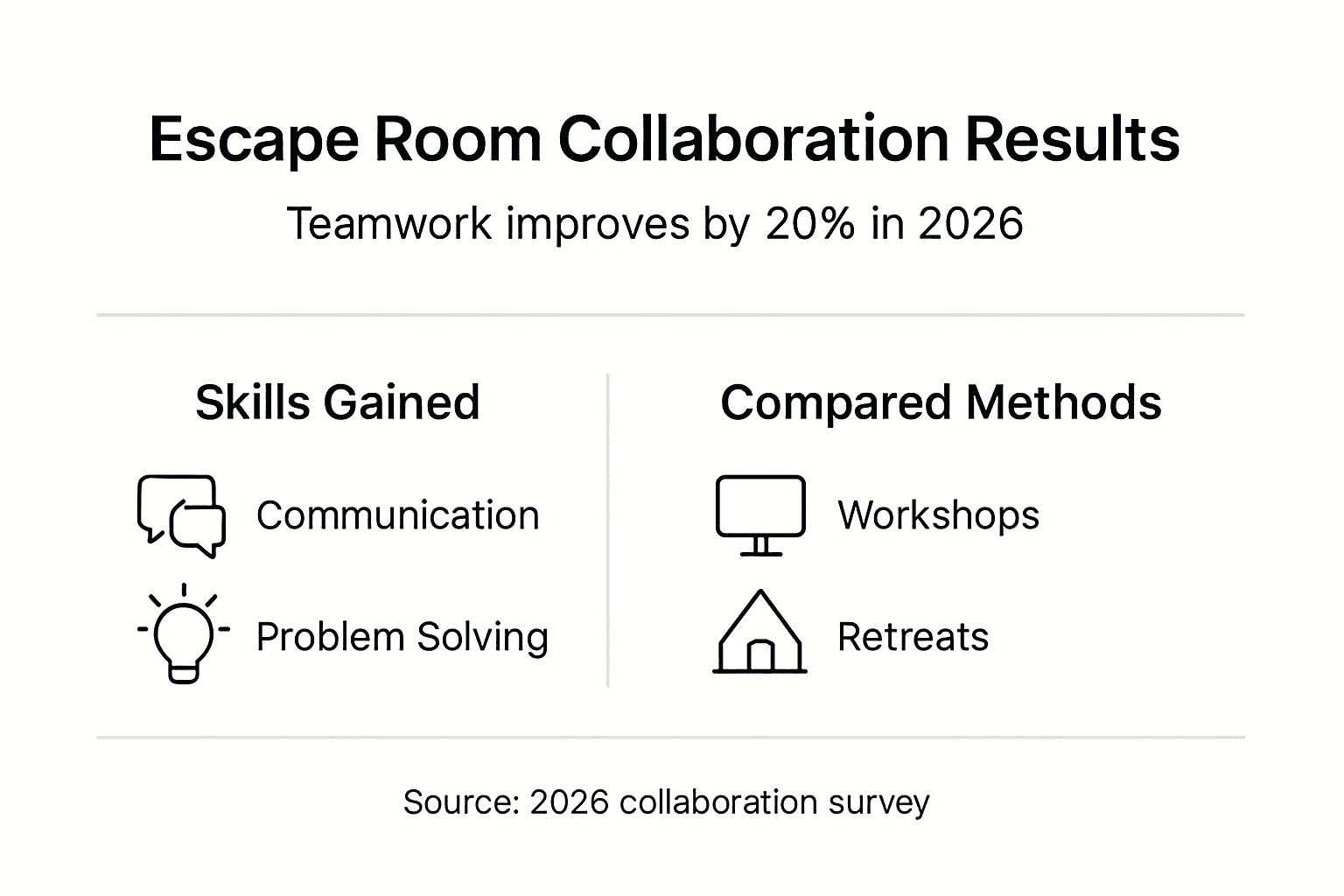
Teams across Colorado Springs are discovering that escape rooms deliver more than entertainment. Teams who engage in escape rooms report a 20% boost in collaboration directly after the activity. This isn’t just fun. It’s a measurable transformation in how your team communicates under pressure. Corporate leaders seeking innovative approaches to strengthen their teams are turning to these immersive experiences as powerful alternatives to traditional workshops. Let’s explore why escape rooms work and how you can leverage them effectively.
Table of Contents
- How Escape Rooms Foster Collaboration And Communication
- The Psychological Mechanisms Behind Team Building In Escape Rooms
- Common Misconceptions About Escape Rooms In Corporate Settings
- Comparison With Other Team Building Methods
- Practical Framework For Corporate Leaders To Select And Integrate Escape Rooms
- Real World Corporate Case Studies
- Conclusion And Recommendations
- Discover CodeBusters Escape Room For Your Team Building Needs
- Frequently Asked Questions
Key Takeaways
| Point | Details |
|---|---|
| Collaboration Impact | Escape rooms produce measurable 20% improvements in team collaboration immediately after participation. |
| Psychological Mechanisms | Cognitive diversity, real time feedback loops, and adaptive problem solving drive these team improvements. |
| Professional Benefits | 81% of participants report enhanced problem solving skills, dispelling the casual entertainment myth. |
| Competitive Advantage | Escape rooms outperform traditional workshops through higher engagement and emergent leadership development. |
| Implementation Framework | A three phase approach covering preparation, engagement, and reflection ensures maximum team building value. |
How Escape Rooms Foster Collaboration and Communication
Escape rooms create unique pressure environments where your team must communicate effectively or fail. Time constraints force rapid information sharing and collaborative decision making. You can’t succeed alone, making interdependence the foundation of progress.
Research confirms this impact. 78% of participants reported improved team communication after escape room participation. These aren’t marginal gains. They represent fundamental shifts in how team members interact and share critical information under stress.
Leadership patterns emerge naturally during these activities. Someone takes charge of organizing clues. Another person tracks time. A third member coordinates the group’s efforts. These roles surface organically based on individual strengths rather than predetermined hierarchies.
The immersive environment supports psychological safety because everyone shares the same goal. Nobody fears judgment when the entire team struggles together. This creates space for honest communication and risk taking that traditional office settings often suppress.
Key communication benefits include:
- Active listening skills develop as team members must process multiple information streams simultaneously
- Nonverbal communication improves through gesture and spatial coordination in physical puzzle solving
- Conflict resolution practices emerge when teams debate puzzle solutions under time pressure
- Information synthesis abilities strengthen as members integrate disparate clues into coherent solutions
Escape room team activities in Colorado Springs capitalize on these dynamics by designing puzzles that require multiple perspectives. Your analytical thinker spots patterns. Your creative member connects abstract concepts. Your detail oriented person catches subtle clues. Success demands that everyone contributes their unique strengths.
“The pressure of an escape room reveals how your team actually communicates, not how they think they communicate. That awareness alone transforms future collaboration.”
The Psychological Mechanisms Behind Team Building in Escape Rooms
Cognitive diversity drives escape room effectiveness. Each puzzle requires different thinking styles. Linear thinkers excel at sequential locks. Creative minds crack symbolic riddles. Spatial reasoners navigate physical challenges. Your team wins by recognizing and deploying these varied cognitive approaches strategically.
Escape rooms enhance cognitive diversity benefits and speed up team strategy adaptation due to immediate feedback. Try a wrong combination and you know instantly. This rapid feedback loop accelerates learning far beyond traditional training where consequences appear days or weeks later.
Adaptive problem solving becomes essential when initial strategies fail. Teams must pivot quickly, reassess their approach, and try new methods. This mirrors real workplace challenges where plans change and flexibility determines success.
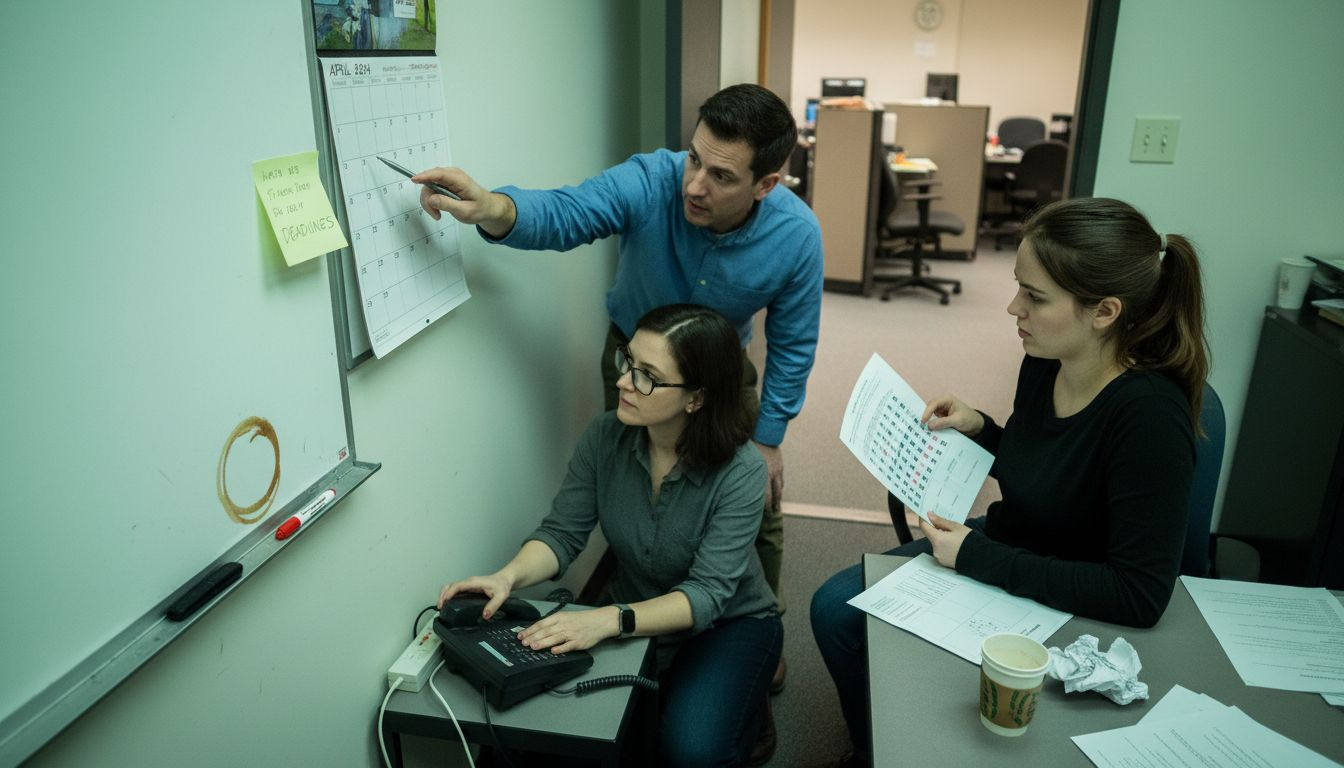
Emergent leadership patterns reveal hidden team dynamics. The quiet analyst might suddenly take charge when a logic puzzle appears. The social connector rallies morale when frustration builds. These natural role shifts expose leadership potential you might never see in normal office contexts.
Psychological mechanisms at work:
- Shared mental models develop as teams align their understanding of puzzle relationships and goals
- Collective efficacy grows when teams successfully solve increasingly difficult challenges together
- Trust formation accelerates through repeated cycles of vulnerability and mutual support under pressure
- Role fluidity encourages members to step outside comfort zones and contribute in unexpected ways
Pro Tip: During the debrief session, ask team members to identify moments when they noticed different thinking styles contributing to solutions. This reflection cements awareness of cognitive diversity value.
The time constraint creates authentic urgency without real stakes. Your team experiences genuine pressure but can laugh about mistakes afterward. This safe stress environment builds resilience and strengthens bonds through shared challenge.
Escape room cognitive benefits extend beyond the activity itself. Teams carry improved communication patterns and problem solving approaches back to daily work. The experience becomes a reference point for future collaboration.
Common Misconceptions About Escape Rooms in Corporate Settings
Many leaders dismiss escape rooms as casual entertainment lacking professional development value. This belief costs organizations a powerful team building tool. The reality differs sharply from the stereotype.
Myth #1: Escape rooms are only casual fun
Structured escape room experiences develop measurable professional skills. 81% of participants report improved problem solving skills after structured escape rooms. That’s a higher success rate than many traditional training programs achieve. The immersive format embeds learning through experience rather than passive instruction.
Myth #2: Escape rooms don’t support large or diverse teams
Modern escape room facilities design experiences for varied group sizes and needs. Multiple rooms accommodate large teams through parallel challenges. Difficulty levels adjust for different experience levels. Themes range from technical puzzles to creative storytelling, engaging diverse personality types and interests.
Myth #3: Only extroverts benefit from escape room activities
Introverts often thrive in escape rooms because defined roles and task focus replace ambiguous social dynamics. The puzzle solving structure provides clear contribution paths. Detail oriented personalities excel at clue analysis. Strategic thinkers coordinate overall approach. Physical puzzle solvers manipulate objects and mechanisms.
Every personality type finds meaningful ways to contribute. The key is creating an environment where different working styles complement rather than compete. Escape room professional benefits materialize when facilitators intentionally structure activities to leverage diverse strengths.
“I thought escape rooms were just games until our quiet developer led us through the final puzzle by connecting details everyone else missed. That changed how we assign project roles.”
Some leaders worry escape rooms feel juvenile or undermine professional credibility. Corporate focused escape rooms address this through sophisticated puzzle design, business relevant themes, and structured debriefing that connects experience to workplace application. The activity itself matters less than the reflection and skill transfer that follow.
Comparison with Other Team Building Methods
Traditional workshops rely on passive learning through presentations and discussions. Participants sit, listen, and maybe complete paper exercises. Engagement remains superficial. Retention suffers because concepts lack experiential anchoring.
Escape rooms flip this model. Teams actively solve problems in real time under genuine pressure. Learning happens through doing rather than hearing. The immersive environment creates memorable experiences that stick far longer than PowerPoint slides.
Retreat activities like ropes courses or trust falls address team dynamics but often feel contrived. The artificial nature of catching someone who falls backward doesn’t translate clearly to workplace collaboration. Escape rooms maintain authenticity because the challenges feel purposeful within their context.
Engagement and motivation comparison:
| Method | Engagement Score | Leadership Development | Measurable Outcomes | Scalability |
|---|---|---|---|---|
| Escape Rooms | 9/10 | High (emergent roles) | Strong (completion rates, communication metrics) | Medium to High |
| Traditional Workshops | 5/10 | Low (assigned exercises) | Weak (self reported surveys) | High |
| Outdoor Retreats | 7/10 | Medium (structured activities) | Medium (observation based) | Low to Medium |
| Business Simulations | 8/10 | Medium (role playing) | Strong (performance data) | Medium |
Business simulations offer comparable benefits but require significant setup time and resources. Escape rooms deliver similar leadership and collaboration development in compact 60 to 90 minute sessions. The efficiency makes them practical for busy teams.
Emergent leadership development sets escape rooms apart. Traditional methods assign leadership roles artificially. Escape rooms let natural leaders surface based on situation and strength. You discover who steps up during different challenge types.
Pro Tip: Use escape rooms as a complementary method alongside other development programs. Follow up with workshops that help teams reflect on and apply the collaboration patterns they discovered during the immersive experience.
Escape rooms versus traditional team building shows clear advantages in engagement, practical skill development, and time efficiency. That doesn’t mean abandoning all traditional methods. It means strategically deploying escape rooms where active learning and rapid team bonding create maximum value.
Practical Framework for Corporate Leaders to Select and Integrate Escape Rooms
Successful escape room integration follows three distinct phases. Skip any phase and you waste the activity’s potential. Execute all three and you transform team dynamics measurably.
Phase 1: Preparation and Selection
-
Define clear team building objectives before booking any activity. Are you addressing communication gaps? Building trust in a new team? Developing problem solving skills? Your goal determines room selection.
-
Match room difficulty to team experience and dynamics. New teams need moderate difficulty to build confidence. Experienced teams benefit from challenging rooms that push boundaries. Mismatched difficulty either bores or frustrates, killing engagement.
-
Consider theme relevance to your team’s interests and culture. Technical teams might prefer puzzle heavy rooms. Creative teams enjoy narrative driven experiences. Theme alignment increases buy in and participation.
-
Verify the facility offers private bookings for your group. Mixing corporate teams with public participants dilutes the team building value and creates distraction.
Phase 2: Active Engagement
-
Brief your team on objectives without over explaining the activity. Frame it as collaborative problem solving rather than competition. Emphasize that everyone’s contribution matters.
-
Observe team dynamics during the activity without interfering. Note who takes leadership roles, how communication flows, where conflicts arise, and which members engage or withdraw.
-
Allow natural role emergence rather than pre assigning responsibilities. The spontaneous organization reveals authentic team patterns you can address later.
Phase 3: Reflection and Integration
-
Facilitate a structured debrief within 24 hours while the experience remains fresh. Ask specific questions about communication breakdowns, successful collaboration moments, and leadership observations.
-
Connect escape room experiences to workplace scenarios explicitly. When did time pressure affect decision quality? How did the team handle conflicting ideas? What communication patterns helped or hindered progress?
-
Create action items based on insights. If the team struggled to share information during the escape room, implement better information sharing protocols at work.
-
Schedule follow up check ins to assess whether improved patterns persist and identify areas needing additional development.
Selection criteria importance:
| Criteria | Importance Level | Impact on Outcomes |
|---|---|---|
| Difficulty Match | Critical | Determines engagement and confidence building |
| Team Size Fit | Critical | Ensures everyone participates meaningfully |
| Debrief Structure | Critical | Converts experience into workplace learning |
| Theme Relevance | Important | Increases buy in and initial engagement |
| Location Convenience | Moderate | Affects participation rates and logistics |
Pro Tip: Contact the escape room facility in advance to discuss your team building goals. Experienced operators can recommend specific rooms and provide guidance on maximizing developmental value.
Avoid selecting rooms purely on entertainment reviews. Corporate team building requires different design elements than casual entertainment. Look for facilities with corporate experience and structured debriefing support.
The framework transforms escape rooms from fun activities into strategic development tools. Each phase builds on the previous one, creating lasting impact rather than temporary excitement.
Real World Corporate Case Studies
A Colorado Springs technology startup used escape rooms to integrate five remote developers joining their local team. Before the activity, video calls felt awkward and collaboration remained surface level. The escape room forced immediate, high bandwidth communication under shared pressure.
Post activity surveys showed a 35% increase in spontaneous communication between remote and local team members. Project coordination improved measurably. The shared reference point from the escape room gave the team common language for discussing collaboration challenges.
Trust building outcomes:
- Remote team members reported feeling significantly more connected to local colleagues after the shared challenge
- Cross location project assignments increased by 40% as managers gained confidence in remote collaboration capabilities
- Team video calls became more efficient with reduced need for explicit coordination due to improved implicit communication patterns
A financial services firm in the region struggled with siloed departments that rarely collaborated despite working on interconnected processes. Leadership arranged a cross functional escape room session mixing members from operations, compliance, and customer service.
The activity revealed communication gaps that formal meetings had masked. Operations assumed compliance understood technical constraints that were never actually communicated. Customer service lacked awareness of operational limitations affecting their promises to clients.
Debriefing surfaced these disconnects explicitly. The teams created new communication protocols based on insights from watching their escape room collaboration break down and recover. Follow up metrics showed 28% faster cross departmental project completion over the next quarter.
A manufacturing company used escape rooms quarterly as part of their continuous improvement culture. They tracked problem solving speed and communication quality across sessions. Teams that participated showed measurably better performance in production troubleshooting scenarios compared to teams that hadn’t done the activities.
Quantified improvements:
- Average production issue resolution time decreased by 22 minutes across escape room participating teams
- Cross shift communication rated 4.2 out of 5 by participating teams versus 3.1 for non participating teams
- Safety incident reporting increased 31% as psychological safety and communication norms improved
These corporate escape room success stories share common elements. Leaders set clear objectives, selected appropriate difficulty levels, and invested in thorough debriefing. The activity itself mattered less than the intentional integration into broader development efforts.
Conclusion and Recommendations
Escape rooms deliver measurable collaboration and communication improvements when implemented strategically. The 20% collaboration boost and 78% communication improvement statistics reflect real organizational value, not just temporary fun.
Leaders should integrate escape rooms using the three phase framework: careful preparation aligned with team goals, active observation during engagement, and structured reflection that connects experience to workplace application. Skip the debrief and you lose most of the developmental value.
Select rooms based on team size, current dynamics, and specific collaboration challenges you’re addressing. Match difficulty appropriately. Too easy and teams coast without learning. Too hard and frustration blocks the positive bonding experience.
Consider escape rooms as one component of comprehensive team development strategy. Combine them with follow up workshops, regular check ins, and practical application of discovered insights. The immersive experience creates awareness. Your subsequent actions create lasting change.
Colorado Springs team leaders have access to quality facilities designed specifically for corporate development. Take advantage of local expertise to customize experiences around your unique team needs and culture.
Discover CodeBusters Escape Room for Your Team Building Needs
Ready to transform your team’s collaboration? CodeBusters Escape Room in Colorado Springs specializes in team building escape rooms designed for corporate groups. Our themed rooms accommodate diverse team sizes and skill levels with puzzle designs that promote communication and emergent leadership.
Our experienced facilitators work with you to align room selection with your specific team development goals. We provide structured debriefing support to help your team translate escape room insights into workplace improvements. Multiple locations across Colorado Springs ensure convenient access for your team.
Pro Tip: Book early to customize the experience around your team goals and availability. We can adjust difficulty levels, emphasize specific collaboration elements, and tailor debrief questions to your organizational context.
As a veteran and family owned business, we understand the discipline and teamwork that drive successful organizations. Our award winning rooms deliver professional team building experiences that respect your time and development objectives. Contact us to discuss how we can support your team’s growth.
Frequently Asked Questions
What is the ideal team size for escape room activities?
Most escape rooms work best with teams of 4 to 8 people to ensure everyone participates meaningfully. Larger teams can split into multiple rooms for parallel experiences or book rooms specifically designed for bigger groups. Smaller teams of 2 to 3 work but may lack the cognitive diversity that makes escape rooms most effective for team building.
How can remote or hybrid teams benefit from escape rooms?
Virtual escape rooms offer online puzzles designed specifically for remote collaboration and trust building. These digital experiences replicate in person benefits by requiring coordinated communication and problem solving across video platforms. Some teams combine virtual escape rooms with occasional in person sessions when members gather, creating continuity in their team building approach despite physical distance.
What are common mistakes when using escape rooms for team building?
Selecting overly difficult or thematically irrelevant rooms frustrates teams and undermines confidence rather than building it. Skipping structured debriefing sessions wastes the learning opportunity by leaving insights implicit rather than explicit. The biggest mistake is treating escape rooms as entertainment only, assuming the activity alone fixes deeper team issues without intentional follow up and application of discovered patterns.
How long does the team building impact from escape rooms last?
Immediate collaboration improvements typically persist for 2 to 4 weeks without reinforcement. Sustained impact requires deliberate integration through debriefing, action planning, and regular reference back to escape room insights during team interactions. Organizations that embed escape room lessons into ongoing development programs and team norms see lasting changes, while those treating it as a one time event see effects fade within a month.
Recommended
- CodeBusters Escape Room | Escape Rooms | Colorado Springs
- Immersive Technology In Tourism: Transforming Travel Experiences | Flight Of Aloha