How to Choose Escape Room for Friends: Step-by-Step Guide

Finding a memorable activity for friends in Colorado Springs can feel tricky when everyone wants something different. Escape rooms stand out because they offer creative themes and challenges that appeal to a mix of personalities. By assessing group interests and skill levels, you can choose an experience where everyone feels engaged and included, setting the stage for a night of shared problem-solving and laughter.
Table of Contents
- Step 1: Assess Group Interests And Skill Levels
- Step 2: Identify Suitable Themes And Difficulty Options
- Step 3: Review Room Features And Booking Details
- Step 4: Verify Room Fit And Finalize Your Choice
Quick Summary
| Key Takeaway | Explanation |
|---|---|
| 1. Assess group interests before booking | Understanding what each member enjoys ensures a more enjoyable experience for everyone involved in the escape room. |
| 2. Select suitable themes and difficulty | Match the escape room’s theme and difficulty with your group’s preferences to enhance engagement for all players. |
| 3. Review room features and booking details | Confirm session length, group size limits, and accessibility before finalizing your booking to avoid unexpected issues. |
| 4. Verify all aspects before finalizing | Ensure the chosen escape room meets group preferences, schedule, and budget to prevent any regrets after booking. |
Step 1: Assess group interests and skill levels
Before you book an escape room with your friends, take time to understand what everyone wants from the experience. Different people have different comfort levels with pressure, puzzle complexity, and themed environments. A quick conversation now prevents booking a room that sounds fun to you but stresses out half your group.
Start by asking your friends what attracts them to escape rooms. Are they puzzle enthusiasts who love logic challenges? Do they prefer atmospheric storytelling and immersive themes? Some people want a laid-back experience where they can chat and laugh, while others crave intense pressure and tight time limits. Your group likely has a mix, and that’s okay—you just need to know the spectrum.
Next, think about experience levels. Have some friends done escape rooms before while others are newcomers? First-timers often feel anxious in confined spaces or under time pressure, so they benefit from rooms with slightly lower difficulty and supportive game mechanics. Experienced players might find beginner-level rooms too easy and lose engagement. Assessing group interests and skill levels establishes participation modes that keep everyone challenged but not overwhelmed.
Consider these factors when evaluating your group:
- Physical comfort: Does anyone have mobility issues, claustrophobia, or sensitivity to darkness or loud sounds?
- Thematic preferences: Would your group prefer sci-fi, mystery, horror, history, or adventure themes?
- Competitive vs. collaborative: Does your group want to race against the clock, or would they prefer a relaxed solve-at-your-own-pace experience?
- Group dynamics: Are some friends more dominant problem-solvers who might overshadow quieter teammates?
Once you have a sense of preferences, identify the common ground. You don’t need unanimous agreement on every detail—escape rooms work because groups with mixed interests still enjoy the shared challenge. Look for a room difficulty and theme that accommodates the broadest comfort range without forcing anyone into an uncomfortable situation.
Your goal is finding a room where everyone can participate fully, not a room that only thrills one or two people while the rest feel sidelined.
Pro tip: Send a quick group text asking three simple questions: What escape room theme sounds fun to you? How many escape rooms have you done before? Would you prefer a relaxed or high-pressure experience? Their answers take 30 seconds but give you the clarity you need to choose wisely.
Step 2: Identify suitable themes and difficulty options
Now that you understand your group’s interests and experience levels, it’s time to match them with actual escape room options. Theme and difficulty work together to create the right experience for your friends. Pick the wrong combination, and even a great group can have a mediocre time.
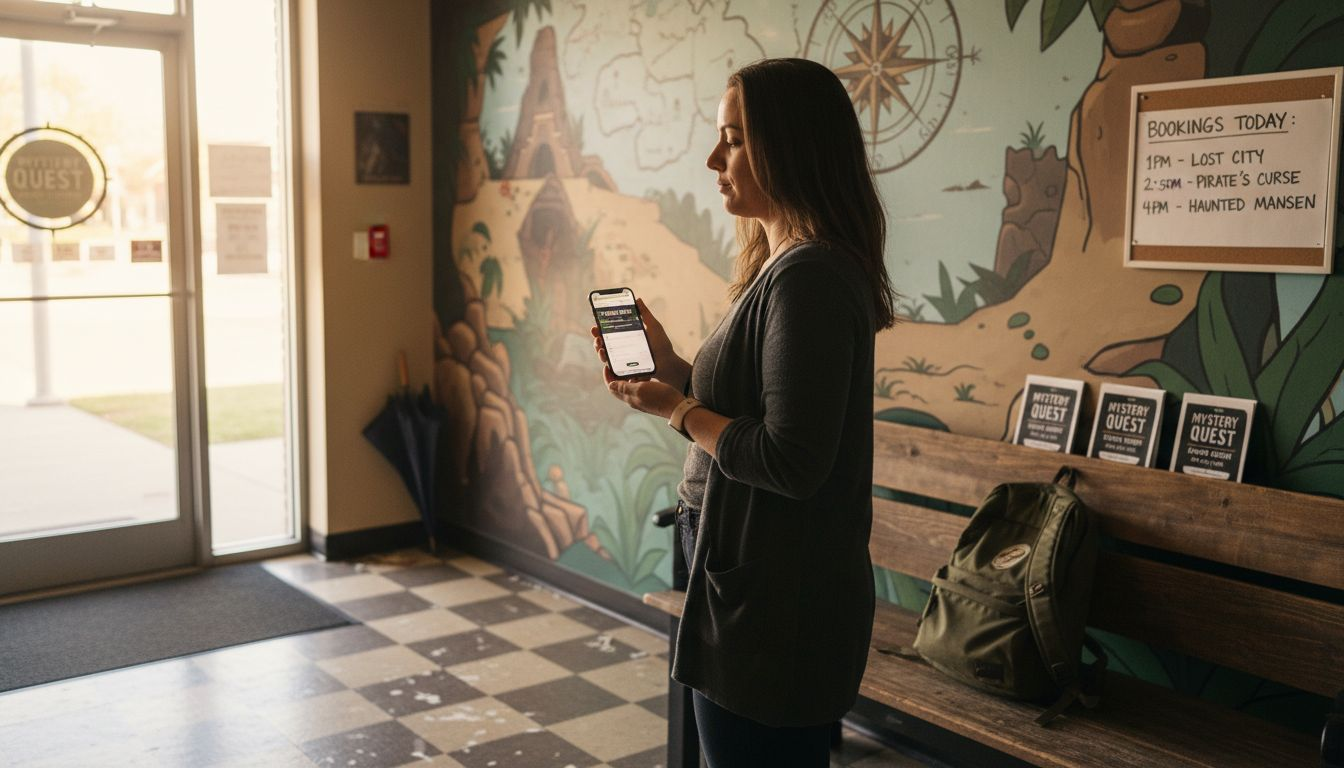
Start by exploring what themes appeal to your group based on your earlier conversation. Colorado Springs escape rooms offer variety, from sci-fi adventures to vintage mysteries to suspenseful scenarios. Think about what your friends discussed. Did multiple people light up at the mention of 80s nostalgia? Did someone mention loving mystery stories? Let those preferences guide your theme selection. Selecting themes that align with participant interests makes the experience memorable and engaging for everyone involved.
Difficulty is equally important. Escape rooms typically range from beginner-friendly to expert-level, and difficulty affects more than just puzzle complexity. Lower-difficulty rooms usually have more guidance from staff, clearer puzzle logic, and extra hints available. Higher-difficulty rooms demand independent thinking, obscure clues, and minimal hand-holding. Your group’s mix of experience levels should determine where you land on this spectrum.
Evaluate difficulty options by considering these aspects:
- Puzzle complexity: Are solutions obvious or do they require outside knowledge and lateral thinking?
- Guidance availability: Can your group request hints easily, or are you expected to solve everything independently?
- Time pressure: Do easier rooms give you breathing room, or do all options include strict time limits?
- Physical interaction: How much do you need to move around, climb, or manipulate objects in the space?
A group with mixed experience should avoid the most extreme options. Instead, choose a medium-difficulty room where newer players can contribute while experienced players stay challenged. Most escape room operators provide detailed descriptions online that explain difficulty and theme, so read those descriptions carefully before booking.
Here’s a quick reference for matching escape room difficulty to group experience levels:
| Group Experience Mix | Ideal Room Difficulty | Engagement Impact | Staff Support |
|---|---|---|---|
| All beginners | Beginner-friendly | Reduces anxiety, encourages fun | Frequent |
| Mix of new and experienced | Moderate | Keeps everyone involved | Available |
| All experienced | Challenging/Expert | Maximizes excitement and challenge | Limited |
The sweet spot is a room where at least 80 percent of your group feels capable of solving puzzles, not completely lost.
Pro tip: Check customer reviews on the operator’s website or Google for specific mentions of difficulty, group dynamics, and whether first-timers had fun—real feedback tells you far more than marketing descriptions alone.
Step 3: Review room features and booking details
Before you commit to a booking, dig into the specifics of what you’re actually getting. A room that sounds perfect in the description might have hidden limitations that affect your group’s experience. Taking 10 minutes now to review details prevents disappointment later.
Start by checking the session length. Most escape rooms run 60 minutes, but some offer 45 or 90 minute options. Your group’s attention span and problem-solving pace matter here. Faster solvers might finish early in a 60 minute room and feel bored, while slower groups might feel rushed. Also confirm the group size limits. Some rooms accommodate 2 to 8 people, others handle up to 12 or more. A room designed for 4 players feels cramped with 8, and a large room with only 4 people loses energy.
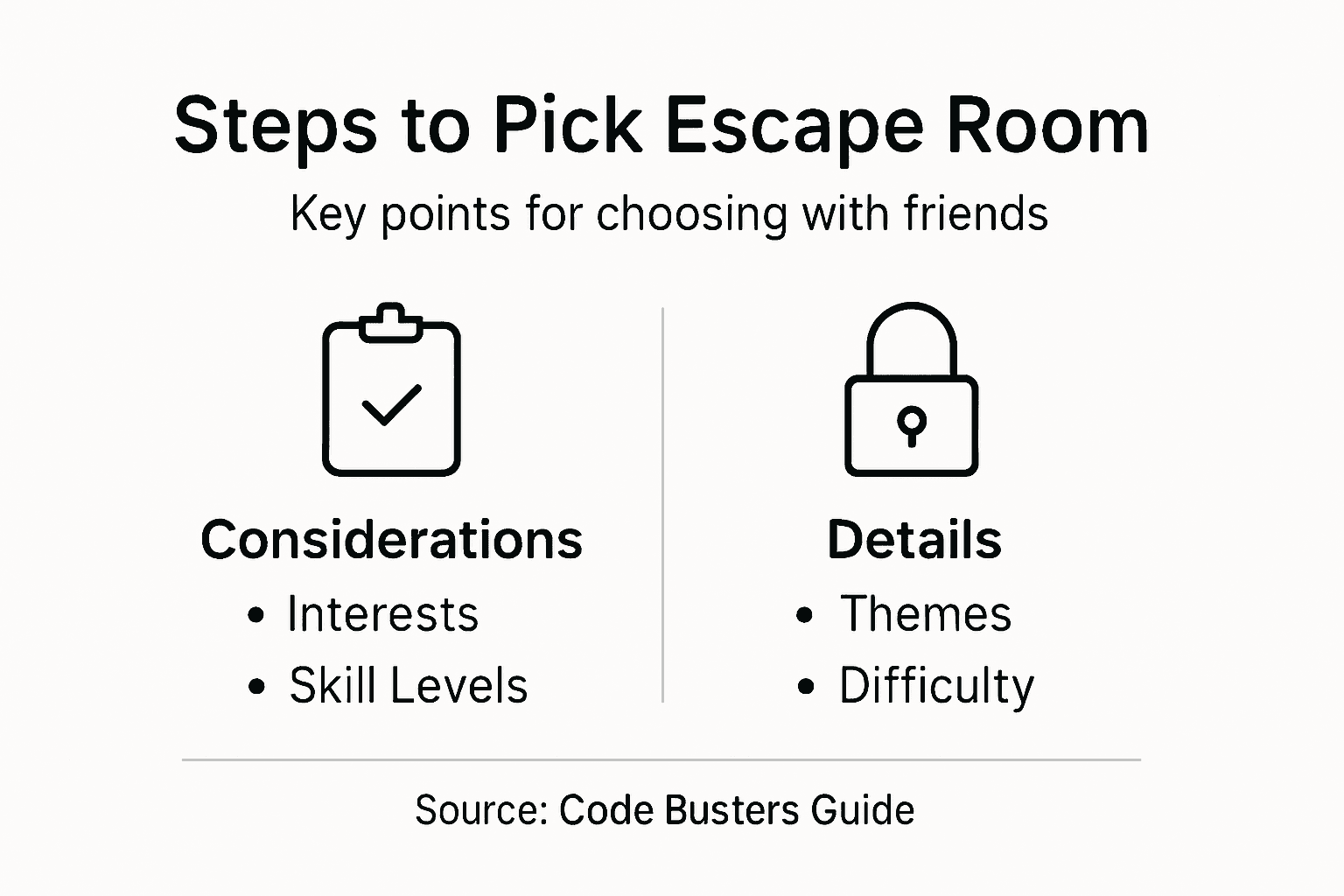
Use this table to compare the impact of session length and group size choices:
| Session Length | Group Size Range | Best For | Potential Challenge |
|---|---|---|---|
| 45 minutes | 2-4 | Fast solvers, small groups | May feel rushed |
| 60 minutes | 4-8 | Balanced experiences | Fits most groups |
| 90 minutes | 8-12 | Large, social groups | Attention span may wane |
Understanding booking details like session length and group size ensures seamless planning and fits your specific group. Look for accessibility information too. Does the room have stairs, tight spaces, or dim lighting that might exclude someone in your group? Can they accommodate someone with mobility challenges or sensory sensitivities? These details matter more than most people realize.
Check these essential booking factors before finalizing your choice:
- Availability: Are your preferred dates and times actually open, or does the calendar show limited slots?
- Price and add-ons: What’s the base cost per person? Do they charge extra for hints, photos, or private bookings?
- Cancellation policy: What happens if someone gets sick or plans change?
- Parking and location: Is the venue easy to find and accessible from where your group is meeting?
- Check-in process: Do you arrive early, or can you walk in right at your booking time?
Read the fine print about what happens during the game. Can staff help you, or do they only enter if you’re truly stuck? Are there any rules about touching items, taking photos, or rearranging the room? Some escape rooms let you go wild; others are precious about their setup.
Booking details aren’t boring—they’re the difference between a smooth adventure and a frustrating experience.
Pro tip: Call the escape room directly with any questions instead of relying solely on the website—staff can clarify policies, confirm accessibility, and sometimes offer unofficial discounts for group bookings.
Step 4: Verify room fit and finalize your choice
You’ve done the homework. Now it’s time to make sure everything aligns before you click book. This final check takes just a few minutes and prevents buyer’s remorse or logistical headaches on game day.
Pull together what you learned from your earlier steps. Review your notes about your group’s interests, experience levels, and any accessibility needs. Now compare those against the specific room you’re considering. Does the theme genuinely excite most of your group, or are you compromising because it’s the only available time slot? Would the difficulty level challenge your experienced players without frustrating the newcomers?
Think about the practical side too. Can everyone actually attend the date and time you’re considering? Is the location convenient for your group to meet, or will half your friends face a 30-minute drive? Have you factored in travel time, so people aren’t rushed arriving late? A perfectly chosen room loses its appeal when people are stressed about logistics.
Run through this final verification checklist:
- Theme match: Does this room align with what excited your group most?
- Difficulty sweet spot: Will at least 80 percent of your group feel capable of contributing?
- Accessibility confirmed: Have you verified the room accommodates anyone with mobility or sensory needs?
- Schedule works: Does this date and time work for everyone without major conflicts?
- Budget aligned: Is the price per person reasonable for your group’s expectations?
- Logistics realistic: Can everyone get there comfortably and on time?
If you’re checking boxes across the board, you’re ready to book. If you’re finding yourself making excuses or rationalizing compromises, pause. Go back and explore other options. The right room exists, and forcing a mediocre choice wastes everyone’s time and money.
A good escape room choice feels right across multiple dimensions, not just one or two.
Pro tip: Before finalizing your booking, send a quick message to your group with the room details, date, time, and what to expect—this builds excitement and gives anyone last-minute concerns a chance to speak up before you’re locked in.
Find the Perfect Escape Room Experience for Your Friends at Code Busters
Choosing the right escape room means balancing your group’s interests, skill levels, and comfort. The challenge is clear. You want an immersive theme that excites everyone, the right difficulty to keep all engaged, and a seamless booking process that fits your schedule and needs. At Code Busters Escape Room, we understand these hurdles and have designed our experiences to cater to diverse groups—from first-timers to seasoned puzzle solvers. Whether you crave the nostalgia of our “Stranger 80’s” room or the thrilling twists in “Flight of Deception,” we offer detailed descriptions and clear difficulty ratings to help you pick with confidence.
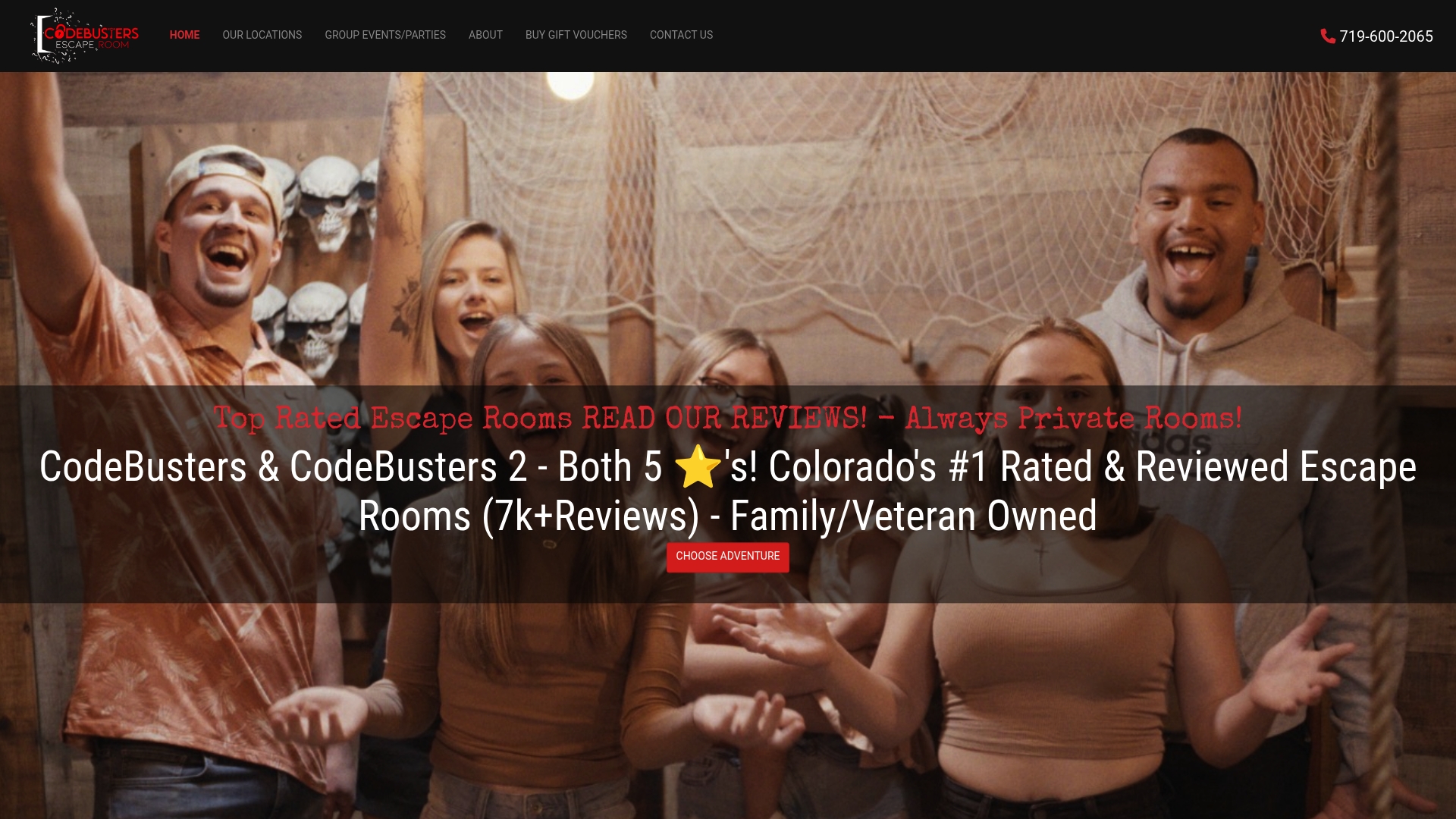
Don’t settle for guesswork when planning your next group adventure. Visit our site today to explore our unique themed rooms, check availability, and secure your booking with ease. Your perfect escape room experience tailored for friends is just a click away at Code Busters Escape Room. Make your choice now and create unforgettable memories with your crew.
Frequently Asked Questions
How do I assess my friends’ interests and skill levels for choosing an escape room?
Start by having a conversation with your friends about what draws them to escape rooms. Ask them questions about their preferred themes, comfort levels with pressure, and previous experience, and use their answers to find a room that meets everyone’s expectations.
What themes should I consider when choosing an escape room?
Consider themes that resonate with your group’s interests, like mystery, adventure, or sci-fi. Discuss what themes excite your friends, and look for rooms that specifically cater to those preferences to create an engaging experience for all.
How do I determine the right difficulty level for our escape room?
Select a difficulty level that accommodates the experience mix of your group. Aim for a medium-difficulty room where at least 80 percent of your friends feel capable of participating and contributing to the puzzles without feeling overwhelmed.
What features should I review before booking an escape room for my group?
Before booking, check the session length, group size limits, and any special accessibility features. Confirm details like pricing, parking options, and the cancellation policy to ensure a smooth experience for everyone involved.
How can I finalize my choice of escape room after my research?
Review your notes on your group’s interests, accessibility needs, and schedule to ensure everything aligns. Run through a final checklist to ensure the theme, difficulty, accessibility, and logistics work for everyone before making your booking.