What Is an Escape Room and Why It’s So Popular

Every group outing in Colorado Springs deserves something more than a simple dinner or movie night. Escape rooms blend interactive storytelling, teamwork, and creative puzzle-solving to deliver a truly immersive experience for families and friends. This article reveals how the origins of escape games and their evolving formats bring people together, highlight core concepts, and explain why these adventures remain the top choice for engaging group entertainment. Experience the excitement of problem-solving and collaborative interaction techniques that set escape rooms apart.
Table of Contents
- Escape Rooms Explained: Core Concepts And Origins
- Types Of Escape Room Experiences Available
- How Escape Room Games Actually Work
- Roles, Teamwork, And Collaboration Essentials
- Safety, Age Limits, And Common Misconceptions
Key Takeaways
| Point | Details |
|---|---|
| Immersive Experience | Escape rooms combine storytelling and puzzle-solving for a unique entertainment format. |
| Team Collaboration | Success relies on effective teamwork, communication, and leveraging individual strengths. |
| Diverse Formats | Various escape room types cater to different preferences, from physical to digital experiences. |
| Safety and Inclusivity | Well-designed escape rooms prioritize safety and accommodate participants of diverse ages and skill levels. |
Escape Rooms Explained: Core Concepts and Origins
Escape rooms represent an immersive, interactive entertainment experience where participants solve intricate puzzles and challenges to “escape” a themed room within a set time limit. Origins of interactive game experiences trace back to a fascinating blend of interactive storytelling and problem-solving activities.
The modern escape room concept emerged from a unique combination of entertainment disciplines. Key predecessor experiences included:
- Live-action role-playing games
- Interactive theater performances
- Adventure game shows
- Digital puzzle challenges
These diverse entertainment formats converged to create a wholly immersive experience that challenges participants’ critical thinking, communication skills, and collaborative problem-solving abilities. Players are typically “locked” in a themed room and must work together to decipher clues, solve puzzles, and complete objectives before time expires.
Defining Characteristics of escape rooms include:
- Time-limited gameplay (usually 60 minutes)
- Narrative-driven scenarios
- Multiple puzzle types and challenges
- Team-based cooperation
- Immersive environmental design
The widespread phenomenon began in the early 2010s, rapidly evolving from simple locked-room concepts to complex, multi-room adventures with sophisticated storytelling and technological integrations. Each escape room offers a unique narrative, transforming participants from passive observers into active protagonists of an unfolding story.
Pro tip: When attempting an escape room, communicate openly with your team and approach puzzles with a collaborative mindset - no single person has all the answers.
Types of Escape Room Experiences Available
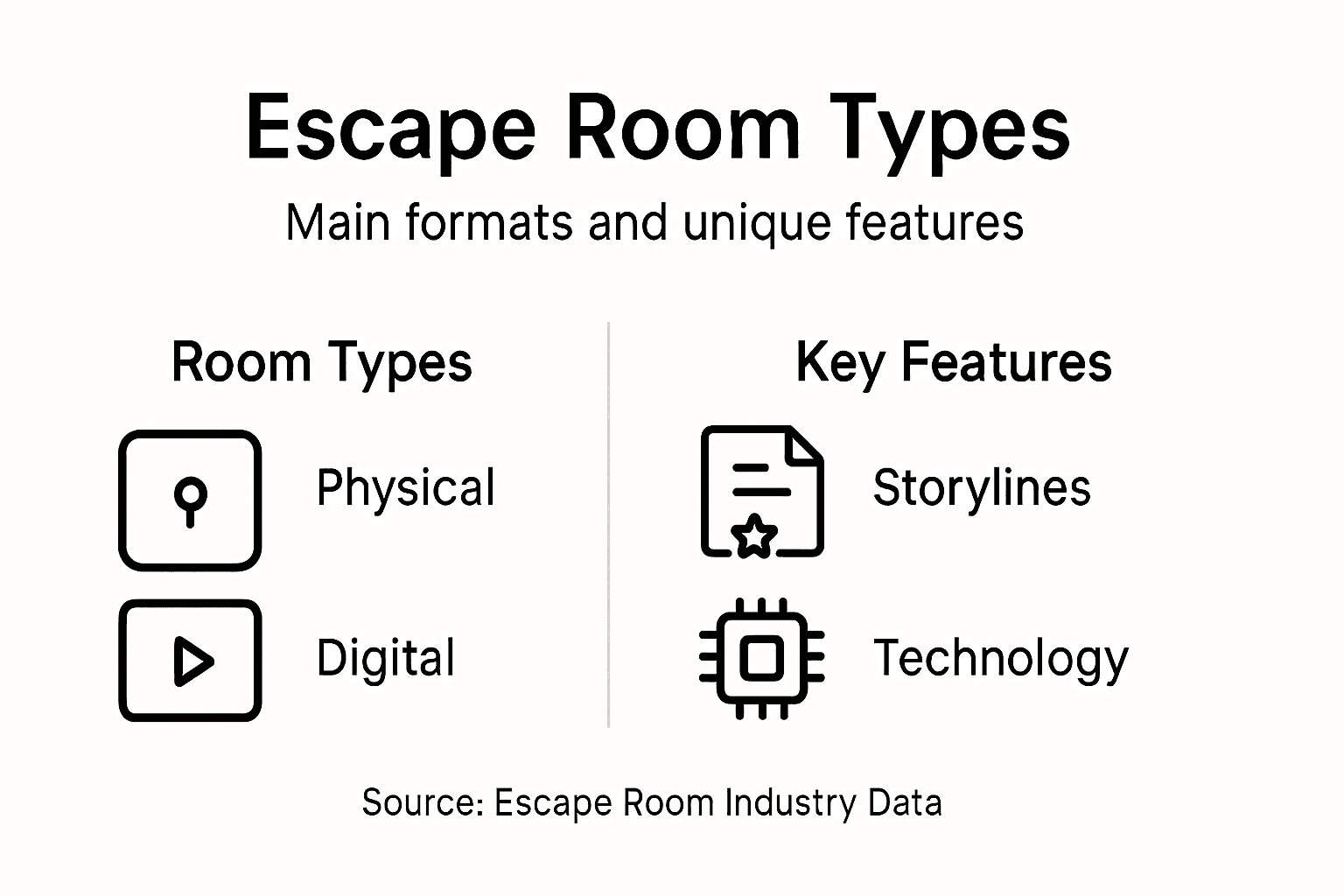
Escape rooms have evolved into a diverse entertainment format with multiple variations catering to different preferences and objectives. Categorization of escape room experiences reveals a fascinating range of interactive challenge types that extend far beyond traditional locked-room scenarios.
The primary types of escape room experiences include:
- Physical Escape Rooms: Traditional locked-room challenges where participants physically solve puzzles in a themed environment
- Digital Escape Rooms: Virtual experiences accessed through online platforms or computer interfaces
- Hybrid Escape Rooms: Combinations of physical and digital puzzle-solving elements
- Pop-up Escape Rooms: Temporary installations at events, festivals, or special locations
- Puzzle Hunt Experiences: Multi-session challenges involving sequential problem-solving
Narrative Diversity is a critical aspect of these experiences. Escape room formats vary widely depending on their intended purpose, which can range from pure entertainment to educational or corporate training scenarios.
Modern escape rooms often specialize in unique thematic experiences that transport participants into immersive storylines. These narrative-driven adventures might include historical mysteries, sci-fi scenarios, detective investigations, or even horror-themed challenges. Each format requires different skills and offers distinct engagement levels for participants.
Interactive elements have become increasingly sophisticated, incorporating advanced technology like augmented reality, complex mechanical puzzles, and interactive storytelling techniques. Some escape rooms now offer multi-room experiences, serialized game formats, and progressive narratives that extend beyond a single gameplay session.
Here’s how popular escape room formats differ:
| Experience Type | Typical Setting | Best For | Unique Feature |
|---|---|---|---|
| Physical Escape Room | Immersive in-person | Groups, team-building | Tactile puzzles, room props |
| Digital Escape Room | Online or app-based | Remote teams, solo play | Virtual clues, web integration |
| Hybrid Escape Room | Mix of physical/digital | Tech-savvy groups | Blends real with virtual |
| Pop-up Escape Room | Temporary installations | Events, large audiences | Custom themes, portability |
| Puzzle Hunt Experience | Multi-location/online | Puzzle enthusiasts | Game spans multiple sessions |
Pro tip: When selecting an escape room, consider your team’s skill level and interests to ensure an enjoyable and appropriately challenging experience.
How Escape Room Games Actually Work
Escape room games are intricate, immersive experiences that transform participants into active problem-solvers within a carefully designed narrative environment. Interactive puzzle challenges require teams to collaborate, communicate, and think critically to progress through a series of interconnected challenges.
The typical escape room experience follows a structured gameplay framework:
- Game Initiation: Teams enter a themed room and receive initial storyline and objective instructions
- Puzzle Discovery: Participants systematically search the environment for hidden clues, codes, and interactive elements
- Problem-Solving: Players decode messages, solve mechanical and logical puzzles, and unlock sequential challenges
- Time Management: Groups must complete all objectives within a predetermined time limit (usually 60 minutes)
- Narrative Progression: Each solved puzzle advances the storyline and brings participants closer to their ultimate goal
Puzzle Mechanics are the core engine driving escape room experiences. These challenges are meticulously designed to require diverse skills, including:
- Logical reasoning
- Pattern recognition
- Mathematical calculations
- Spatial awareness
- Creative thinking
- Team communication
Most escape rooms incorporate multiple puzzle types within a single experience, ensuring that different team members can contribute unique skills. Some puzzles might require physical manipulation of objects, while others demand complex mental decoding or collaborative problem-solving strategies.
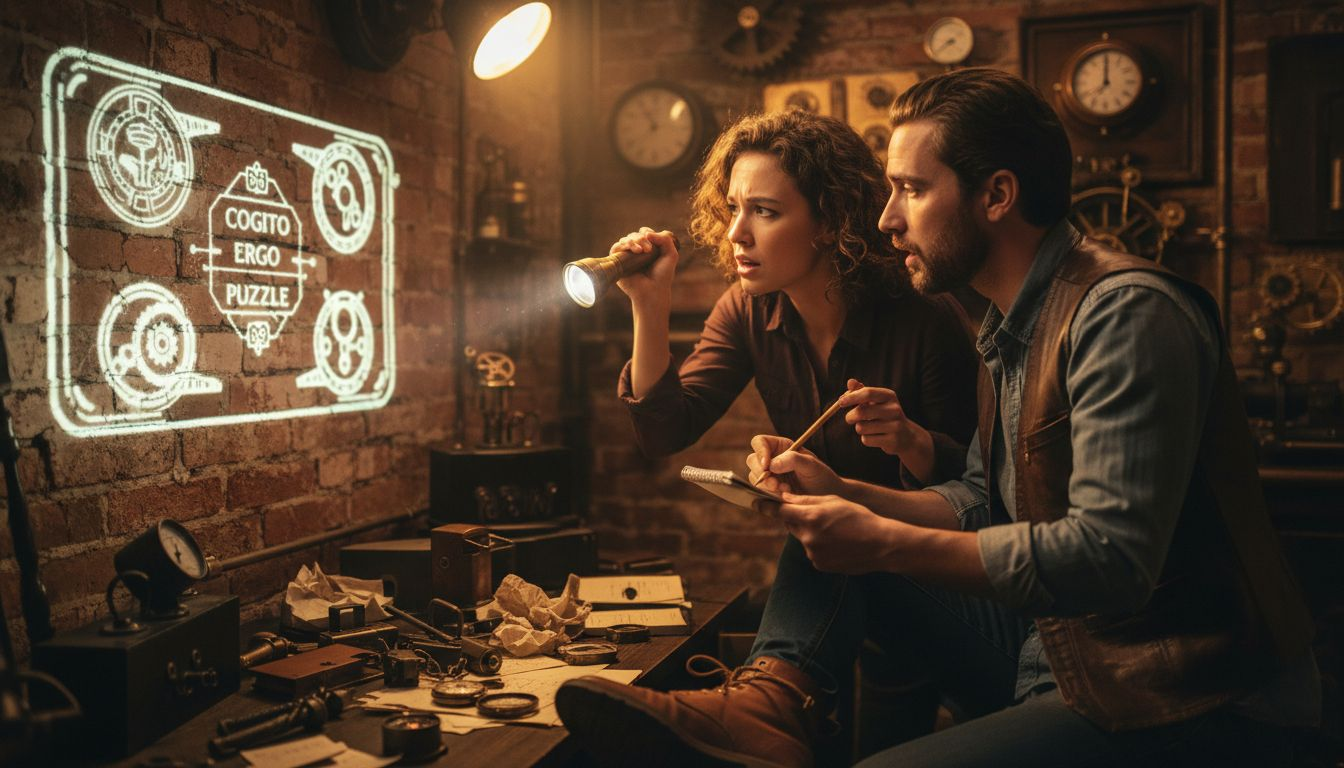
Interactive technology has revolutionized escape room design, allowing for increasingly sophisticated challenge mechanisms. Modern rooms might integrate digital interfaces, augmented reality elements, sound and light cues, and complex mechanical interactions that respond dynamically to player actions.
Pro tip: Assign specific roles to team members based on their strengths and communicate constantly to maximize your problem-solving efficiency.
Roles, Teamwork, and Collaboration Essentials
Escape rooms are fundamentally designed to test and enhance team dynamics, requiring participants to work together in ways that go far beyond typical group activities. Collaborative problem-solving strategies are critical to successfully navigating the complex challenges presented in these immersive environments.
Successful escape room teams typically distribute roles based on individual strengths:
Compare these common escape room team roles:
| Role | Key Responsibility | Ideal Participant Trait |
|---|---|---|
| Organizer | Coordinates group efforts | Good at multitasking |
| Detail Hunter | Finds subtle clues | Strong attention to detail |
| Logical Thinker | Solves complex puzzles | Exceptional analytical skills |
| Communication Specialist | Shares team discoveries | Articulate, clear communicator |
| Creative Problem Solver | Offers unconventional ideas | Thinks outside the box |
- The Organizer: Keeps track of discovered clues and coordinates team efforts
- The Detail Hunter: Meticulously searches the room for hidden information
- The Logical Thinker: Decodes complex puzzles and analyzes patterns
- The Communication Specialist: Ensures clear information sharing between team members
- The Creative Problem Solver: Approaches challenges from unconventional angles
Team Dynamics play a crucial role in escape room success. Collaborative interaction techniques emphasize the importance of:
- Active listening
- Open communication
- Respecting different problem-solving approaches
- Sharing information transparently
- Supporting team members’ ideas
- Maintaining a positive, encouraging atmosphere
The time-pressured environment of escape rooms creates a unique crucible for team development. Participants must quickly adapt, leverage individual strengths, and create a cohesive strategy to overcome challenges. This requires a delicate balance of leadership, creativity, and collective decision-making.
Effective teams approach escape rooms as collaborative experiences rather than competitive challenges. They understand that success depends on mutual support, trust, and the ability to synthesize diverse perspectives into a unified problem-solving approach.
Pro tip: Before entering the escape room, take two minutes to discuss each team member’s strengths and agree on a communication strategy to maximize your collective problem-solving potential.
Safety, Age Limits, and Common Misconceptions
Contrary to popular belief, escape rooms are carefully designed entertainment experiences with robust safety protocols and inclusive participation guidelines. Safety management strategies ensure that participants of various ages and abilities can enjoy these immersive challenges with minimal risk.
Typical safety measures in escape rooms include:
- Emergency exit doors that remain unlocked
- Constant video monitoring by staff
- Clear communication channels with game masters
- Pre-game safety briefings
- Optional hints and immediate assistance options
- Room design compliant with local safety regulations
Age Restrictions vary depending on the specific room’s complexity and theme:
- Children’s Rooms: Typically designed for ages 8-12 with simplified puzzles
- Teen Rooms: Usually recommended for ages 13-16
- Adult Rooms: Standard rooms for ages 16 and above
- Family-Friendly Experiences: Designed to accommodate mixed-age groups
- Specialized Rooms: Some venues offer age-specific or skill-level-specific challenges
Common misconceptions about escape rooms often prevent potential participants from experiencing these engaging adventures. Many people incorrectly assume that escape rooms are physically demanding, dangerous, or require specialized skills. In reality, most rooms are designed to be mentally challenging while maintaining a safe, controlled environment that welcomes participants with diverse abilities and backgrounds.
Professional escape room facilities prioritize participant comfort and safety. Game masters are trained to provide immediate assistance, ensure physical safety, and create an enjoyable experience for all participants. The focus remains on mental challenges and teamwork rather than physical endurance or risk-taking.
Pro tip: Always communicate any physical limitations or concerns with the escape room staff before booking to ensure a comfortable and enjoyable experience.
Discover Why Escape Rooms Are the Ultimate Team Experience
The article highlights that escape rooms combine immersive storytelling, collaborative problem-solving, and strategic teamwork in a time-limited setting. If you have ever wanted to experience firsthand how logical thinking, communication, and creativity come together to unlock thrilling mysteries then our escape rooms at Code Busters Escape Room are perfect for you. Each themed adventure is carefully designed to challenge groups of all sizes and skill levels while offering exciting narratives like “Past to the Future” and “Flight of Deception” that keep your mind engaged and your team connected.

Ready to transform your next outing into a memorable event filled with mental challenges and unforgettable fun Visit Code Busters Escape Room now to explore our unique rooms and book your private session. Experience why so many in Colorado Springs trust our award-winning, veteran owned business for high-quality entertainment and team-building adventures. Don’t wait The clock is ticking on your chance to join the excitement and put your problem-solving skills to the ultimate test.
Frequently Asked Questions
What is an escape room?
An escape room is an immersive entertainment experience where participants solve puzzles and challenges to “escape” a themed room within a set time limit, usually 60 minutes.
Why are escape rooms so popular?
Escape rooms are popular due to their engaging gameplay, immersive storytelling, and the opportunity for teamwork. They provide a unique blend of problem-solving, communication, and fun, making them ideal for group activities and team-building events.
What types of escape rooms are available?
Escape rooms come in various formats, including physical escape rooms, digital escape rooms, hybrid experiences, pop-up installations, and puzzle hunt experiences, each offering different challenges and themes.
How do you succeed in an escape room?
Success in an escape room requires effective teamwork, open communication, and diverse problem-solving skills. Assigning roles based on individual strengths and collaborating on puzzles are key strategies to maximize efficiency.
Recommended
Article generated by BabyLoveGrowth