Why Escape Rooms Matter for Family Bonding

Every parent faces the challenge of finding activities that actually bring the whole family together in Colorado Springs. Weekend plans too often mean everyone is staring at screens or splitting into separate interests. Escape rooms change that dynamic by making each family member’s input essential, mixing teamwork, creativity, and age-appropriate puzzles into one adventure. You’ll discover how the time-constrained, puzzle-based structure keeps every child and adult engaged and communicating, turning an ordinary outing into a real bonding experience.
Table of Contents
- What Makes Escape Rooms Family-Friendly
- Types of Experiences for Different Ages
- Core Benefits: Teamwork, Skills, and Fun
- Safety, Booking, and Practical Tips
- How Escape Rooms Compare to Other Activities
Key Takeaways
| Point | Details |
|---|---|
| Collaboration Over Competition | Escape rooms encourage families to work together towards a common goal, promoting unity and engagement among different age groups. |
| Age-Appropriate Challenges | Quality escape rooms adjust puzzle difficulty, ensuring every family member contributes based on their strengths without feeling overwhelmed. |
| Enhanced Communication Skills | The game’s design fosters conversation and collaboration, allowing family members to practice clear communication under mild pressure. |
| Memorable Experiences | Escape rooms create lasting memories through shared accomplishments and genuine fun, leading to ongoing conversations long after the activity. |
What Makes Escape Rooms Family-Friendly
Escape rooms succeed as family activities because they’re designed around collaboration, not competition. Unlike many entertainment options that pit family members against each other, escape rooms require everyone working together toward a shared goal. Your 10-year-old and your teenager contribute equally—their different perspectives and problem-solving styles become actual strengths.
The time-constrained, puzzle-based structure creates natural engagement for all ages. Everyone participates actively because the puzzles demand input from multiple people. You can’t solve most rooms alone, and the game mechanics ensure younger children aren’t sidelined while adults take over.
Age-Appropriate Design That Actually Works
Quality escape rooms adjust difficulty levels so each family member stays challenged without feeling lost or bored. A puzzle that requires pattern recognition appeals to your logical teenager, while a physical lock might engage your younger child. Escape rooms encourage collaboration and motivation by mixing challenge types, ensuring nobody zones out.
Here’s what makes this work in practice:
- Varied puzzle types keep different ages engaged simultaneously
- Physical puzzles appeal to younger kids; logic puzzles engage older children
- Clues and hints are built in, so nobody feels completely stuck
- Victory happens together, not individually
Communication Gets Better, Naturally
Escape rooms force conversations that don’t normally happen at home. Your teenager stops scrolling. Your youngest speaks up with ideas. Parents actually listen because solving the room depends on hearing everyone.
Escape room design emphasizes teamwork and communication by requiring shared information and divided tasks. One person decodes a message while another searches for clues. Nobody can succeed without talking.
This builds real communication skills:
- Kids practice explaining ideas clearly under mild pressure
- Family members learn each other’s problem-solving styles
- Listening becomes essential, not optional
- Success requires acknowledging different approaches
Real Bonding, Not Forced Fun
Many family activities feel obligatory. Escape rooms feel like an adventure everyone actually wants to finish. The shared mission creates natural bonding—you’re working as a team against the puzzle, not just sitting together.
Families remember escape room experiences because they involve genuine collaboration and shared accomplishment, not staged entertainment.
The pressure and excitement create moments worth talking about afterward. Your family will reference inside jokes from the room for months.
Pro tip: Choose a room with your family’s interests in mind—themed rooms like “Past to the Future” or “Stranger 80’s” create extra engagement because everyone connects with the story.
Types of Experiences for Different Ages
Escape rooms aren’t one-size-fits-all. The best ones scale difficulty and puzzle complexity to match your family’s ages and abilities. A room designed for younger kids looks completely different from one built for teenagers, and quality escape room businesses offer both.
Your 8-year-old needs different challenges than your 14-year-old. The good news? Escape room designs balance cognitive load across age groups, so everyone stays engaged without anyone feeling lost or bored.
Rooms for Younger Children (Ages 8-11)
Escape rooms for younger kids focus on discovery and fun over complexity. Puzzles rely on observation, pattern matching, and physical interaction rather than abstract logic. Kids at this age love finding hidden objects and solving visual puzzles.
What works for this age group:
- Large, obvious clues that reward careful searching
- Colorful, themed environments that spark imagination
- Puzzles requiring teamwork (not solo challenges)
- Shorter time limits (30-45 minutes instead of 60)
- Story elements that feel like an adventure, not a test
Parents stay involved but aren’t solving everything. Your child’s contributions feel genuinely important.
Here’s a comparison of escape rooms for different family age groups:
| Age Group | Puzzle Types Emphasized | Story Style | Group Role Balance |
|---|---|---|---|
| Ages 8-11 | Visual and physical puzzles | Bright adventure | Adult help, kid discovery |
| Ages 12-16 | Logic, codes, multi-step tasks | Mature themes | Teen-led, with support |
| Mixed Ages | Hybrid: all puzzle types | Universal narrative | Each age has meaningful part |
Rooms for Teenagers (Ages 12-16)
Teenagers handle more complex reasoning and abstract thinking. They enjoy logic puzzles, codes, and multi-step challenges that require careful planning. The experience should feel sophisticated, not childish.
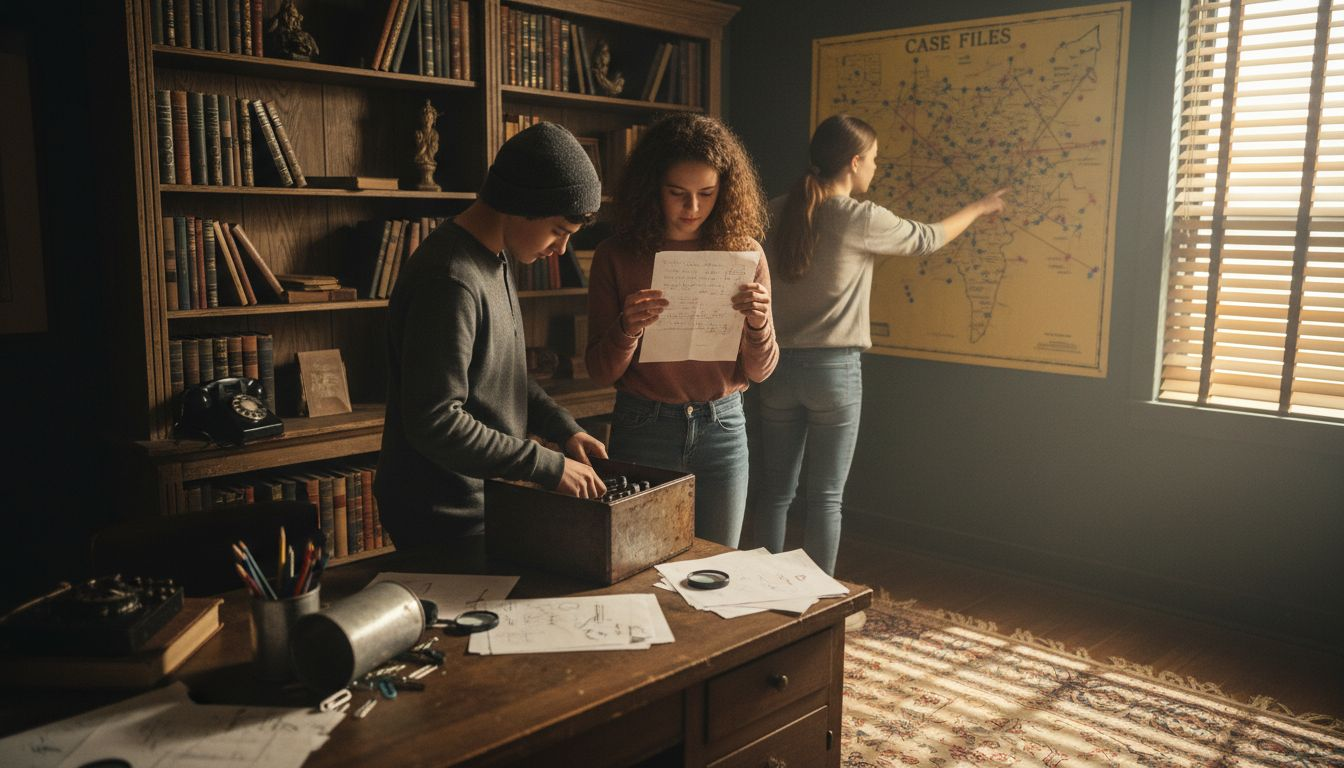
Age-appropriate puzzle design supports motivation and collaboration across developmental stages. Teenage-focused rooms introduce pressure and difficulty that feels exciting rather than frustrating.
These rooms typically include:
- Cipher and code-breaking challenges
- Sequences requiring multiple steps to solve
- Locks that demand precise answers
- Sophisticated storytelling and atmosphere
- Tighter time constraints that create healthy pressure
Mixed-Age Family Rooms
The sweet spot for families with wide age ranges involves hybrid puzzle design. Some challenges target specific skills while others require combined effort from everyone.
The best family escape rooms give younger children meaningful wins while keeping teenagers engaged through complexity they can’t easily dismiss.
Themed rooms like “Past to the Future” work well because the narrative hooks everyone regardless of age. Your youngest connects with the sci-fi premise while your oldest analyzes the puzzle mechanics.
Pro tip: Before booking, ask the escape room business about difficulty levels and age recommendations—most quality facilities clearly mark which rooms suit which ages and will honestly tell you if a room fits your family.
Core Benefits: Teamwork, Skills, and Fun
Escape rooms deliver benefits that extend far beyond the hour you spend solving puzzles. Your family walks out with stronger communication, better problem-solving abilities, and memories that stick around. These aren’t side effects—they’re the core reason families should prioritize escape rooms for bonding.
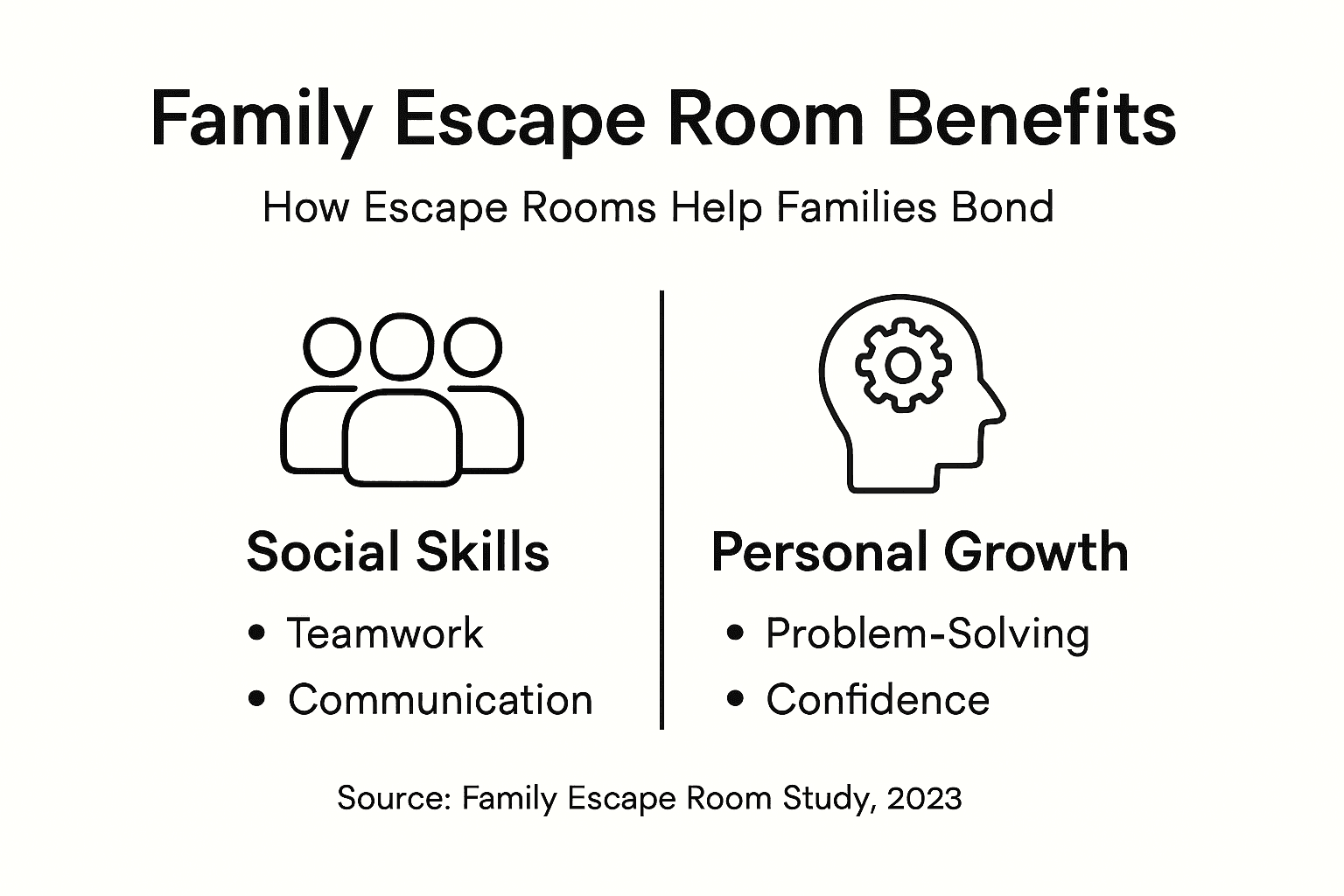
Escape rooms strengthen family bonds through improved communication and teamwork. Everyone enters as individuals and exits as a more cohesive unit.
Building Real Teamwork Skills
Escape rooms force delegation in ways everyday life doesn’t. Your teenager naturally takes charge of a code-breaking puzzle. Your younger child owns the hidden object search. Nobody assigned these roles—they emerged because the room demanded it.
This teaches genuine collaboration:
- Family members discover each other’s strengths organically
- Tasks distribute based on who’s best suited, not who’s oldest
- Success depends on everyone contributing something valuable
- Weakness in one area gets compensated by another’s strength
Communication Under Pressure
Working under time pressure fosters strategic thinking and mutual support within families. The 60-minute countdown creates urgency that transforms casual conversation into focused teamwork.
Your family learns to communicate efficiently. No wasted words. Clear explanations matter because time runs short. Someone shares a discovery, and everyone adjusts their strategy immediately.
Problem-Solving That Sticks
Escape rooms demand creative thinking in unfamiliar situations. Your family can’t rely on Google or outside help. You solve problems together using only what’s in the room and what you know.
This builds confidence in unfamiliar challenges. Your teenager realizes they can think through complex problems. Your younger child discovers that persistence pays off when stuck.
Families remember escape room experiences because they’ve seen each other succeed under pressure, creating trust and respect that transfers to everyday challenges.
The Fun Factor Matters
All these benefits happen while having genuine fun. Nobody feels like they’re in a family therapy session or educational program. The experience feels like an adventure—because it is.
You’re laughing at inside jokes. Everyone’s engaged in the same mission. Victory tastes real because you earned it together.
Pro tip: Schedule your escape room experience when everyone’s rested and energized—Sunday mornings work better than Friday nights when fatigue makes communication harder and frustration easier.
Safety, Booking, and Practical Tips
Escape rooms are designed with families in mind, but smart booking and preparation make the experience even better. Safety protocols, clear communication before you arrive, and knowing what to expect removes stress and maximizes enjoyment for everyone.
Quality escape room businesses prioritize participant well-being. Safety protocols and clear briefing ensure smooth, inclusive experiences where families feel comfortable and supported throughout the experience.
Before You Book
Not all escape rooms work for all families. Check age recommendations, difficulty levels, and room themes before committing. Most Colorado Springs escape room businesses clearly label which rooms suit which ages.
Key questions to ask:
- What’s the minimum and recommended age for this room?
- How difficult is it compared to other rooms you offer?
- Are there any physical requirements (crawling, lifting, squeezing)?
- Can we get hints if we get stuck?
- What happens if we can’t solve it—do we still have fun?
- Are there any scary elements or jump scares?
Honest answers help you pick the perfect fit. A room that’s too easy feels boring. Too hard creates frustration rather than bonding.
Booking Strategy for Colorado Springs Families
Timing matters more than people realize. Avoid peak times (Saturday afternoons, holiday weeks) unless you love crowds. Weekday mornings or early evenings offer a more relaxed experience.
Book 2-3 weeks ahead when possible. This gives you flexibility and often better time slots. Many businesses offer family packages or discounts for larger groups.
What to Know on Game Day
Participant briefing and in-game monitoring maintain engagement and reduce frustration. Arrive 15 minutes early so the staff can explain rules clearly without rushing.
Use this time to ask about hint systems. Most rooms offer hints through an intercom or video screen. Using hints isn’t failure—it’s smart gameplay that keeps everyone engaged.
During the Experience
Quality escape rooms stay alert to your family’s experience, providing hints before frustration kills the fun and adjusting difficulty on the fly if needed.
Expect staff monitoring through cameras. They’re watching to help, not judge. If your family is stuck, they’ll offer guidance. If you’re crushing it, they might add surprise challenges.
These practical elements enhance bonding:
- Everyone gets a chance to try each puzzle
- Communication flows naturally as you share observations
- Hints come quick enough to prevent giving up
- Victory feels earned, not handed to you
Pro tip: Designate one family member as the timekeeper who announces how many minutes remain—this keeps everyone focused and prevents the scramble at the end from derailing your teamwork.
How Escape Rooms Compare to Other Activities
Colorado Springs families have plenty of weekend options. Movies, bowling, mini golf, sports leagues—they all offer entertainment. But escape rooms deliver something most activities don’t: genuine bonding through shared problem-solving under real pressure.
Most family activities fall into passive entertainment or physical recreation. Escape rooms occupy a unique space where everyone participates meaningfully in solving challenges together.
Escape Rooms vs. Passive Entertainment
Movies and shows keep families together physically but rarely generate conversation or collaboration. You sit, watch, leave. Everyone experienced the same thing but in parallel, not together.
Escape rooms flip this dynamic completely. Your family actively creates the experience rather than consuming it. Every puzzle solved, every discovery made, every “aha!” moment belongs to your group.
Escape Rooms vs. Physical Activities
Team sports and outdoor activities build energy and fitness. They’re valuable. But they often emphasize competition and individual performance over collaboration.
Consider soccer or basketball. Someone plays offense, someone defense. Winning requires outperforming the other team. Escape rooms remove this competitive friction. Everyone wins or loses together, and victory depends on cooperation, not dominance.
Escape Rooms vs. Traditional Team-Building
Escape rooms foster authentic teamwork and communication unlike common team-building exercises. Trust falls and group games feel forced. Escape rooms generate natural collaboration because solving puzzles demands it.
What sets escape rooms apart:
- Real problem-solving, not artificial exercises
- Immediate feedback through puzzle success or failure
- Time pressure creates genuine urgency, not simulated stress
- Everyone contributes meaningfully or the room stays locked
- Memories stick because they’re earned, not assigned
The Immersion Factor
Themed escape rooms like “Flight of Deception” or “Stranger 80’s” create immersive storytelling that regular activities can’t match. Your family enters a different world. The narrative hooks everyone emotionally.
This matters for bonding. You’re not just solving puzzles in a room. You’re detectives cracking a mystery or adventurers solving a heist. The story context makes your teamwork feel purposeful.
Escape rooms create lasting memories because families solve real problems together under pressure while immersed in a compelling narrative—something few activities can replicate.
The Conversation Afterward
Here’s something most activities miss: escape rooms generate weeks of conversation. Your family references inside jokes from the room. You talk about who solved which puzzle. You strategize about returning and trying a different room.
This continued engagement deepens bonding in ways a movie night or bowling outing rarely does. The experience extends beyond the hour you’re in the room.
This table summarizes how escape rooms differ from other family activities:
| Activity Type | Level of Interaction | Main Benefit | Lasting Impact |
|---|---|---|---|
| Escape Rooms | Active collaboration | Teamwork, problem-solving | Ongoing conversation, bonding |
| Passive Entertainment | Minimal (watching together) | Relaxation | Short-term enjoyment |
| Sports/Physical | Team play, competition | Fitness, energy boost | Win/lose memories |
| Team-Building Events | Forced group tasks | Surface-level trust | Often forgotten, less natural |
Pro tip: Choose a room theme that genuinely excites your family—excitement makes everyone more engaged, strategic thinking sharper, and bonding stronger than a room picked just because it has availability.
Strengthen Family Bonds with an Unforgettable Escape Room Experience
Escape rooms are the perfect solution if your family is looking to improve teamwork, communication, and problem-solving skills while having genuine fun. With themes like “Past to the Future” and “Stranger 80’s,” each room at Codebusters Escape Room is thoughtfully designed to engage everyone, from young children to teenagers. These immersive adventures bring families together to face challenges where every member’s contribution matters, creating memories that last far beyond the hour inside the room.
Don’t wait to transform family bonding into a thrilling shared mission that excites and motivates all ages. Explore the variety of themed rooms and book your next family adventure today at Codebusters Escape Room. Discover how escape rooms turn simple entertainment into real connection and lasting fun by visiting Codebusters Escape Room. Your family’s next unforgettable experience is just a click away.
Frequently Asked Questions
What makes escape rooms effective for family bonding?
Escape rooms promote collaboration over competition, allowing family members of all ages to work together toward a shared goal. This teamwork fosters communication, strengthens relationships, and creates lasting memories through the shared excitement of solving puzzles.
How do escape rooms accommodate different age groups?
Quality escape rooms design their puzzles to fit various age levels and abilities. Younger children engage with visual and physical challenges, while teenagers tackle complex logic puzzles. This ensures that everyone is involved and challenged without feeling overwhelmed or bored.
What skills do families develop while participating in escape rooms?
Families enhance their problem-solving skills, teamwork, and communication abilities during escape room experiences. The collaborative nature of solving puzzles under time constraints encourages family members to share ideas, listen actively, and discover each other’s strengths organically.
Are escape rooms suitable for families with mixed ages?
Yes, many escape rooms offer mixed-age options with hybrid puzzle designs. These rooms include a variety of challenge types that cater to different skill sets, ensuring that all family members contribute meaningfully to the experience, thus promoting bonding and engagement.
Recommended
- CodeBusters Escape Room | Escape Rooms | Colorado Springs
- Collaborative Board Gaming: Strengthening Family Bonds - The World Game