Escape Room Cameras: Live Safety Monitoring, Not Constant Recording
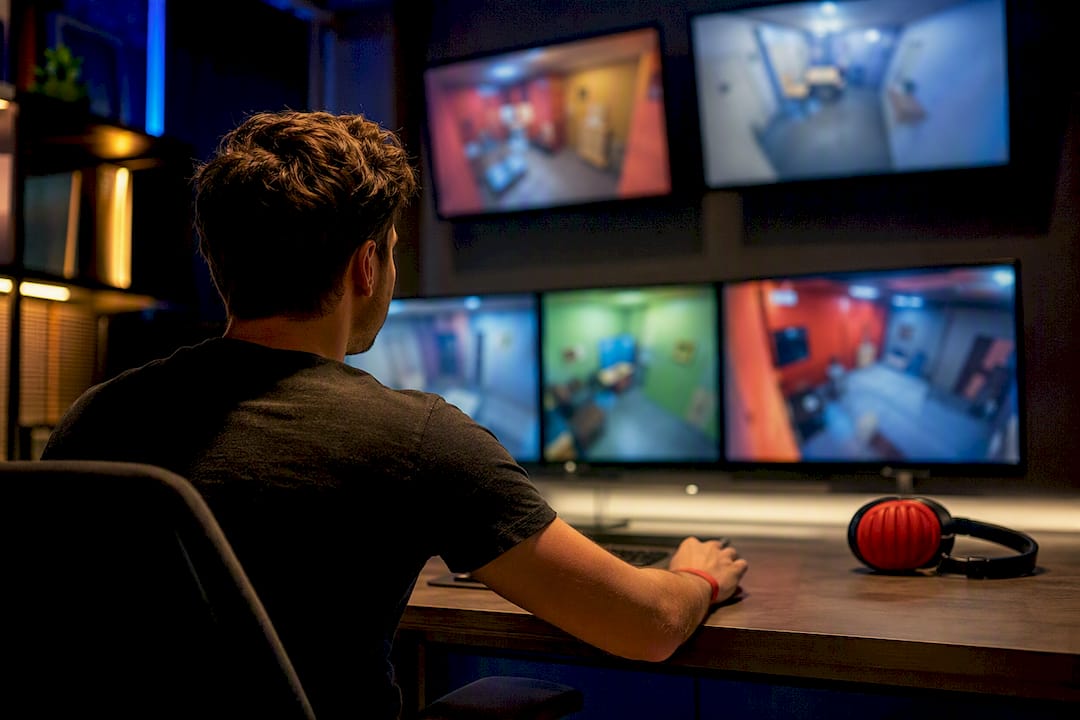
Yes, most escape rooms watch you, but almost none record you. The standard setup is a closed-loop, live video feed the game master uses to track your progress and step in fast if something goes wrong. Sessions typically aren’t saved unless there’s an accident or dispute, and some venues purge that footage within 24 hours if nothing happens worth keeping.
Table of Contents
- How Escape Room Cameras Actually Work
- Why Venues Monitor Players in the First Place
- Where Cameras Go, and Where They’re Strictly Off-Limits
- What Reputable Venues Disclose Before You Play
- Steps to Take if You’re Uneasy About Being Watched
- What Codebusters Escape Room Does Differently
- Why Vague Camera Policies Are the Real Red Flag
- Book a Private Room With Clear Safety Policies
- Sources
- FAQ
How Escape Room Cameras Actually Work
The cameras you’ll find in a typical escape room aren’t security cameras in the sense most people picture. They’re closed-circuit monitors feeding a screen in the control room, where a game master watches in real time and nothing more. That closed-loop setup is the industry standard, and it’s the reason most venues don’t sit on a library of old footage. There’s simply nothing to store.
Recording, when it happens at all, is usually reserved for two situations: something went wrong and staff need to review what happened, or a new hire is being trained on how to run the room. Even then, footage tends to get deleted quickly unless an incident report requires it to stick around.
It helps to separate two different camera systems that get lumped together:
- In-room gameplay cameras: live-feed only, watched by the game master, rarely saved.
- Lobby and entrance cameras: often recorded continuously for liability and theft prevention, sometimes retained 30 to 90 days.
Quick fact: Lobby footage and gameplay footage follow different rules almost everywhere. The lobby camera protecting the cash register isn’t the same system watching you solve a puzzle.
You’ll usually find these policies spelled out somewhere before you ever walk in, whether on the booking page, in a confirmation email, or on a waiver you sign at check-in.
Why Venues Monitor Players in the First Place
Monitoring exists for practical reasons, not to catch you doing something embarrassing. The biggest one is safety. If someone trips, has a medical episode, or gets a finger stuck in a prop, staff watching a live feed can respond in seconds instead of minutes. Escape room design guidance treats camera and microphone coverage as a baseline requirement precisely so no corner of the room goes unseen.
Beyond safety, monitoring supports the game itself. A game master watching your team stall on a puzzle for ten minutes can drop a hint through the intercom right when you need it, which keeps the experience fun instead of frustrating.
There are quieter reasons too:
- Protecting expensive set pieces and electronics from damage or theft.
- Catching a technical glitch (a stuck lock, a dead sensor) before it ruins someone’s session.
- Occasional staff training or quality checks, always disclosed ahead of time.
Pro Tip: If you’re curious how a game master’s attentiveness shapes your group’s actual performance, gamemaster behavior and team dynamics affect your success rate more than most players realize.
Where Cameras Go, and Where They’re Strictly Off-Limits
Camera placement in a well-run escape room follows a predictable pattern:
- High wall mounts positioned to cover the entire puzzle area, angled wide rather than zoomed in on faces.
- Entrances and egress points, so staff can confirm everyone’s location and clear the room quickly in an emergency.
- Lobby and check-in areas, usually on a separate recorded system for liability reasons.
What you won’t find, and shouldn’t tolerate, is a camera anywhere near a restroom or a changing area. That’s a firm line the industry doesn’t cross, since monitoring is meant to keep players safe and situationally aware, not to capture private moments.
Audio works the same way. Most venues run intercom-style audio so staff can talk to you and hear you call for help, not passive recording that captures every conversation. Design experts note that good audio coverage often catches problems faster than video alone, which is exactly why it’s there. If a venue is quietly recording audio without saying so, that’s worth asking about directly.
What Reputable Venues Disclose Before You Play
Transparency isn’t optional for a well-run venue. It’s baked into how they operate, and you should be able to find proof of it in a few predictable places: the booking page, your confirmation email, signage at check-in, and the waiver you sign before entering.
Clear disclosure sounds like this: “Live video feed used for safety monitoring only, no recording except in the case of an incident,” or “Audio is intercom-only, used to communicate with players.” Transparency around audio and video use is treated as a baseline industry expectation, not a nice extra.
Academic researchers studying escape rooms follow the same logic, using consent forms and pre-session briefings before any monitoring begins. Commercial venues should hold themselves to a similar standard.
Watch for these signals:
- Staff who can explain exactly where cameras are and how audio works.
- A waiver that specifically mentions video or audio monitoring, not vague boilerplate.
- A willingness to offer no-video private bookings if that option exists.
- Evasive answers, shrugs, or “don’t worry about it” responses. That’s a warning sign, not reassurance.
If a venue wants to record your session for marketing or a highlight reel, that requires separate, explicit opt-in consent, distinct from the general safety waiver you sign at check-in.
Steps to Take if You’re Uneasy About Being Watched
You have more control here than you might think. A few concrete moves cover most of your bases:
- Ask before you book. A quick email or phone call asking “Is the room recorded, or just live-monitored?” tells you a lot about how the venue operates.
- Confirm at check-in. Look for signage, and ask staff to point out where the waiver addresses cameras and audio.
- Speak up mid-game. Use the intercom, wave at the camera, or ask the game master directly to pause the session if something feels off. Staff are trained to prioritize your comfort and safety over keeping the clock running.
- Walk away if needed. If staff dodge your questions or you spot a camera somewhere it shouldn’t be, decline to play and raise it with venue management.
What Codebusters Escape Room Does Differently
A well-known escape room business runs themed rooms across multiple locations, built around private group bookings rather than mixing strangers into the same session. That structure alone changes the privacy conversation, since your group is the only one in the room.
Responsible operators share a common playbook, and it’s worth knowing what to look for regardless of which venue you book with:
- Visible signage explaining how monitoring works before you ever step inside.
- A pre-game safety briefing that covers cameras, intercom use, and emergency procedures.
- Live monitoring focused on safety and hint delivery, not passive recording.
- Short or nonexistent footage retention outside of documented incidents.
If you want a deeper look at how gameplay dynamics and team performance tie into how a room is run, Codebusters Escape Room’s own resources on team performance metrics and corporate group integration go into more detail on how monitoring supports the experience rather than intruding on it.
Why Vague Camera Policies Are the Real Red Flag
The conventional advice on this topic usually stops at “ask if there’s a camera.” That’s not enough. The better question is whether a venue can explain its policy without hesitating, because a game master’s ability to describe camera placement and audio use in plain terms says more about a venue’s trustworthiness than the cameras themselves ever could.
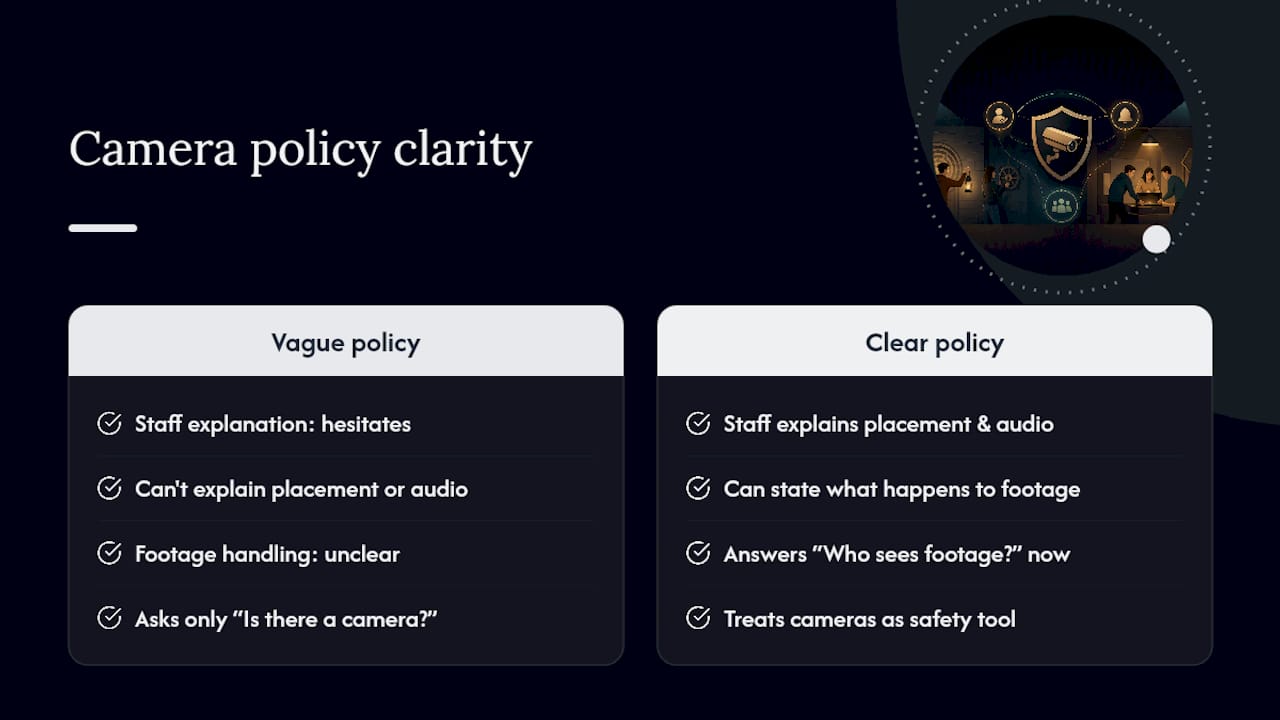
Most people assume surveillance in these settings is about catching bad behavior or building a blooper reel. It isn’t. The research and design guidance both point the same direction: cameras exist as a safety net and a game-management tool, nothing more. A room with no cameras at all is arguably riskier than one with clear, disclosed monitoring, since nobody’s watching if you actually need help.
What should you prioritize first? Skip the instinct to ask “is there a camera.” Ask instead: “What happens to the footage, and who can explain your policy to me right now?” That question separates a venue that treats privacy seriously from one that hasn’t thought it through.
— CodeBusters
Book a Private Room With Clear Safety Policies
Certain escape rooms run private group bookings across multiple locations, so groups are not sharing a room, or a camera feed, with strangers. Every session includes a safety briefing before the clock starts, live monitoring focused on getting your team unstuck and keeping you safe, and staff who can tell you exactly how the cameras and intercom work if you ask.

If you’d rather read more before you commit, the escape room design and immersive world guide breaks down how these rooms are built with safety in mind from the ground up. When you’re ready, check available dates and book your private room at one of our Colorado Springs locations.
Sources
- Are escape rooms monitored? What you need to know about surveillance in escape rooms
- Escape Room Design: Safety Basics - Room Escape Artist
- Educational escape rooms for raising information privacy competences: An empirical validation
- Do They Watch You in an Escape Room? The Truth About Cameras and Safety
FAQ
Are Phones Allowed in Escape Rooms?
Most venues ask you to leave phones in a locker or cubby before the game starts, both to prevent cheating and to keep the immersive experience intact.
Can You Take Your Phone Into an Escape Room?
Generally no. Staff usually collect phones at check-in, though some venues allow a phone to stay with you in an emergency bag if you disclose a medical need beforehand.
Do Escape Rooms Record Audio the Entire Time?
Most rooms use intercom-style audio for communication with staff rather than continuous passive recording, though you should confirm this directly if it matters to you.
What Should I Do if I Don’t See Camera Disclosure Anywhere?
Ask staff directly before booking or at check-in. A reputable operator, including Codebusters Escape Room, should be able to explain camera and audio policy without hesitation.
Is There an Escape Room Alcohol Policy I Should Know About?
Alcohol policies vary by venue, so check directly with the escape room you’re booking, since rules around drinking before or during a session differ from one location to the next.