3 Safety Questions Based on OSHA to Manage Escape Room Claustrophobia

Most people with mild to moderate claustrophobia can safely play an escape room if they check exit procedures and pick the right room first. Before you book, do three things: ask the venue how you can exit at any time, ask whether the theme involves crawlspaces or forced confinement, and request a private booking so you’re not managing strangers’ reactions along with your own. If staff can’t answer the exit question clearly, or you have a history of full panic attacks, skip that room and look elsewhere.
Table of Contents
- What an escape room actually looks and feels like
- Why a roomy set can still trigger claustrophobia
- How to verify a room’s safety before you play
- Choosing a room that won’t work against you
- What to do before and during the game to stay calm
- When to skip the room entirely
- What claustrophobic players actually say about their experience
- How CodeBusters approaches guests with claustrophobia
- Ready to book a room that fits your comfort level
- Where these safety and clinical claims come from
- Sources
- FAQ
What an escape room actually looks and feels like
Marketing photos tend to exaggerate tight spaces, and most commercial rooms are larger than they appear online. A typical escape room occupies an open set roughly the size of a living room or small apartment, with furniture, props, and walking space between puzzle stations. Some rooms use a corridor layout that moves players between two or three connected spaces, which can feel more enclosed than a single open set. Crawlspaces and low-clearance tunnels do exist in some horror or heist-themed rooms, but they’re usually short, optional, and completed by one volunteer rather than the whole group.
Before booking, ask the venue:
- Is any part of the room a crawlspace, and can it be skipped?
- How many separate spaces or transitions does the room have?
- Are lights kept on throughout, or does the room go dark at any point?
A venue that answers these specifically, rather than with a general “it’s mostly open,” is giving you something you can actually plan around. For more on how different themes handle enclosed spaces, certain rooms provoke more anxiety than others by design.
Why a roomy set can still trigger claustrophobia
Claustrophobia isn’t really about square footage. It’s a specific phobia centered on fear of suffocation and, just as often, fear of losing control, and both can fire even in a room that’s objectively spacious. Locked doors, a countdown clock, and low lighting all signal restricted control, and that signal matters more to the nervous system than the actual dimensions of the space.
Escape rooms also use mechanics that intensify this feeling on purpose: isolating one teammate in a side room, simulating a locking sound, or cutting the lights for a jump scare. None of these physically trap you, but they mimic the exact cues your brain associates with being trapped.
A significant portion of adults report fear of enclosed spaces, according to clinical research on claustrophobia, and that fear is tied to perceived suffocation and loss of control rather than room size alone. Telling someone “the room is actually pretty big” often doesn’t help, because the fear was never really about the measurements.
How to verify a room’s safety before you play
Commercial escape rooms are entertainment venues, not locked facilities, and reputable ones design around the same logic OSHA applies to exit routes in any workplace: exits stay unobstructed, clearly marked, and available the moment someone needs them. A well-run room extends that same standard to guests, with a staff member monitoring cameras and a way to end the game instantly if needed. OSHA’s exit-route factsheet lays out the baseline: routes must be free, marked, and maintained, and a good venue can explain how that translates to its game rooms.
Before you enter, ask:
- Can I exit the room at any point without finishing the game?
- Is the door locked with a real lock, or is it just closed?
- How does staff know if someone needs to leave immediately?
- Is there an in-room signal, button, or radio to call for help?
Leave if the staff can’t describe a clear release process, hesitates on the locked-door question, or brushes off your concern as unnecessary.
Pro Tip: Ask to see the exit door itself before you pay. A five-second look answers more than any verbal reassurance can.
Choosing a room that won’t work against you
Not all themes carry equal risk. Horror and heist rooms lean on crawlspaces and blackout moments more often than adventure or mystery themes, so a bright, open-set room is generally the safer starting point.
- Ask for a private booking so you’re not adjusting your pace to strangers.
- Confirm whether any tight-space puzzle is optional or can be handled by a teammate.
- Read recent reviews for mentions of staff responsiveness to anxious guests, not just puzzle difficulty.
- Ask if the game master can watch more closely or check in mid-game if you disclose a concern in advance.
Venues that answer these questions without hesitation are usually the ones that have handled anxious guests before. A beginner’s checklist and a general room selection guide can help you compare themes and group sizes before you commit to a booking.
What to do before and during the game to stay calm
Preparation matters more than willpower once the clock starts.
- Tell staff about your claustrophobia when you book or check in, not after the door closes.
- Pick a “safety buddy” in your group and agree on a stop signal before you start.
- Position yourself near the exit rather than deep in a corner or side room.
- Use slow breathing (in for four counts, out for six) if you feel your chest tighten.
- Ask for a hint instead of pushing through a puzzle that’s raising your heart rate.
If panic escalates rather than settles, leave. Breathing techniques and a clear stop signal help manage moderate anxiety in the moment, but they aren’t a treatment and shouldn’t be used to push through a genuine panic response. Clear communication tips and a team communication guide can help you set up signals with your group in advance.
Pro Tip: Agree on a single word, not a phrase, as your stop signal. Under stress, short is easier to remember and say.
When to skip the room entirely
Some situations call for sitting this one out rather than pushing through.
- You have a history of full panic attacks, fainting, or dissociation in enclosed spaces.
- You rely on medication that impairs your ability to communicate or assess risk in the moment.
- A staff member cannot clearly describe how you would exit if needed.
Clinical treatment for significant claustrophobia centers on cognitive behavioral therapy and structured, clinician-guided exposure, which is gradual and supervised in ways a commercial escape room simply isn’t. An escape room is not a substitute for that kind of treatment. If you still want the experience, ask about watching a room in progress, previewing photos or a walkthrough video, or booking the largest, brightest-set room the venue offers.
What claustrophobic players actually say about their experience
Accounts from claustrophobic players who’ve tried escape rooms tend to land in two camps. Some report that disclosing their fear to staff beforehand changed the entire experience: knowing exactly where the exit was and having a game master watching closely let them focus on puzzles instead of scanning for threats. Others describe rooms that never became a problem at all, simply because the set was open, well-lit, and didn’t require crawling or isolation.

The common thread in both types of accounts is preparation. Players who called ahead, asked about layout, and picked non-horror themes generally described the session as manageable or even confidence-building. Players who booked without checking anything, and ended up in a dark, corridor-style horror room, were far more likely to describe a rough time. The room’s actual difficulty rarely came up in either kind of account. What mattered was whether the player felt informed and in control before the door ever closed.

That pattern lines up with the clinical point above: control and predictability, not square footage, decide how a claustrophobic player experiences an escape room.
How CodeBusters approaches guests with claustrophobia
Some escape room venues operate with private bookings to avoid grouping guests with strangers unless chosen. Guests can ask staff to preview the exit, request that any tight-space element be handled by a teammate, and flag concerns before the game starts. A venue that answers these requests directly, rather than deflecting, is doing what a good operator should.
Ready to book a room that fits your comfort level
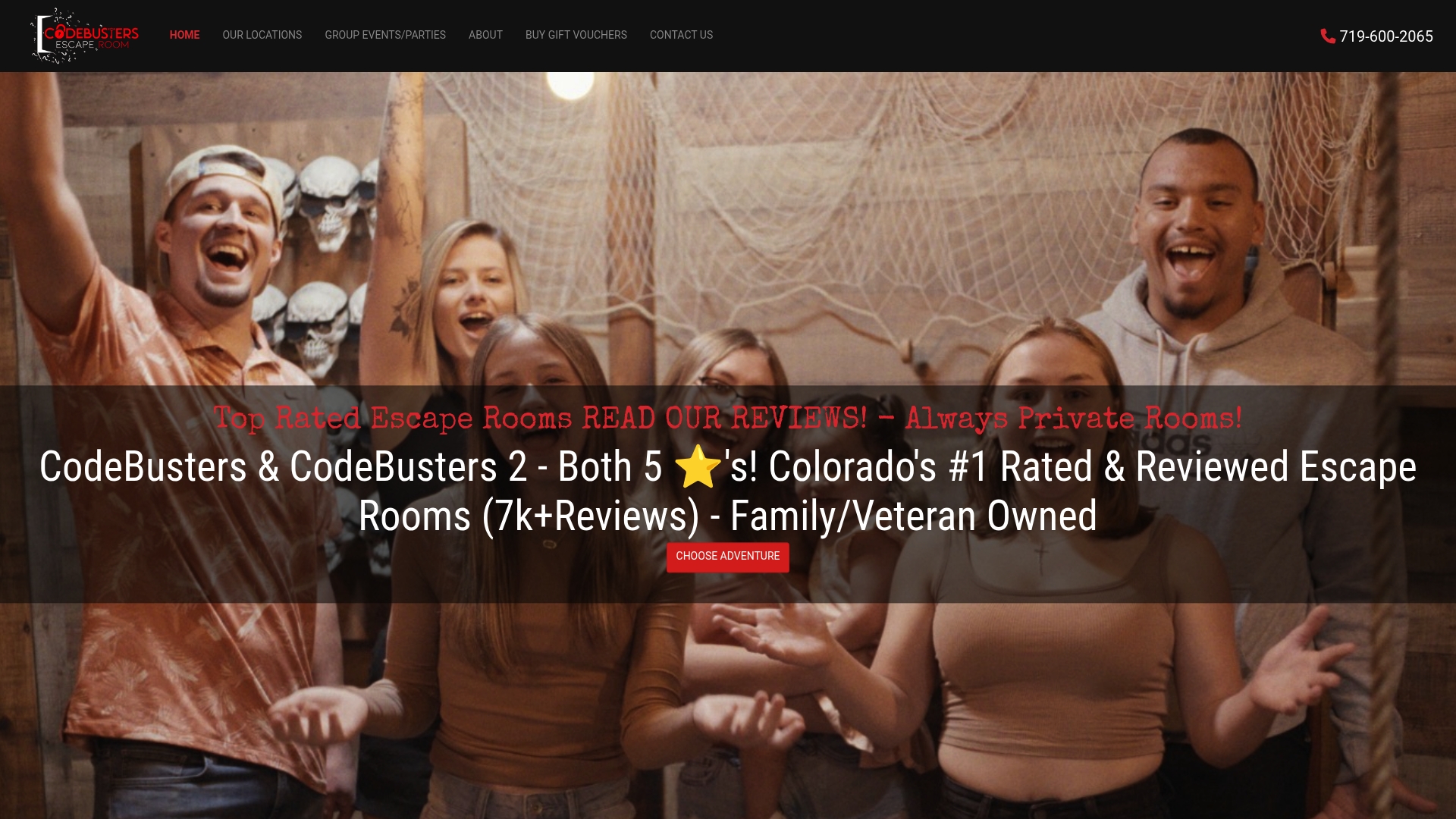
Escape room venues may offer a range of themed rooms and often provide private bookings by default. Before you reserve a session, use the room descriptions and booking page to check layout details, then call and run through the exit and accommodation questions from this guide.
- Browse themed rooms and check group size before booking.
- Call ahead to ask about crawlspaces, lighting, and exit procedures.
- Request a private session if you’d rather not manage strangers’ reactions too.
If horror themes and tight-containment settings aren’t your comfort zone at all, even outside escape rooms, that preference is worth respecting: genre entertainment aimed at fear isn’t for everyone, and there’s no reason to force it.
Where these safety and clinical claims come from
For readers who want the primary sources, OSHA’s exit-route standard and factsheet cover safety expectations. StatPearls and Cleveland Clinic cover the clinical picture. Room Escape Artist covers industry practice.
Sources
- 1910.37 - Maintenance, safeguards, and operational features for exit routes. | Occupational Safety and Health Administration
- Claustrophobia - StatPearls - NCBI Bookshelf
- Are Escape Rooms Claustrophobic? - Room Escape Artist
FAQ
Should you do an escape room if you’re claustrophobic?
Many people with mild to moderate claustrophobia can play safely if they confirm exit procedures beforehand and choose a bright, open-set room rather than a horror or crawlspace-heavy theme. If a venue can’t clearly explain how you can exit at any time, it’s reasonable to skip that room.
Are escape rooms bad for people with anxiety?
Escape rooms aren’t inherently bad for anxious players, but time pressure, locked doors, and darkness can intensify anxiety symptoms for some people. Disclosing your concerns to staff and picking a lower-intensity theme usually makes the experience more manageable.
Is claustrophobia a type of PTSD?
No, claustrophobia is classified as a specific phobia, not PTSD, though both involve intense fear responses. Claustrophobia centers specifically on fear of enclosed spaces and often fear of suffocation or loss of control, according to clinical descriptions of the condition.
What should you tell staff before playing if you’re claustrophobic?
Tell staff about your claustrophobia when you book or check in, and ask directly how you can exit the room at any point. Reputable venues will describe their release process without hesitation and may offer accommodations like skipping optional tight-space puzzles.
— CodeBusters