Puzzle-Based Entertainment: Your Practical Guide

Puzzle-based entertainment is defined as any interactive experience that challenges participants to reach a solution through reasoning, pattern recognition, and creative thinking. The best puzzle formats, from logic grids and jigsaw puzzles to live escape rooms like those at Codebusters Escape Room in Colorado Springs, share three core traits: a clear goal state, a defined ruleset, and a solution path discoverable through logic. Puzzle games train creative thinking and cognitive skills while delivering dopamine-driven motivation. That combination explains why puzzle entertainment has grown from a niche hobby into a mainstream activity for families, corporate teams, and solo enthusiasts alike.
What is the guide to puzzle-based entertainment built on?
Every puzzle, regardless of format, rests on three structural pillars: a goal state (what you are trying to achieve), constraints (the rules that limit your moves), and a solution path (the logical sequence that gets you there). Fair puzzles communicate consistent rules, enabling players to discover solutions through reasoning rather than guessing. When any of these pillars is missing or unclear, the experience stops being fun and starts feeling arbitrary.
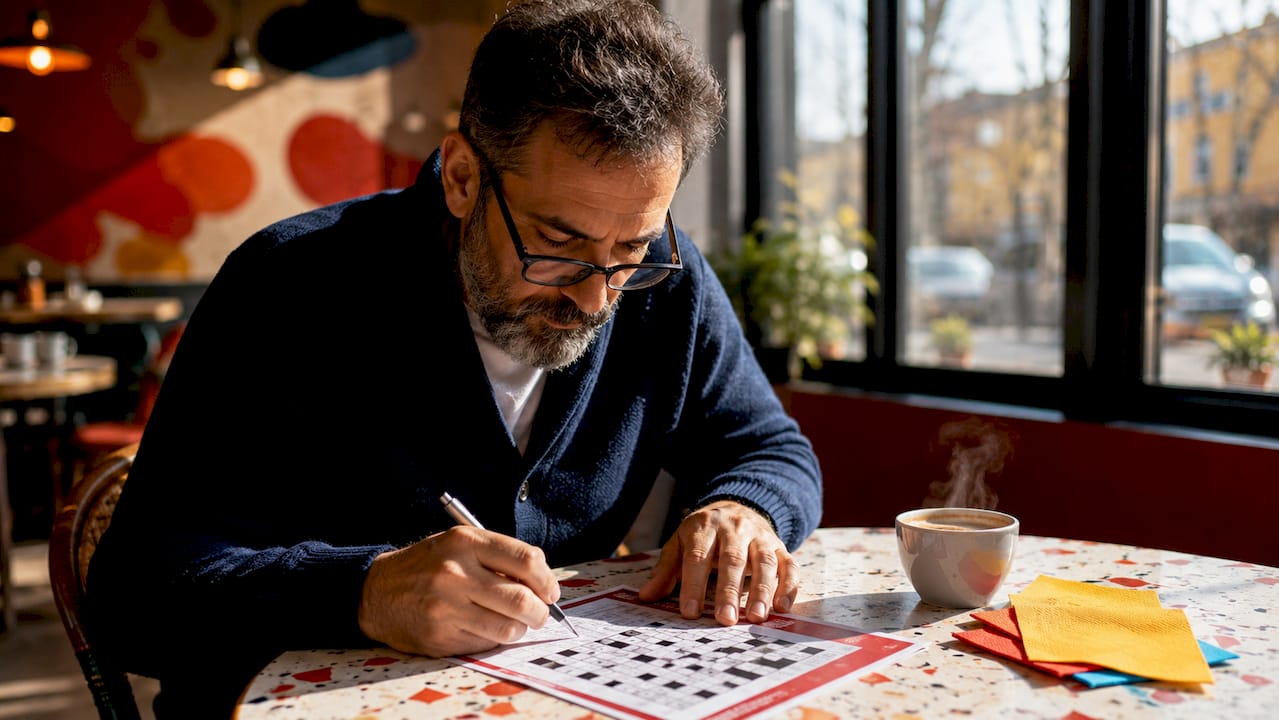
Puzzle entertainment divides into five broad categories, each engaging different cognitive skills.
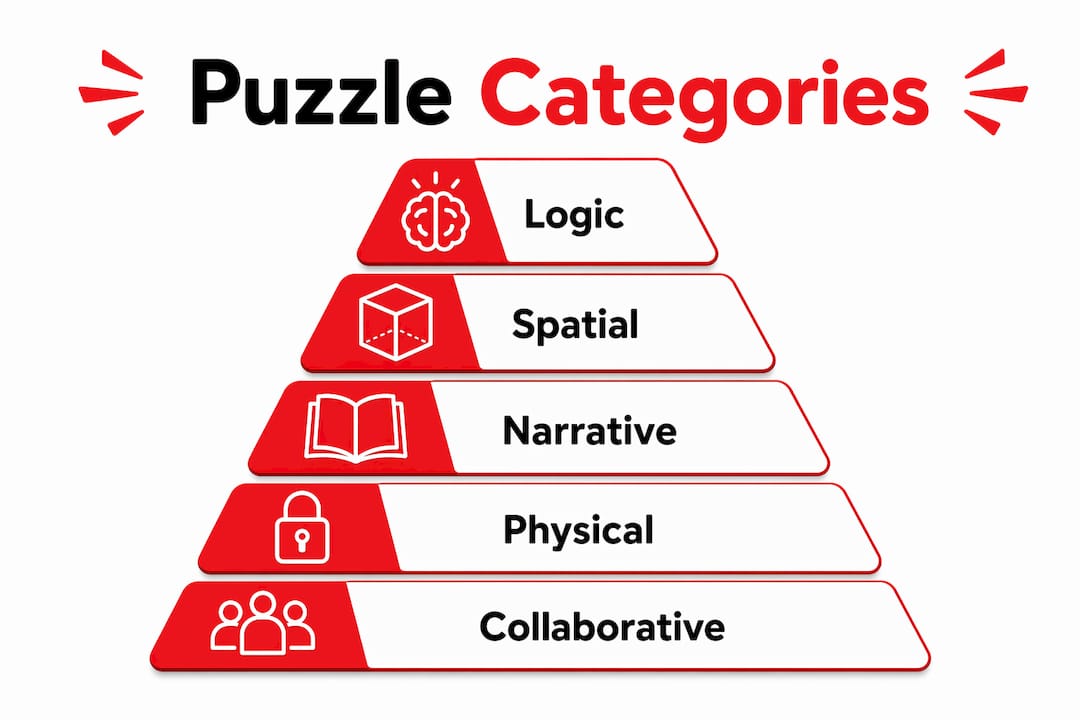
| Puzzle type | Primary skill | Typical format |
|---|---|---|
| Logic | Deductive reasoning | Grid puzzles, constraint problems |
| Spatial | Visual processing | Jigsaws, tangrams, 3D builds |
| Narrative | Lateral thinking | Escape rooms, mystery games |
| Physical | Dexterity and coordination | Mechanical locks, tactile puzzles |
| Collaborative | Communication and delegation | Team escape rooms, group jigsaws |
Escape rooms sit at the intersection of narrative and collaborative puzzles. They layer storytelling over physical and logic challenges, which is why they produce stronger social bonding than most solo formats. Codebusters Escape Room builds each of its themed rooms, including “Past to the Future” and “Stranger 80’s,” around this multi-layer structure. The result is an experience that feels cohesive rather than like a random collection of tasks.
Understanding which category a puzzle belongs to helps you prepare the right mental approach before you start. A spatial puzzle rewards patience and visual scanning. A logic puzzle rewards systematic elimination. Knowing this in advance cuts frustration and speeds up your path to that satisfying solution.
How can you solve puzzles more effectively?
Effective puzzle solving starts with one habit: read the goal before touching anything. Players who skip this step waste time on moves that cannot lead to a solution. Once the goal is clear, breaking complex puzzles into smaller parts improves success rates and reduces frustration significantly.
Four techniques consistently outperform random trial and error.
- Isolation. Separate one variable or section and solve it independently before reconnecting it to the whole.
- Backward reasoning. Start from the goal state and work backward to identify which moves must have preceded it.
- Chunking. Group elements into recognizable patterns. Expert players identify high-frequency configurations rather than isolated pieces, which reduces cognitive load and boosts success rates.
- The rubber duck method. Explain your current reasoning out loud, even to an inanimate object. Verbalizing a problem forces your brain to reorganize it, which often reveals the flaw in your approach.
Using physical tools like grids or diagrams reduces mental strain and enhances logic puzzle-solving efficiency. Offloading information onto paper frees your working memory for actual deduction rather than storage. This is especially useful in multi-step logic puzzles where tracking five or more variables simultaneously becomes unmanageable.
Pro Tip: Take a deliberate two-minute break when you feel stuck. The brain continues processing problems during rest, a phenomenon psychologists call incubation. Many solvers report their breakthrough arriving within minutes of stepping away.
A structured daily practice routine accelerates improvement faster than occasional long sessions. The recommended format is a five-minute warmup puzzle, two timed attempts at your target difficulty, a ten-minute post-game analysis of your decisions, and two minutes of logging what you learned. Running this routine for 30 days produces measurable gains in both speed and accuracy.
What makes puzzle entertainment work for groups and families?
Group puzzle entertainment succeeds when every participant has a meaningful role. The biggest design failure in group puzzles is creating a single critical path that one person dominates while everyone else watches. Good collaborative design distributes tasks so that different skill levels contribute simultaneously.
Family Piece technology addresses this directly. It uses large, medium, and small pieces within a single puzzle so that younger children, older adults, and experienced puzzlers can all work at the same time without blocking each other. A 350-piece puzzle built with this approach becomes genuinely multigenerational rather than just labeled as such.
Selecting the right puzzle for a mixed group requires checking five criteria.
- Difficulty range. The puzzle should have entry points for beginners and depth for experienced players.
- Clear visual language. Every mechanic should communicate its function without a lengthy explanation.
- Scalable time commitment. The activity should fit within the group’s available window without feeling rushed or padded.
- Physical accessibility. Piece size, table space, and lighting all affect who can participate comfortably.
- Feedback loops. Players need to know when they are making progress, not just when they finish.
Escape room logic puzzles enhance group play and communication by forcing teams to share observations and delegate tasks in real time. This mirrors the communication demands of professional team environments, which is why corporate groups consistently rate escape rooms as more effective for team building than passive activities.
Pro Tip: Assign a “connector” role in group puzzles. This person’s job is not to solve individual sections but to spot how completed sections relate to each other. Groups with a connector finish faster and argue less.
What common pitfalls should you watch for in puzzle entertainment?
The most damaging flaw in any puzzle is a hidden rule. A hidden rule is one the player could not have discovered through observation or logic, meaning the only way to progress is to guess or look up the answer. This breaks the implicit contract between designer and player. Fair puzzles are built on clear, consistent rules that communicate their logic visually, so players always feel the solution was within reach.
| Puzzle flaw | Consequence | Remedy |
|---|---|---|
| Hidden rules | Players feel cheated, not challenged | State all constraints clearly at the start |
| No feedback | Players cannot gauge progress | Add visual or audio confirmation for correct steps |
| Flat difficulty | Boredom or sudden overwhelm | Use warm-ups, spikes, and breather puzzles |
| Excessive guesswork | Frustration replaces reasoning | Ensure every solution path is logic-based |
| Absent hint system | Players quit rather than persist | Build a tiered hint ladder |
Strategic puzzle pacing balances warm-ups, spikes, and breather puzzles to maintain engagement and avoid fatigue. Warm-ups rebuild confidence at the start of a session. Spikes test mastery at peak engagement. Breather puzzles deliver satisfying progress with less strain, preventing the mental exhaustion that causes players to quit early.
Hint systems are the most underused tool in puzzle entertainment. Tiered hint ladders reveal clues gradually, from a gentle nudge toward the right area to a near-complete solution, so players can choose how much help they want without losing the intellectual reward entirely. The worst response to being stuck is immediately searching for a full walkthrough. Avoiding full walkthroughs preserves the “Aha!” moment that makes puzzle entertainment genuinely satisfying.
How do you build puzzles into your regular entertainment routine?
Consistent improvement in puzzle solving comes from deliberate practice, not just volume. Deliberate practice means focusing on a specific weakness, getting feedback on it, and adjusting your approach. Playing the same type of puzzle you already find easy produces comfort, not growth.
The most effective habits for long-term puzzle enthusiasts include:
- Mix puzzle styles weekly. Rotating between logic, spatial, and narrative puzzles prevents skill stagnation and promotes transfer across formats.
- Log your decisions. After each session, write down one move you would change and why. This reflection loop accelerates learning faster than replaying the same puzzle.
- Join a puzzle community. Online forums and local puzzle clubs expose you to approaches you would never develop alone. Seeing how others solved the same problem is one of the fastest ways to expand your toolkit.
- Use apps for targeted training. Cognitive training apps that focus on pattern recognition and working memory directly support puzzle performance.
- Set session limits. Capping sessions at 45–60 minutes prevents the diminishing returns that come with mental fatigue.
Pro Tip: Alternate between a puzzle style you find easy and one you find hard in the same week. The confidence from the easy session carries into the hard one, and the challenge from the hard session sharpens your approach to the easy one.
Diverse puzzle challenges in escape room environments offer one of the best real-world training grounds for this kind of mixed practice. A single well-designed room might include a logic sequence, a spatial lock mechanism, and a narrative cipher, all within 60 minutes.
Key Takeaways
The most effective approach to puzzle-based entertainment combines clear goal understanding, deliberate solving techniques, fair puzzle design, and consistent practice across multiple puzzle types.
| Point | Details |
|---|---|
| Know your puzzle type | Identify whether a puzzle is logic, spatial, narrative, physical, or collaborative before starting. |
| Use structured techniques | Apply isolation, backward reasoning, chunking, and the rubber duck method to reduce guesswork. |
| Design for all skill levels | Use varied difficulty entry points and clear visual language to keep every group member engaged. |
| Avoid hidden rules | Every solution path must be discoverable through logic, not luck or prior knowledge. |
| Practice deliberately | Mix puzzle styles, log decisions, and cap sessions at 45–60 minutes for consistent improvement. |
What running an escape room taught me about puzzle design
Most people treat puzzle difficulty as a dial you turn up or down. After years of watching groups work through the rooms at Codebusters Escape Room, I have come to believe that difficulty is not a single variable. It is a relationship between the puzzle’s clarity and the player’s current mental state.
The groups that struggle most are rarely the least experienced. They are the ones who rush. They see a lock and immediately start trying combinations instead of reading the room for context. The puzzle is not hard. They are not listening to it. Every well-designed puzzle is a conversation between the designer and the player. The designer leaves clues in the visual language of the room. The player’s job is to read them, not override them with assumptions.
The “Aha!” moment that makes puzzle entertainment worth the effort is only possible when the design is fair. If a player feels tricked, the moment becomes hollow. If the solution was always there and they finally saw it, the feeling is genuinely rewarding. That distinction is everything. Embrace failure as information, not defeat. Every wrong path tells you something the right path needs.
My honest advice: resist the walkthrough. Use the hint system. The difference between a nudge and a full solution is the difference between learning and being told.
— CodeBusters
Live puzzle experiences worth booking
Puzzle entertainment reaches its highest form when the environment, narrative, and challenge all work together in real time.
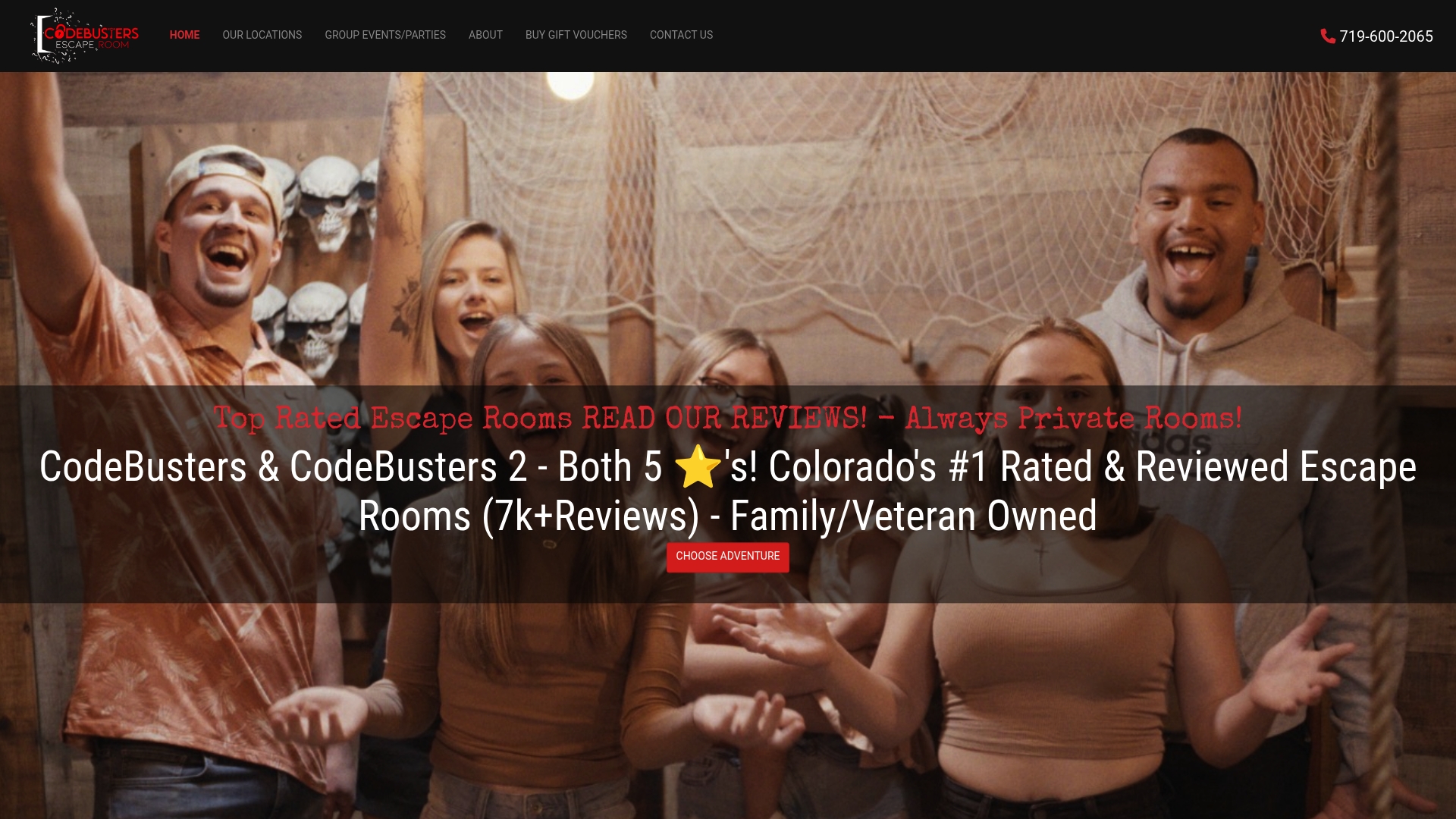
Codebusters Escape Room in Colorado Springs builds every room around fair, layered puzzle design with a tiered hint system that keeps groups engaged without spoiling the experience. Whether you are planning a family-friendly group outing or a corporate team session, the rooms at Codebusters offer the kind of hands-on puzzle challenge that no app or board game fully replicates. Private bookings are available for groups of all sizes. Visit Codebusters Escape Room to check room themes, difficulty levels, and availability.
FAQ
What is puzzle-based entertainment?
Puzzle-based entertainment is any interactive activity where participants solve structured challenges using logic, pattern recognition, or creative thinking. Common formats include escape rooms, logic grid puzzles, jigsaw puzzles, and narrative mystery games.
What are the best puzzle-solving strategies for beginners?
The most effective starting strategies are isolation, backward reasoning, and offloading information onto paper or diagrams. These techniques reduce cognitive load and help beginners focus on deduction rather than memorization.
How do you choose family-friendly puzzles for mixed age groups?
Select puzzles with multiple difficulty entry points, clear visual instructions, and scalable time requirements. Family Piece technology, which uses large, medium, and small pieces in one puzzle, is one proven format for multigenerational groups.
Why do hint systems matter in puzzle entertainment?
Tiered hint systems preserve the challenge and the “Aha!” moment by revealing information gradually rather than all at once. A good hint nudges players toward the right area without removing the intellectual reward of finding the solution.
How often should you practice puzzles to improve?
A daily routine of 45–60 minutes that includes a warmup, timed attempts, and a short post-session review produces the fastest improvement. Mixing puzzle styles across the week prevents skill stagnation and promotes broader cognitive gains.